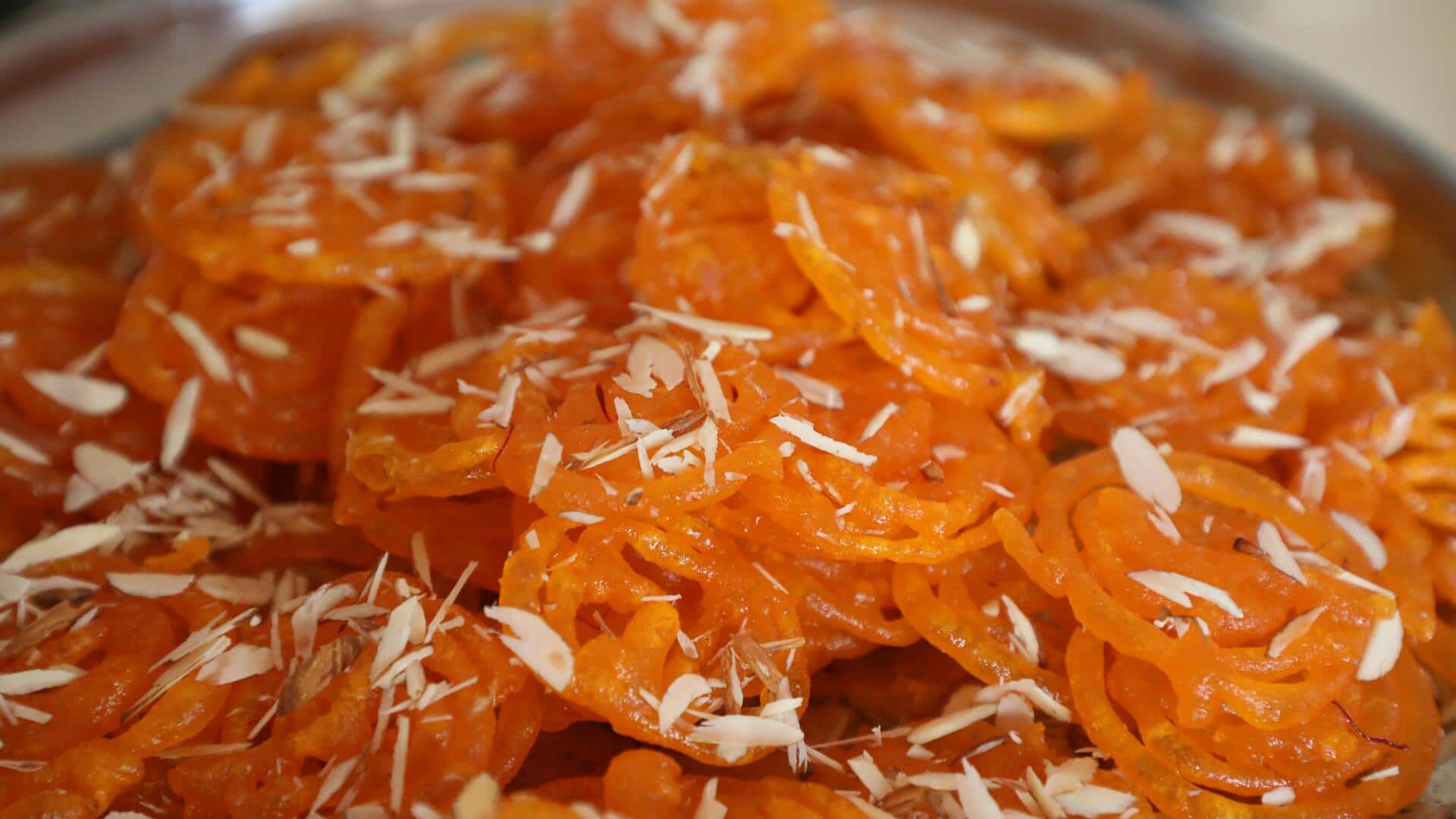
How jalebi became a beloved sweet across cultures
What's the story
Jalebi, the beloved sweet, has a history that dates back centuries. From its origins in ancient kitchens to becoming a favorite at modern celebrations, jalebi's journey is fascinating. This spiral-shaped delicacy, soaked in syrup, has been a part of many cultures and traditions. Its evolution reflects changes in culinary practices and societal preferences over time. Here's how jalebi has transformed through the ages.
Early days
Ancient origins and preparation
Jalebi's roots can be traced back to ancient Persia, where it was known as zulbia. The sweet was prepared using simple ingredients like flour and sugar syrup. The batter was shaped into circular forms and fried until crispy. This early version of jalebi laid the foundation for what would become a beloved treat across different regions.
Cultural diffusion
Spread across cultures
As trade routes expanded, jalebi made its way to various parts of the world. It became popular in India, where it was embraced with local flavors and techniques. Each culture added its own twist to the dish, making it unique yet retaining its core identity as a sweet treat.
Contemporary twists
Modern variations and innovations
In recent years, chefs have experimented with jalebi by adding new flavors and textures. Some variations include stuffing jalebis with cream or pairing them with ice cream for an interesting contrast of temperatures. These modern twists cater to evolving tastes while keeping the traditional essence alive.
Festive favorite
Jalebi's place in celebrations today
Today, jalebi is an integral part of many festivals and celebrations around the world. Its bright color and sweet taste make it a crowd favorite at weddings, religious ceremonies, and family gatherings. Despite changing culinary trends, jalebi remains a timeless classic that continues to bring joy to people of all ages.