Jogging v/s skipping: Which builds stronger bones?
What's the story
Jogging and skipping are two popular forms of exercise that are known to improve cardiovascular health and bone density. Both activities are weight-bearing, which means they help strengthen bones by stimulating bone-forming cells. While jogging is a steady-state aerobic exercise, skipping is a high-intensity interval training (HIIT) type. Here's how these exercises affect bone density, and which is better for you.
Steady impact
Impact of jogging on bones
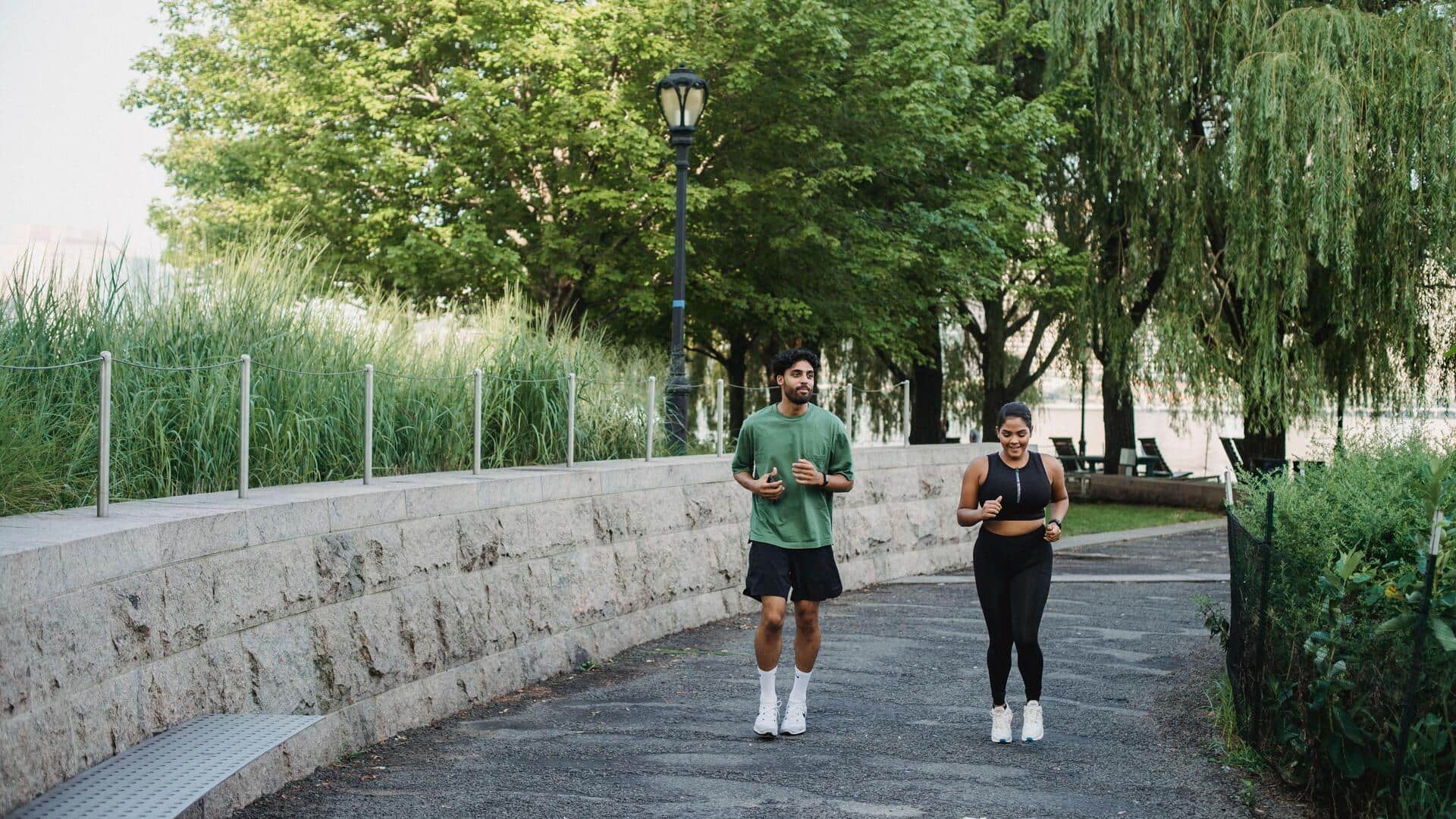
Jogging provides a steady impact on the bones, which helps increase bone density over time.
The repetitive motion of running helps stimulate the bones in the legs and spine, making them stronger.
Studies suggest that regular jogging can reduce the risk of osteoporosis by up to 30%. However, the benefits are more pronounced with consistent practice over months or years.
High-intensity boost
Skipping's role in bone health
Skipping, being a high-intensity workout, offers quick bursts of impact that can be very effective in stimulating bone growth.
The dynamic nature of skipping engages multiple muscle groups and joints, resulting in a comprehensive workout that promotes overall bone health.
Research indicates that regular skipping sessions can increase bone mineral density by as much as 15% in certain areas, like the hips and spine.
Energy expenditure
Caloric burn comparison
When it comes to burning calories, both jogging and skipping are effective but differ in intensity levels.
Skipping usually burns more calories per minute than jogging due to its high-intensity nature.
A person weighing around 70 kg may burn about 300 calories in 30 minutes of skipping, compared with 240 calories during the same duration of moderate-paced jogging.
Practical considerations
Accessibility and convenience factors
Both jogging and skipping have their own accessibility perks.
Jogging only needs a good pair of shoes and can be done almost anywhere outdoors or on a treadmill indoors.
Skipping requires minimal space and equipment, a rope, making it a great option for those with limited access to open areas or looking for indoor workouts.