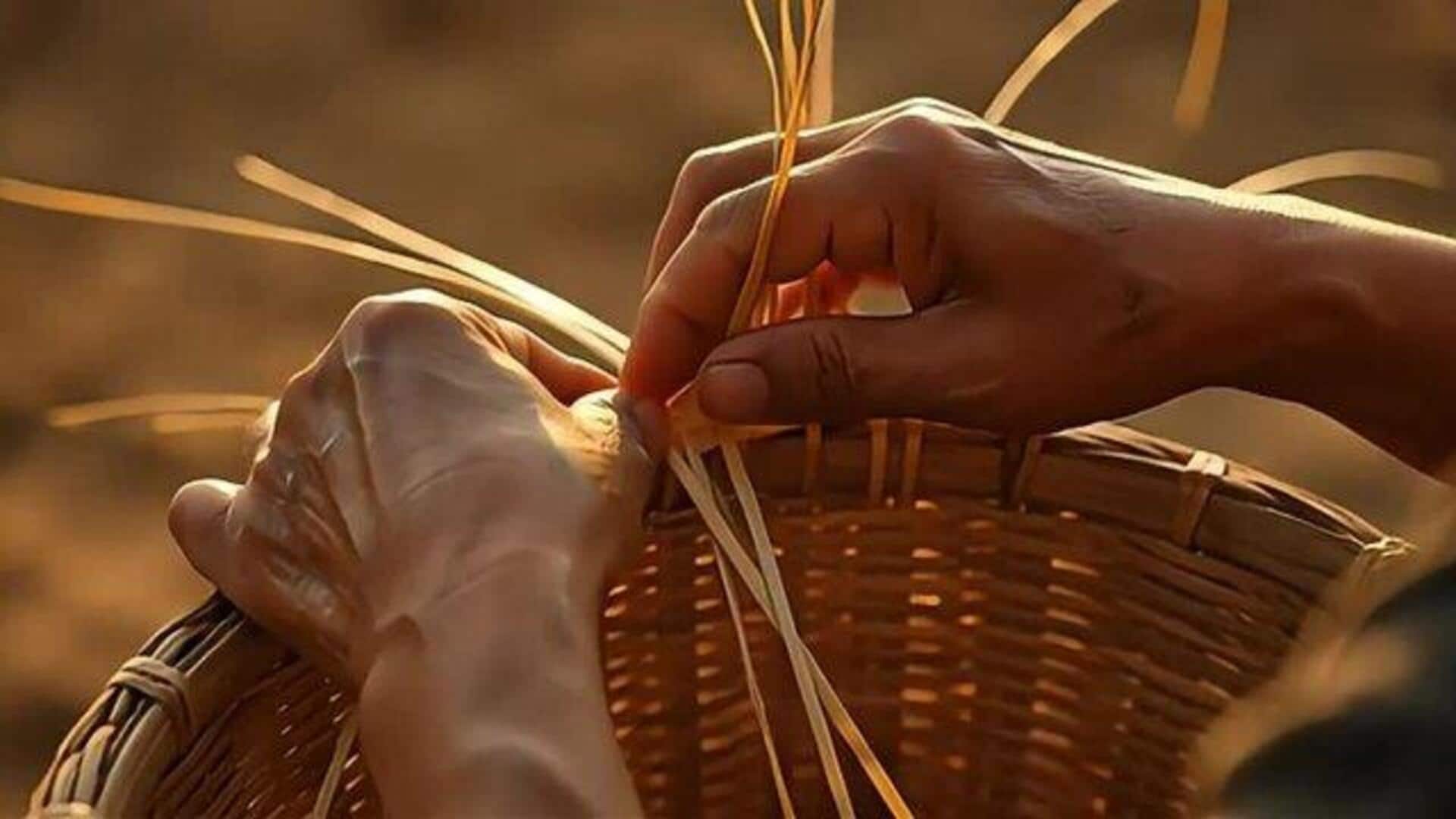
All about Kamba basket weaving
What's the story
Kamba basket weaving is an age-old craft from Kenya's Kamba community. It is a unique art form that has been passed down generations, showcasing the community's rich cultural heritage. The baskets, known for their intricate designs and durability, are made from natural fibers. They are not only functional but also serve as a representation of the Kamba people's identity and creativity. This article delves into the fascinating world of Kamba basket weaving, exploring its history, techniques, and cultural significance.
#1
Historical roots of Kamba baskets
The history of Kamba basket weaving dates back centuries, when it was first used for daily activities.
The Kamba people used to weave baskets for carrying goods, storing items, and even as fishing nets.
As the years went by, the craft evolved into an art form with its own unique patterns and styles.
Today, these baskets are not just practical items but also collectibles that reflect the artistic prowess of their makers.
#2
Techniques behind the craft
Kamba basket weaving involves a series of meticulous steps that require skill and patience.
First, natural fibers are collected from local plants such as sisal or raffia palm.
These fibers are then dyed using natural colors derived from plants or minerals.
The weavers then start the intricate process of creating patterns by interlacing the dyed fibers in specific ways.
Each pattern tells a story or symbolizes something significant to the Kamba community.
#3
Cultural significance in the Kamba community
In addition to being functional items, Kamba baskets also hold cultural significance in the community.
They are often used in traditional ceremonies and rituals, symbolizing unity and prosperity.
The designs on each basket can also indicate social status or family lineage within the community.
This cultural importance ensures that basket weaving remains an integral part of Kamba identity.
#4
Modern adaptations and market trends
In recent years, there has been a surge in demand for Kamba baskets in local and international markets.
This is due to a growing appreciation for handmade crafts and sustainable products.
Weavers have also begun experimenting with new designs, while still keeping traditional techniques intact.
This way, they appeal to modern consumers without losing their cultural essence.