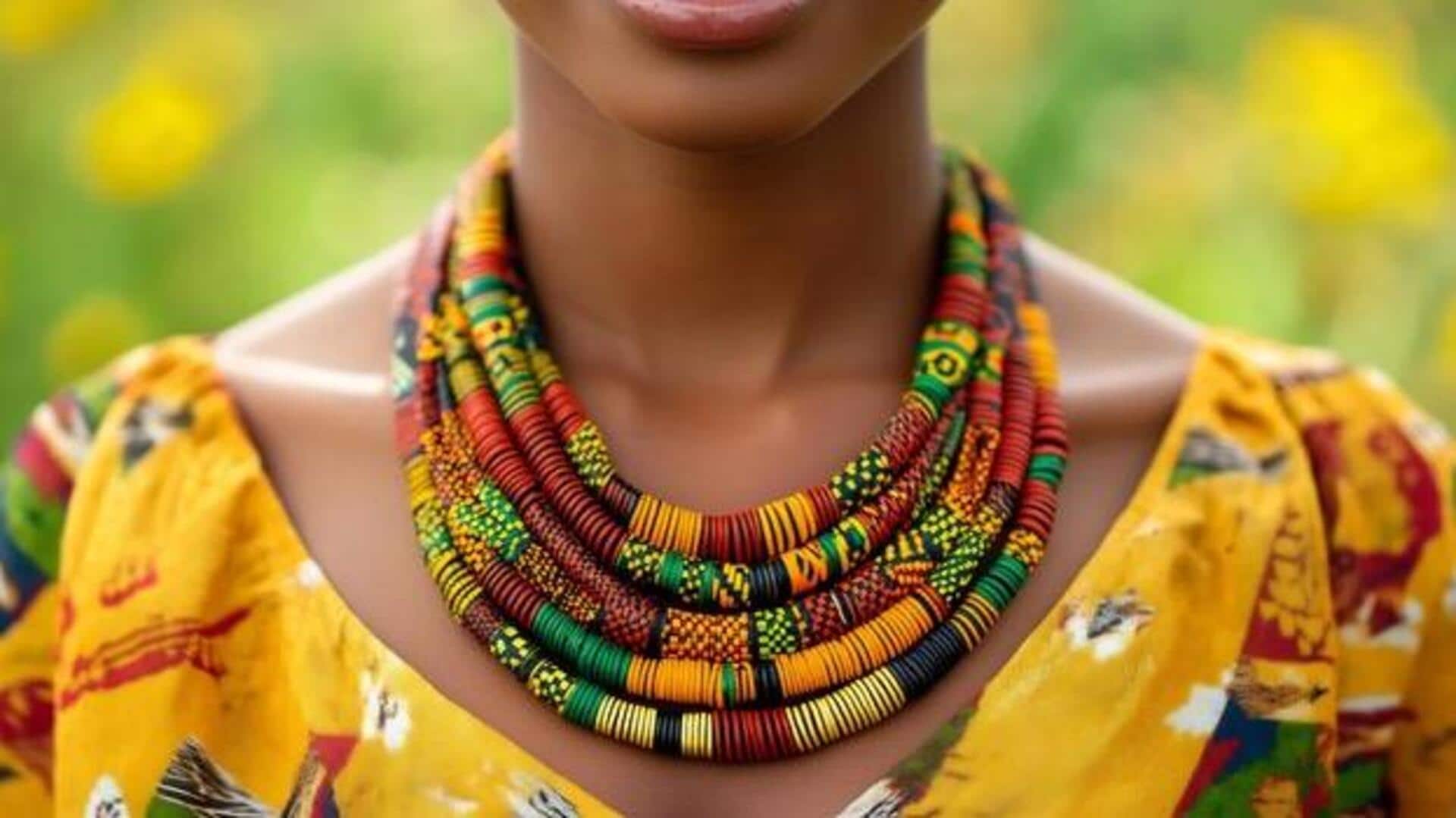
What exactly is kente cloth jewelry?
What's the story
Kente cloth, the vibrant and colorful textile from West Africa, is now being used in innovative ways to create unique jewelry pieces. The traditional fabric is known for its intricate patterns and bright colors, making it a perfect choice for personalized jewelry designs. From earrings to necklaces, kente cloth can be transformed into stunning accessories that reflect cultural heritage and personal style.
Fabric transformation
Transforming fabric into fashion
Kente cloth can be easily transformed into fashionable jewelry by cutting it into small pieces and attaching them to metal or wooden bases.
This way, the bold patterns of the fabric are highlighted, giving each piece a unique look.
The process involves careful selection of colors and patterns that match the desired aesthetic, ensuring that the final product is both stylish and culturally significant.
Eco-friendly approach
Sustainable jewelry design
Using kente cloth in jewelry design also promotes sustainability by repurposing materials that would otherwise go to waste.
By turning leftover fabric scraps into beautiful accessories, designers contribute to reducing environmental impact while supporting local artisans who create these textiles.
This eco-friendly approach appeals to consumers looking for sustainable fashion options.
Personalized designs
Customizable jewelry options
One of the biggest advantages of using kente cloth in jewelry design is the ability to customize pieces according to individual preferences.
Customers can choose specific patterns, colors, and styles that resonate with their personal taste or cultural background.
This level of customization adds sentimental value to each item, making it a cherished keepsake rather than just another accessory.
Artisan collaboration
Supporting local artisans
Collaborating with local artisans is essential when creating kente cloth jewelry.
These skilled craftsmen not only ensure authentic production but also contribute their expertise in handling traditional fabrics.
Working together with these artisans helps preserve cultural heritage while providing economic opportunities within communities where these textiles are made.