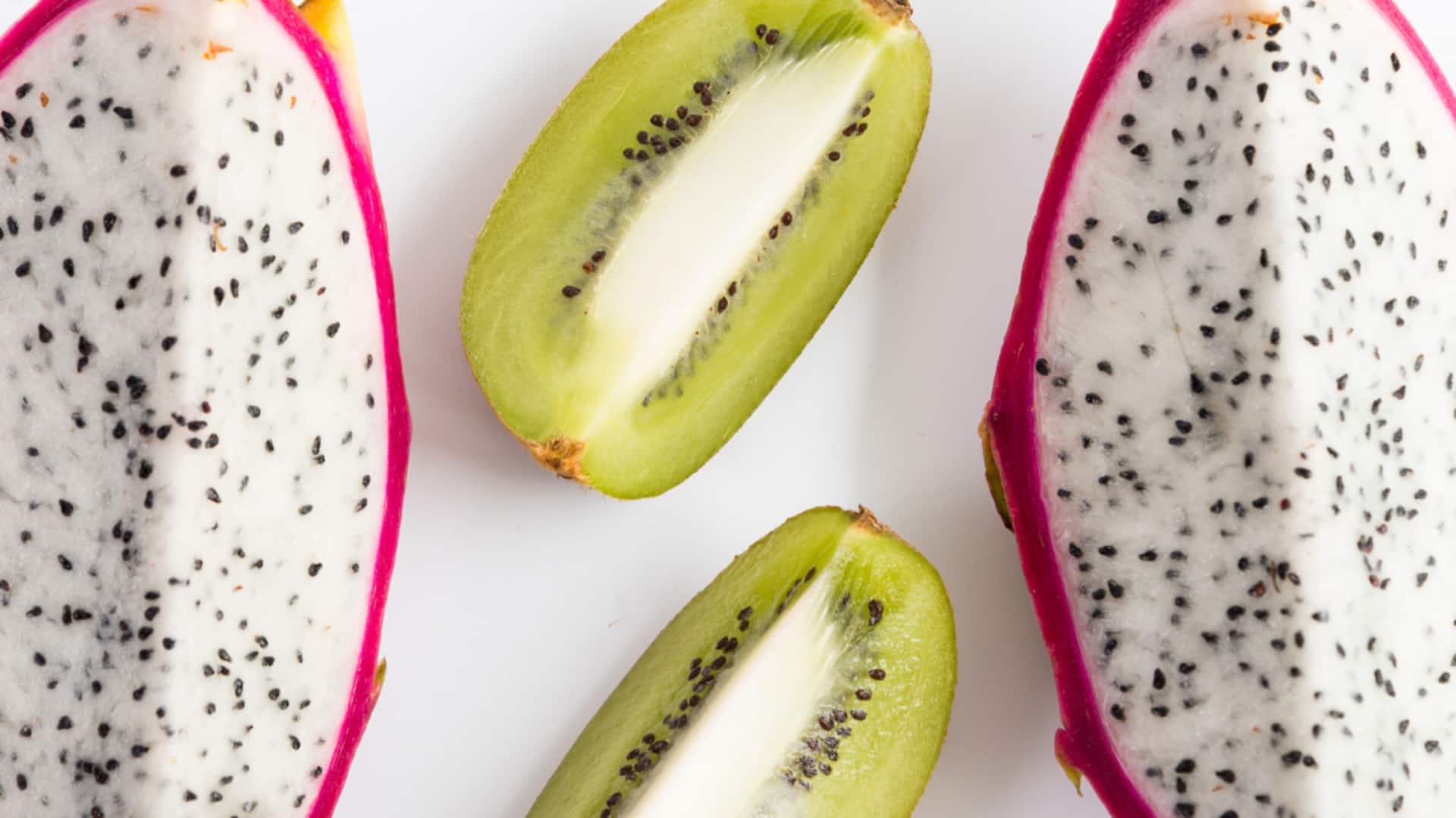
Kiwi v/s dragon fruit: Which has more vitamin C?
What's the story
Kiwi and dragon fruit are two exotic fruits that have become popular for their unique flavors and vibrant colors. Both are packed with nutrients, making them ideal additions to a healthy diet. While kiwi is known for its tangy taste and fuzzy exterior, dragon fruit, or pitaya, is famous for its sweet flavor and striking pink skin. Here is a look at the nutritional profiles of these fruits.
#1
Vitamin C content comparison
Kiwi is famous for its high vitamin C content, offering around 71 mg per fruit. This is more than the daily recommended intake for most adults.
Dragon fruit also has vitamin C but in lesser amounts, offering around nine mg per serving.
Vitamin C is essential for immune function and skin health, making both fruits great choices for boosting your daily intake.
#2
Fiber levels in each fruit
Fiber is important for digestive health, and both kiwi and dragon fruit provide a good amount of it.
A medium kiwi has about two grams of fiber, while one serving of dragon fruit offers around three grams.
Eating fiber-rich foods can help with digestion and keep you full, making these fruits great for anyone looking to up their fiber intake.
#3
Antioxidant properties explored
Antioxidants protect your cells from damage by free radicals.
Kiwi has a good amount of antioxidants, such as vitamin E and polyphenols.
Dragon fruit also has antioxidants, such as betalains, that give it its vibrant color.
Adding antioxidant-rich foods like these can help fight oxidative stress and promote overall health.
#4
Caloric value analysis
When it comes to calorie content, kiwi has more calories than dragon fruit.
A medium kiwi has about 61 calories, while one serving of dragon fruit has roughly 60 calories.
For those keeping an eye on their calorie intake but wanting to enjoy delicious fruits without compromising nutrition, both options offer low-calorie, yet nutrient-dense, choices.