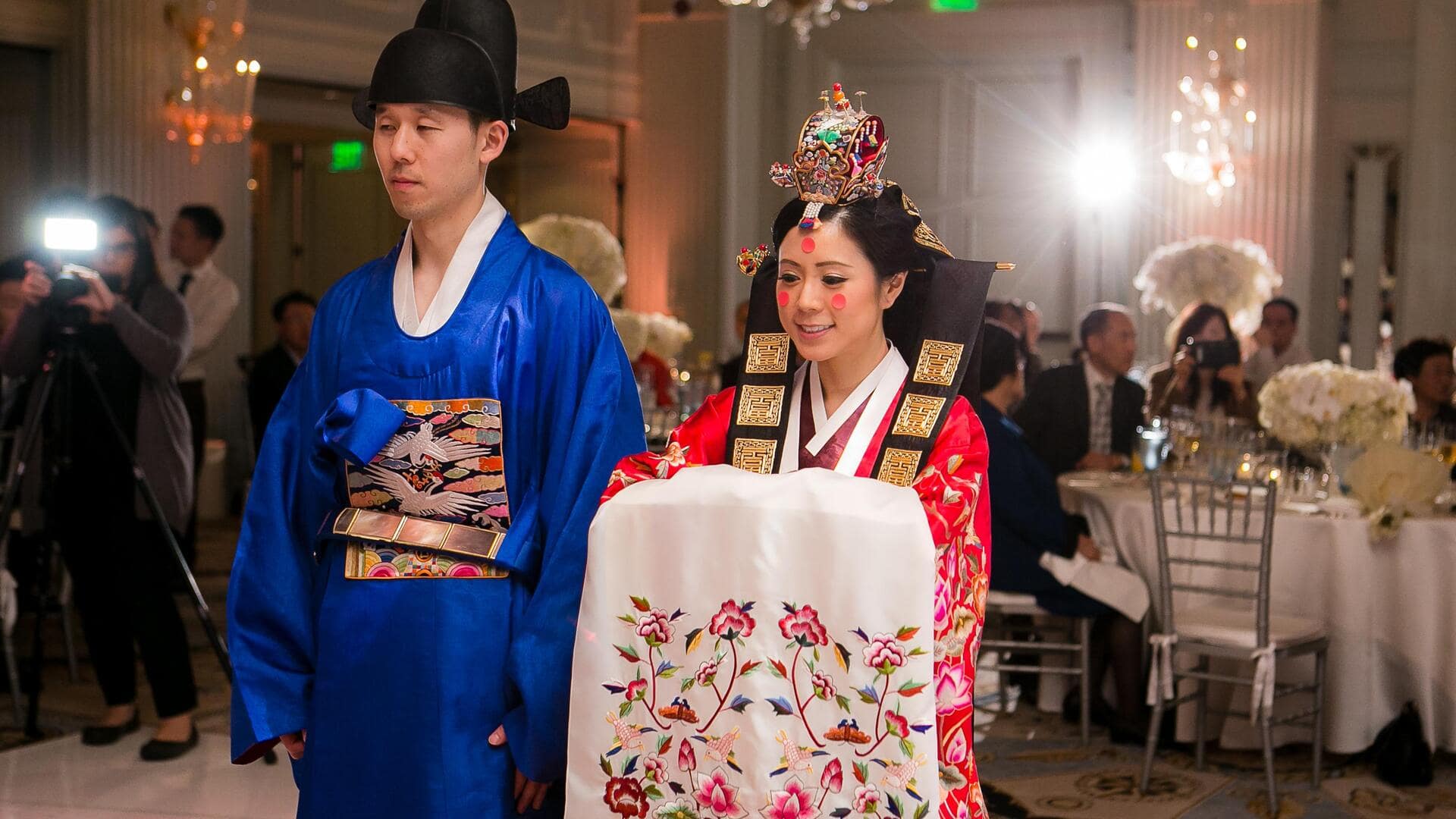
Decoding the significance of different colors of Korean wedding attire
What's the story
Korean weddings are steeped in tradition, with the hanbok playing a key role. The traditional attire is not just a fashion statement but also a symbol of cultural heritage. Each color of the hanbok has its own significance, which is why choosing the right one is important for the ceremony. Understanding these colors can give you an insight into the values and beliefs that shape Korean wedding customs.
#1
Red and Blue: Symbolizing balance
Red and blue are commonly worn together in hanboks, symbolizing balance and harmony.
Red is often associated with good fortune and joy, while blue represents calmness and stability.
This combination is believed to bring a balanced energy to the couple's life together.
The use of these colors reflects the importance of harmony in marriage.
#2
White: Purity and simplicity
White is also a popular color for hanboks at weddings as it symbolizes purity and simplicity.
It is often worn by brides who want to emphasize their innocence and sincerity on their wedding day.
The color also represents new beginnings, making it an ideal choice for couples starting their journey together.
#3
Yellow: Prosperity and wealth
Yellow has long been associated with prosperity and wealth in Korean culture.
Wearing yellow in a hanbok can be seen as a wish for financial success in the couple's future life together.
This color is often chosen by those who want to emphasize abundance and growth in their marriage.
#4
Green: Fertility and growth
Green is also associated with fertility, growth, and renewal, making it an apt choice for newlyweds hoping to start a family.
This color signifies hope for future generations, as well as personal development within the marriage.
Couples who choose green often value these aspects highly.
#5
Black: Protection from evil spirits
Black has traditionally been associated with protection from negative influences in Korean weddings.
Although not as commonly worn as other colors, it can serve as an accent or detail on a hanbok.
Its purpose is to ward off negative influences on the couple's life together.
This belief underscores the importance of spiritual safety in marriage traditions.