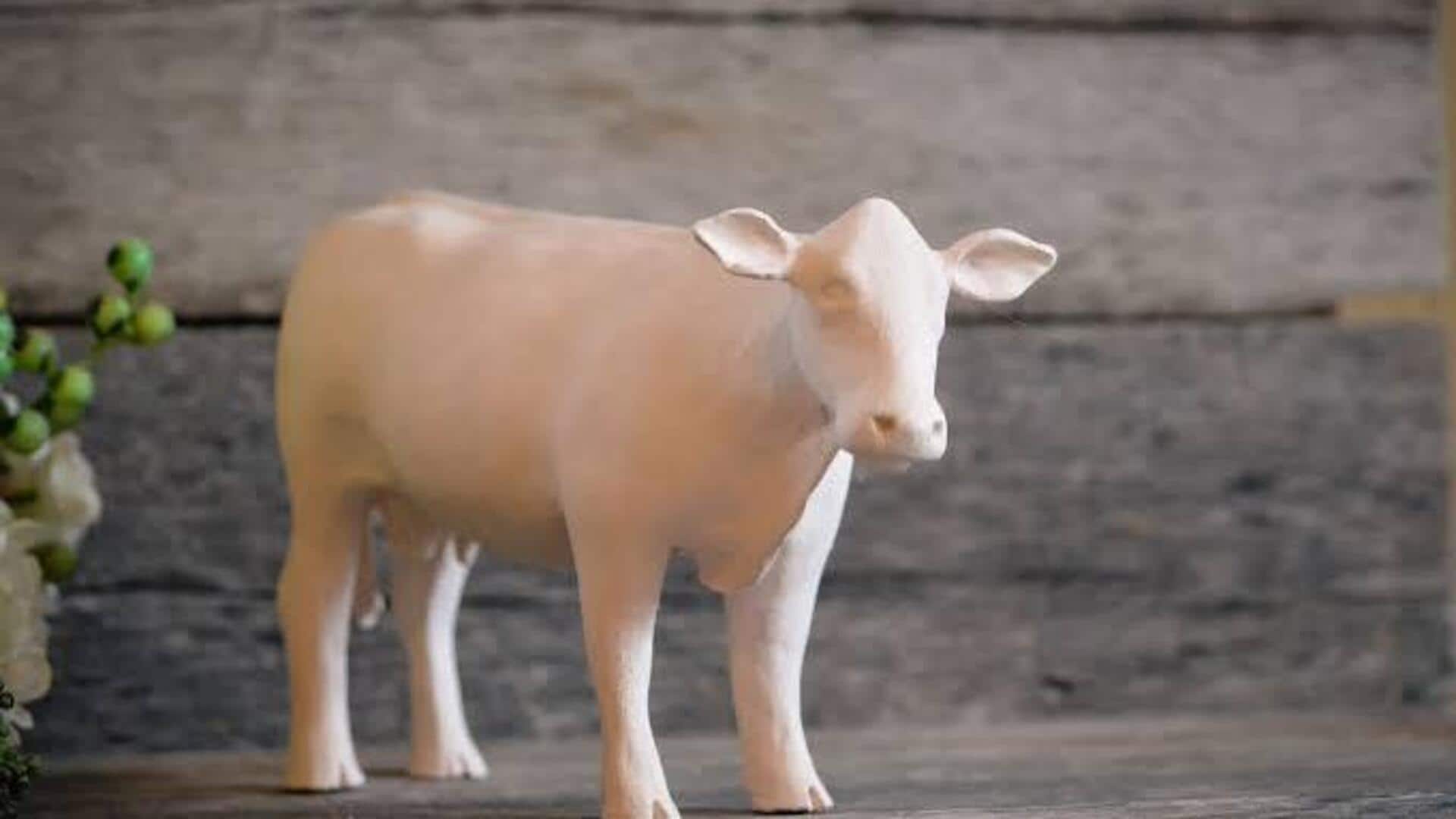
DIY: Make colorful cattle figures from clay
What's the story
Creating clay Ankole cattle figures adorned with colorful beads is a unique way to celebrate African art. This craft not only highlights the beauty of Ankole cattle but also allows you to explore your creativity. Using simple materials, you can create stunning pieces that reflect the rich cultural heritage of Africa. Whether you're an experienced artist or a beginner, this project offers a rewarding experience that connects you with traditional art forms.
Materials
Gather your materials
To start crafting, you will need some clay, tools for shaping, and paints for coloring. Beads in different colors will be required for embellishing the figures.
Make sure the clay is air-dry or oven-bake type, depending on how you want to finish your figure.
Having all materials ready before you start will make the process smooth and enjoyable.
Base shaping
Shape the clay base
Start by molding the clay into the desired shape of an Ankole cattle figure.
Pay attention to details like the horns and body structure that make these animals unique.
Use sculpting tools to refine features and add texture to the surface of the figure.
This step is crucial, as it forms the foundation of your artwork.
Bead embellishment
Add bead embellishments
Once the base shape is ready, you can start adding beads to your figure.
Choose colors that complement each other and fit well with traditional African patterns.
You can either glue or press them into place on the clay surface, depending on how you want the final look to be.
Beads can be used to create intricate designs or simple accents.
Painting techniques
Paint your figure
After adding beads, paint your figure using vibrant colors typical in African art.
Use brushes appropriate for small details, so that every part of your piece gets attention without smudging other areas.
Let each layer dry before applying another coat if needed; this ensures even coverage and enhances visual appeal.
Display tips
Display your artwork proudly
Once completed, find a suitable place at home or work where others can appreciate this unique creation.
Consider framing it or placing it on a shelf, where it becomes a focal point, sparking conversations about its cultural significance and artistic value.