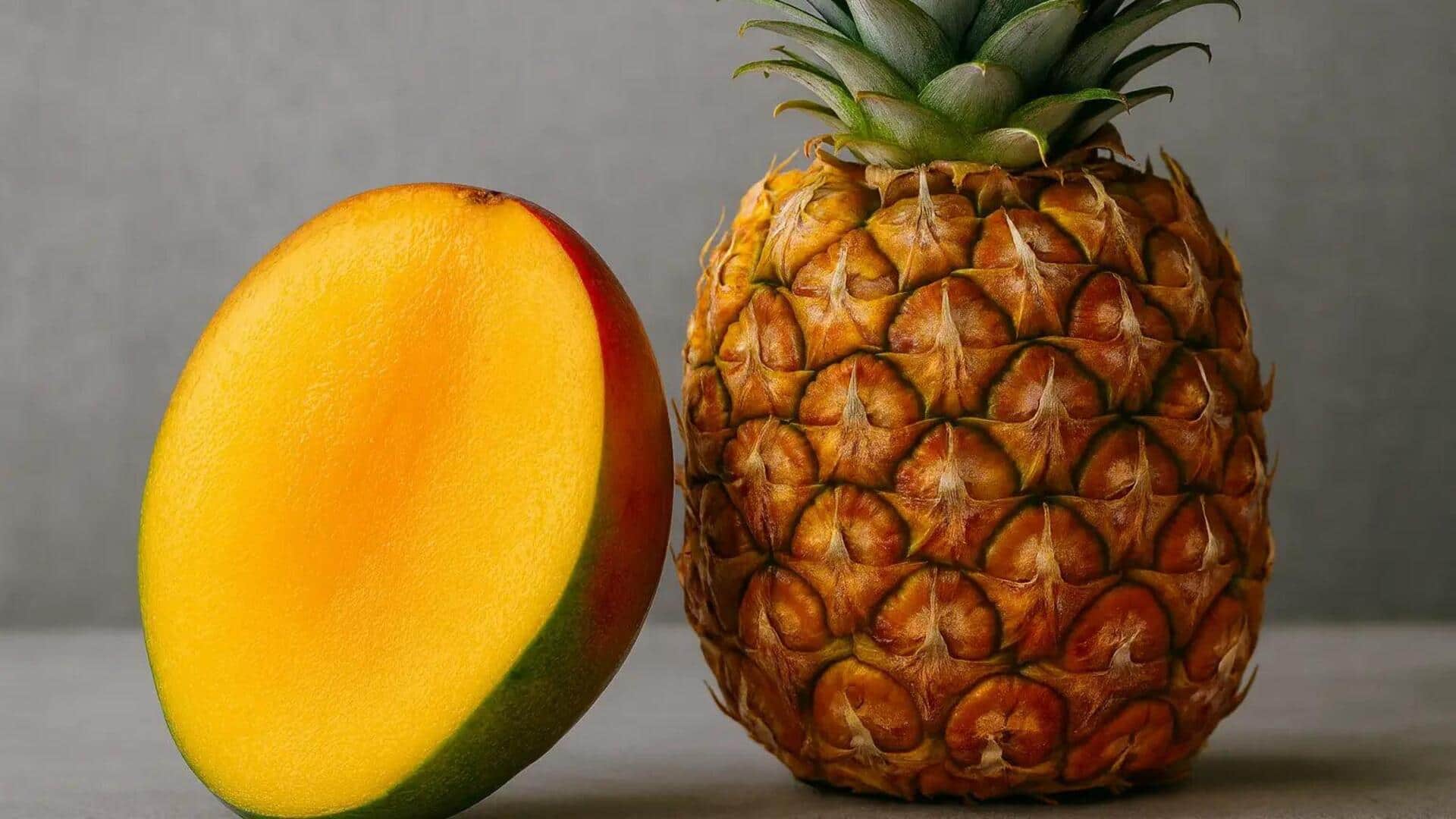
Which has more calories: Mango or pineapple?
What's the story
Mango and pineapple are two of the most popular tropical fruits, both of which are loved for their unique flavors and nutritional benefits. While mango is known for its sweetness and creaminess, pineapple is known for its tangy flavor and juiciness. Both fruits offer a range of vitamins and minerals that can contribute to a healthy diet. Here's a look at the nutritional profiles of these fruits.
#1
Vitamin content in mangoes
Mangoes are a great source of vitamin C, providing around 60% of the daily recommended intake per cup.
They also provide vitamin A, which is essential for good eyesight and immunity.
Mangoes also provide small amounts of other vitamins such as E and K.
Their bright orange color indicates high beta-carotene content, which converts to vitamin A in the body.
#2
Pineapple's enzyme benefits
Pineapples are also rich in vitamin C, offering about 79% of the daily recommended intake per cup.
One unique feature of pineapples is bromelain, an enzyme that may help with digestion by breaking down proteins. This enzyme has anti-inflammatory properties as well.
Pineapples also provide manganese, which is important for bone health and metabolism.
#3
Caloric content comparison
When it comes to caloric content, mangoes have around 99 calories per cup without skin, while pineapples have approximately 82 calories per cup.
If you're watching your calorie intake, pineapple makes for a lower-calorie option than mangoes.
However, both can be easily included in a balanced diet without significantly increasing overall caloric intake.
#4
Fiber content analysis
Fiber is an important part of any healthy diet, and both mangoes and pineapples provide it.
A cup of diced mango has about three grams of fiber, while the same serving size of pineapple has about two grams.
Fiber helps with digestion by adding bulk to stool and keeping blood sugar levels stable after meals.