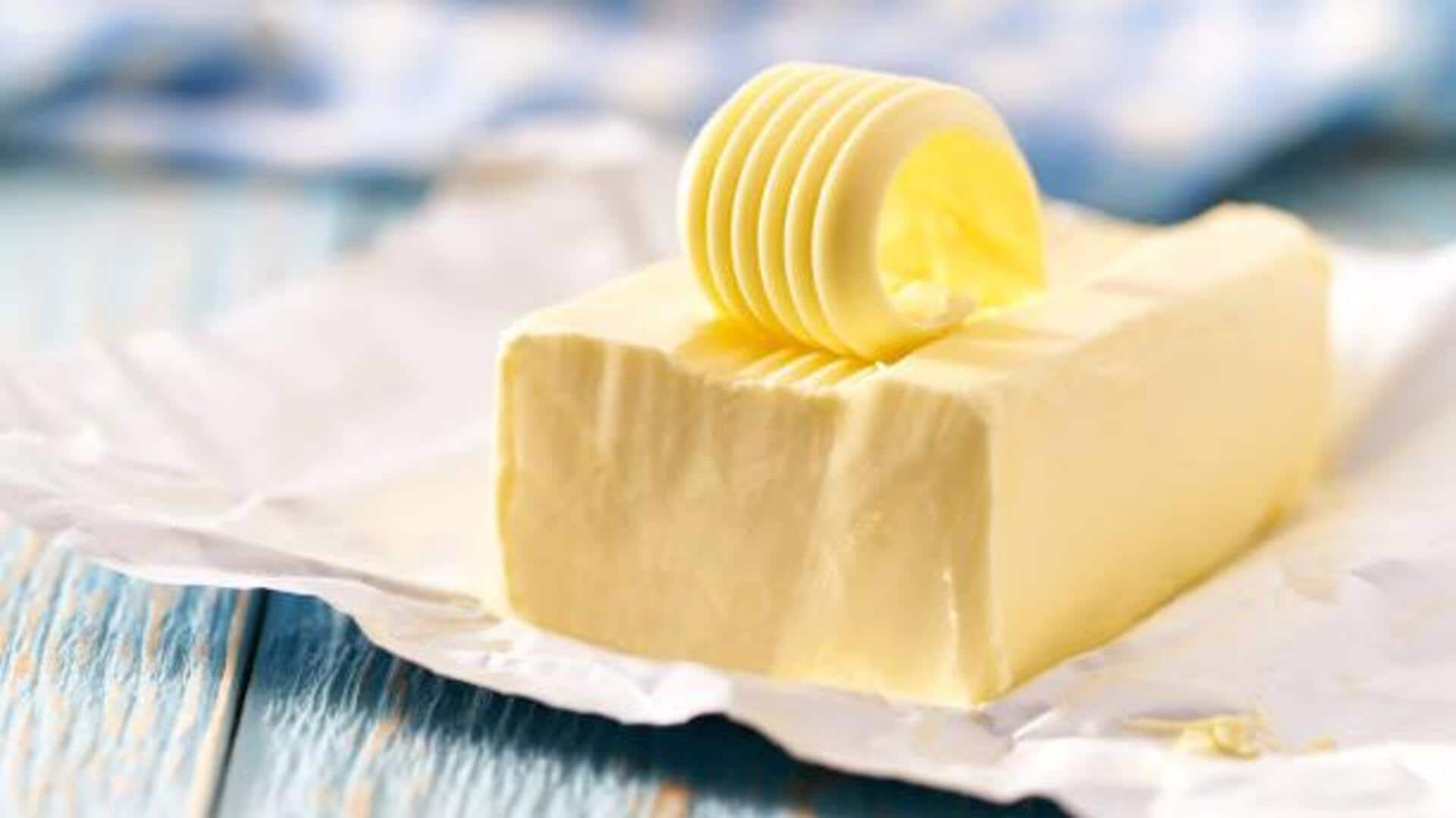
Margarine v/s butter: Which is healthier?
What's the story
The debate between margarine and butter has been going on for years, with both sides claiming health benefits. While butter is a natural dairy product, margarine is a processed alternative made from vegetable oils. This article aims to clear the air by debunking common myths about margarine, butter, and their effects on health. It will help you make informed dietary choices by providing insights into their nutritional profiles and health implications.
#1
Myth: Margarine is always unhealthy
One common misconception is that margarine is unhealthy because it is processed.
However, not all margarines are created equal. Some are made with healthy oils and contain no trans fats, making them a healthier option than butter.
It is important to read labels and choose products that have low saturated fat, and no trans fats, for a healthier option.
#2
Butter v/s margarine: The fat content
Butter has a higher saturated fat content than most margarines.
While butter contains around 63% saturated fat, many margarines have around 30% to 50%.
High saturated fat intake has been linked to higher cholesterol levels, which can increase the risk of heart disease.
Choosing a lower-saturated-fat spread can help manage cholesterol better.
#3
The role of trans fats
Trans fats are another important factor to consider when comparing margarine and butter.
Trans fats increase bad cholesterol (LDL) while lowering good cholesterol (HDL), increasing the risk of heart disease.
While some margarines still have trans fats because of hydrogenation, many brands now offer trans-fat-free options. These are better than traditional butter in terms of heart health.
#4
Nutritional differences: Vitamins and additives
Butter naturally contains vitamins A and D, which are beneficial for health.
Some margarines are fortified with these vitamins artificially to make them more nutritious.
However, some margarines may also contain additives or preservatives, which some people prefer to avoid in their diet.
Knowing what each product contains can help you make better dietary choices.
Tip 5
Cost considerations in choosing spreads
Cost can also be a deciding factor when choosing between margarine and butter.
Generally, margarine is cheaper than butter because of its production process from vegetable oils instead of dairy products.
However, prices differ based on brand reputation and nutritional content, such as organic or non-GMO labels, which may cost more but offer additional benefits for some consumers.