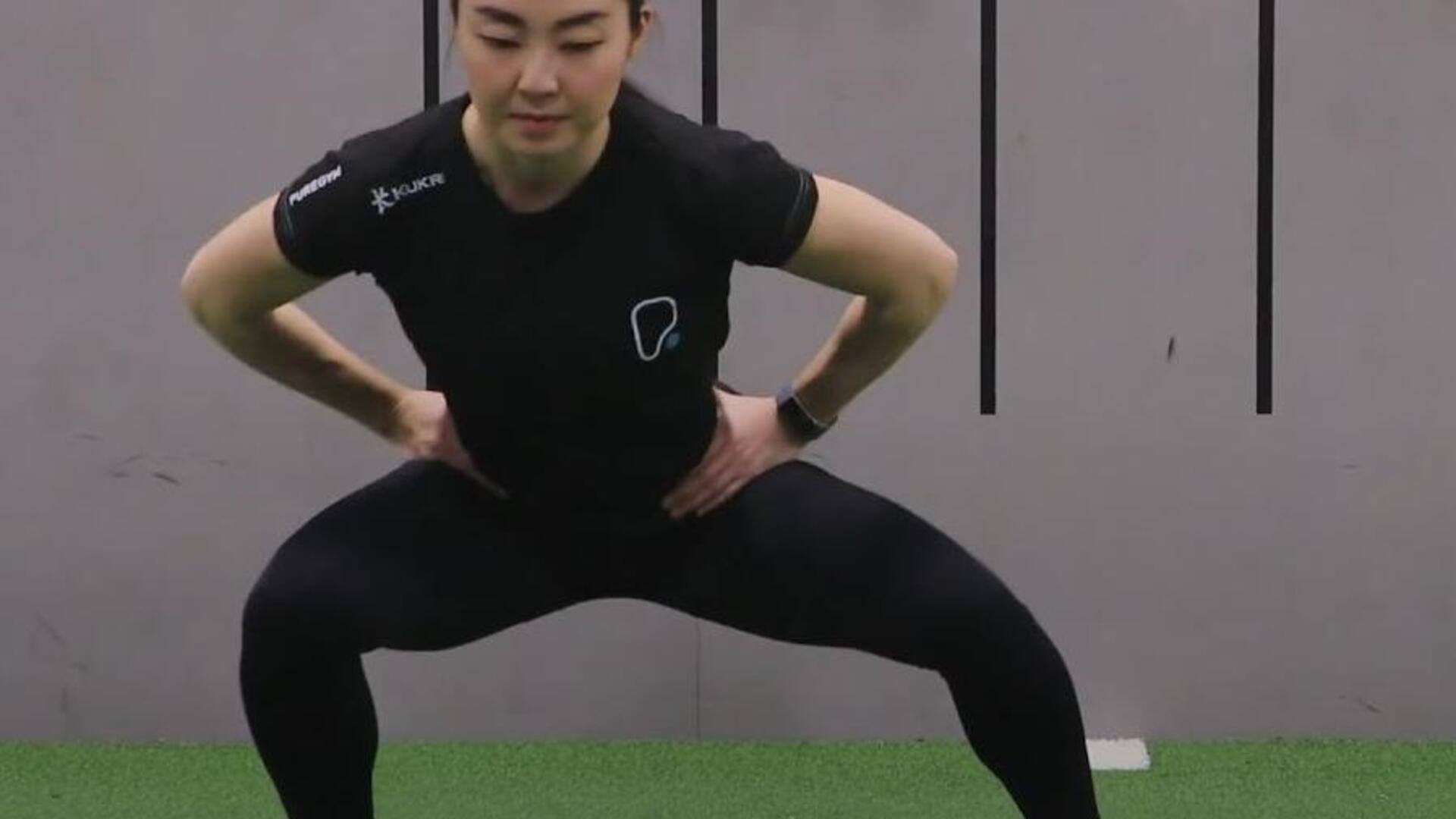
Why wall clock lunges are important for your lower body
What's the story
Wall clock lunges are a great exercise to improve lower body control. The movement mimics the hands of a clock, targeting different muscle groups in the legs and hips. This dynamic exercise improves balance, coordination, and strength. By adding wall clock lunges to your routine, you can improve your lower body stability and agility. Here's how to do it effectively.
Basic movement
Understanding the basic movement
To perform wall clock lunges, stand with feet hip-width apart. Imagine a clock on the floor around you. Step forward with one leg as if you are pointing to one of the hour marks on the clock face. Lower your body into a lunge position while keeping your back straight and core engaged. Return to standing position and repeat with the other leg.
Angles
Targeting different angles
To target different muscle groups, change the angle of your lunge. For example, stepping forward targets quads, while stepping sideways works your inner thighs. Diagonal lunges work your glutes and outer thighs. Changing angles not only keeps your workout interesting but also ensures balanced muscle development.
Form
Maintaining proper form
Proper form is key to avoid injuries while doing wall clock lunges. Keep your knees aligned with your toes when you lunge; don't let them extend past your toes. Keep your chest up and shoulders back throughout the movement to maintain good posture.
Variations
Incorporating variations
To make wall clock lunges more challenging, you can add variations like holding weights or doing a twist at the bottom of each lunge. These variations increase intensity and engage more muscles, making your workout more effective. They also prevent boredom by adding new elements to the exercise, keeping your routine fresh and exciting. This way, you can focus on improving your lower body control and strength over time.