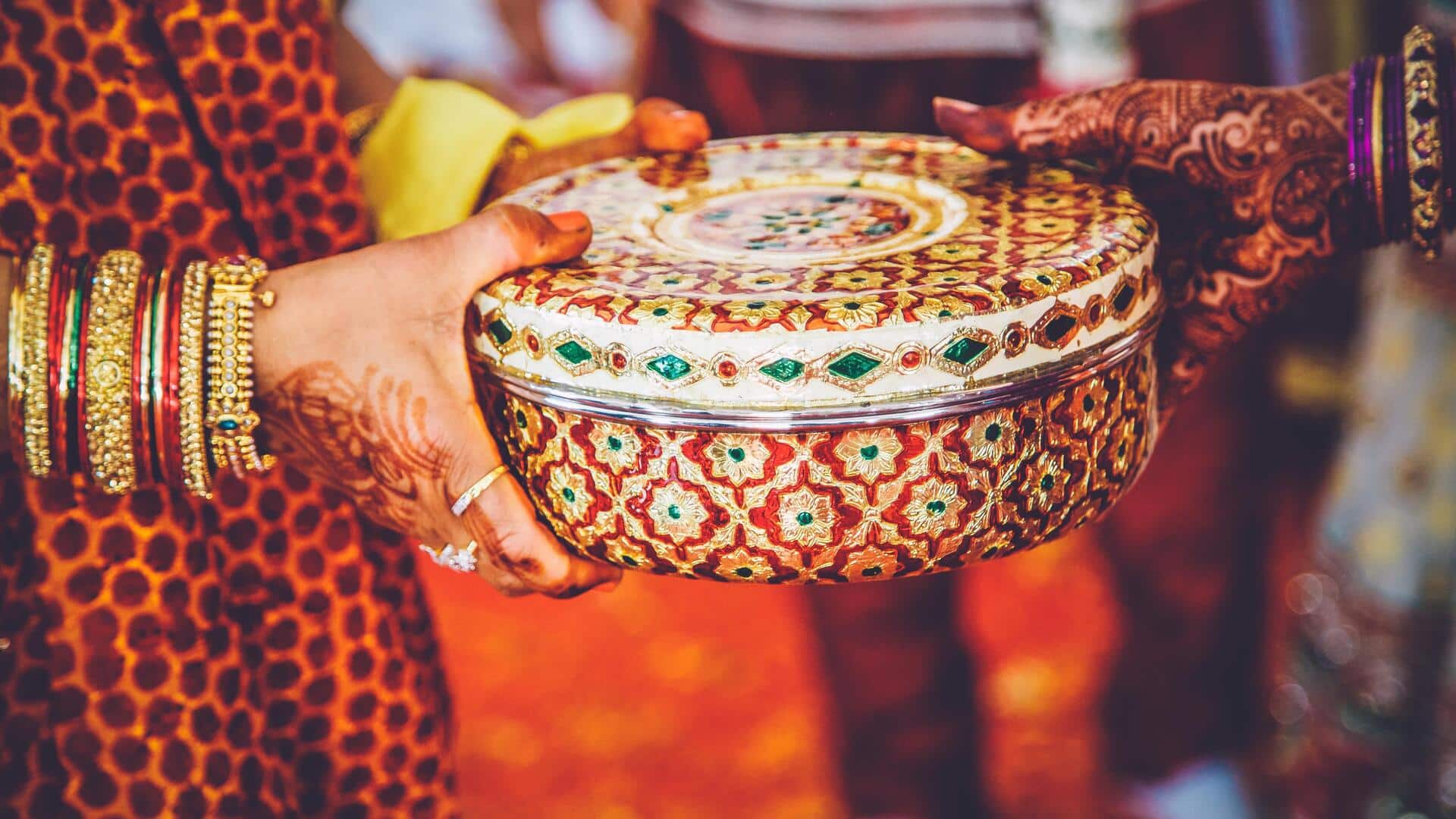
Meenakari: The beautiful art of enamel jewelry
What's the story
Meenakari is a traditional Indian art form that involves the process of enameling on metal. This intricate craft, which originated in Persia, has found a unique place in Indian culture, especially in Rajasthan. The artisans use vibrant colors to create detailed designs on gold, silver, and copper. Meenakari is not just about aesthetics; it reflects the rich heritage and skilled craftsmanship passed down through generations.
#1
The history of Meenakari
Meenakari has a rich history that dates back to the 16th century. It was brought to India by Persian artisans who settled in Rajasthan.
The art form flourished under royal patronage and became an integral part of Indian jewelry and decorative items.
Over time, meenakari evolved with local influences, resulting in a unique style that is still cherished today.
#2
Techniques involved in Meenakari
The process of meenakari involves several meticulous steps.
First, designs are etched onto metal surfaces using tools like chisels or engravers.
Next, colored enamel powder mixed with a binding agent is applied to these etched spaces.
The piece is then heated in a kiln to fuse the enamel with the metal surface permanently.
#3
Popular motifs used in Meenakari
Meenakari designs are often inspired by nature and mythology.
Common motifs include flowers, leaves, peacocks, and geometric patterns.
These motifs are carefully crafted to create harmonious compositions that appeal to the eye.
Each design tells its own story or conveys cultural significance.
#4
Modern applications of meenakari
While traditional meenakari work is still popular for jewelry like earrings and necklaces, modern artisans are exploring new applications for this art form.
From home decor items like vases or wall hangings to contemporary fashion accessories like brooches or hairpins, Meenakari shows great versatility. It continues to inspire creativity across many fields.