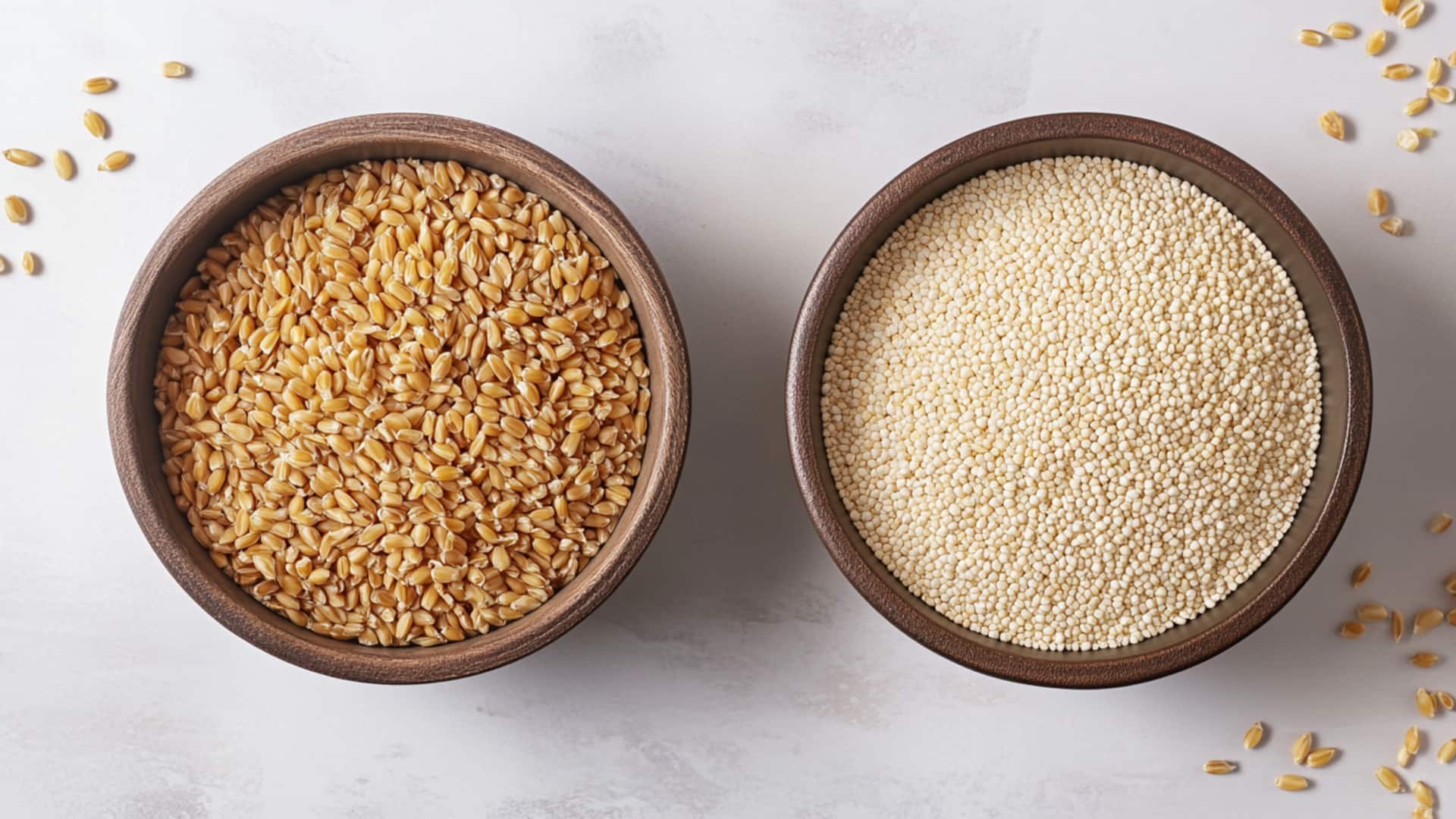
Millet v/s farro: Which has more protein?
What's the story
Millet and farro are two ancient grains that have gained popularity for their nutritional benefits. Both grains are packed with essential nutrients, making them a great addition to a healthy diet. While millet is a gluten-free grain, farro is a wheat grain with a nutty flavor. Let's take a look at the nutritional profiles of these grains and how they can benefit your health.
#1
Protein content in grains
Farro has a higher protein content than millet, making it an excellent option for anyone looking to up their protein intake.
Farro has about three grams of protein per 100 grams, while millet has about 11 grams per 100 grams.
The higher protein content in farro can help with muscle repair and growth.
#2
Fiber benefits of millet and farro
Both millet and farro are great sources of dietary fiber, which is important for digestion and gut health.
Millet offers around three grams of fiber per 100 grams, while farro offers about four grams per 100 grams.
Eating fiber-rich foods can help you maintain a healthy weight by keeping you fuller for longer.
#3
Vitamin content comparison
Millet is rich in B vitamins like niacin and riboflavin, which are important for energy production and keeping skin healthy.
Farro also offers B vitamins, such as thiamine and niacin, but in smaller amounts than millet.
Including these grains in your diet can help you meet your daily vitamin requirements.
#4
Mineral richness of each grain
Both millet and farro are packed with essential minerals, such as magnesium, phosphorus, and iron.
However, farro has a slight edge with its higher iron content, which is essential for transporting oxygen in the body.
Millet, on the other hand, provides a good amount of magnesium, which helps in muscle function and bone health.