
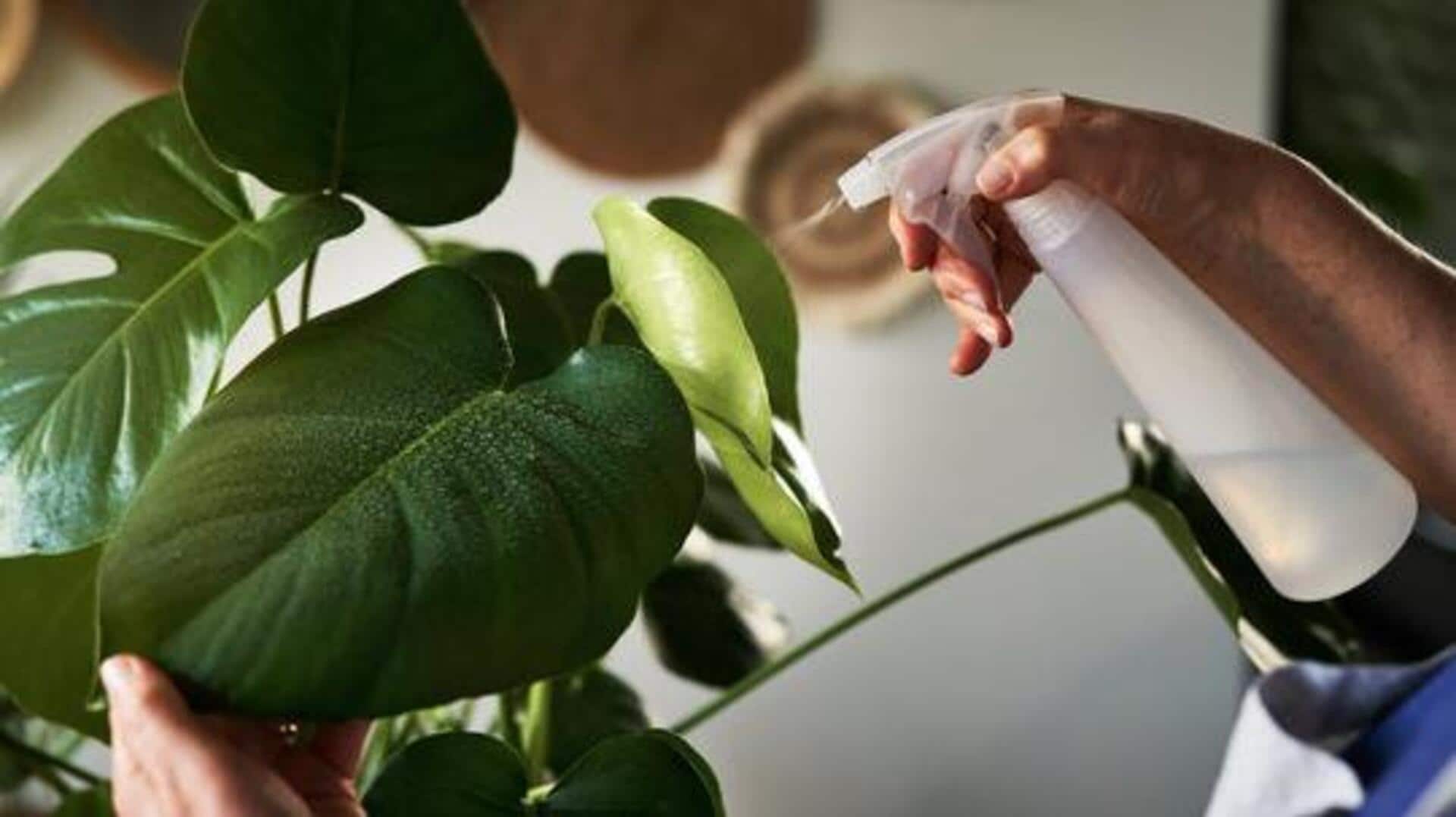
How to mist air plants for better growth
What's the story
Air plants, or Tillandsia, are the low-maintenance wonders of the plant world. Unlike most plants, they don't need soil to thrive, making them the perfect pick for indoor gardening. One of the most important aspects of their care is misting. Misting not only keeps them hydrated but also helps them absorb nutrients from the air. Here's how to mist air plants like a pro.
Timing
Best time for misting air plants
Misting air plants should ideally be done in the morning. This gives them enough time to dry out during the day, preventing rot from excess moisture. Morning misting also mimics natural dew conditions that many air plants thrive in. If you can't mist in the morning, make sure they have ample air circulation and light exposure throughout the day to dry properly.
Frequency
Frequency of misting
The frequency of misting your air plants depends on your environment. In a humid climate, misting once a week may be enough. However, in drier conditions, you may need to mist them two to three times a week. Monitor your plants closely; if their leaves start curling or turning brown at the tips, it may be a sign they need more frequent watering.
Technique
Proper technique for misting
When misting your air plants, use a fine spray bottle to create a light mist over each plant. Make sure every leaf gets wet without soaking them too much. Hold the spray bottle about six inches away from the plant for even coverage. Avoid direct sunlight while misting, as it can cause water droplets to act like magnifying glasses and burn the leaves.
Care tips
Additional care tips post-misting
After misting, ensure that your air plants have good airflow around them by placing them where there's plenty of ventilation or using a fan if necessary. Avoid placing them near heating vents or air conditioners that could dry them out too quickly after watering sessions. Occasionally submerge larger specimens in water for about 30 minutes every two weeks as an alternative hydration method if needed.