Invited to a dinner? 5 must-follow table manners
What's the story
Dining etiquette has evolved over the years, but some timeless rules still apply to modern dining experiences. Knowing these can make your meals more enjoyable and respectful, whether you're at a casual get-together or a formal dinner. Here are five essential dining manners that can help you navigate various eating situations with grace and confidence.
Tip 1
Use utensils properly
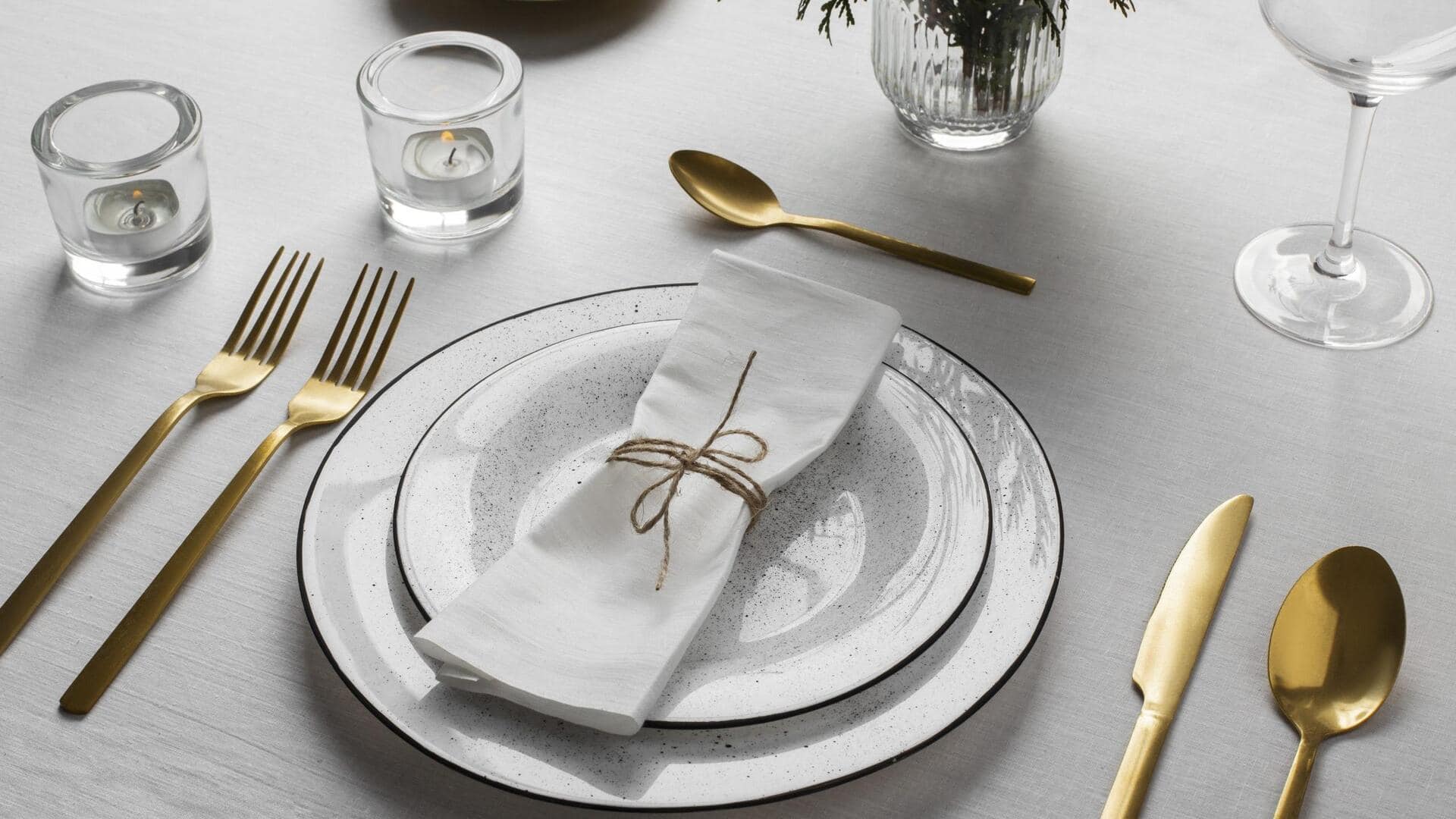
Using utensils properly is a mark of good dining etiquette.
Always hold your fork in your left hand and knife in the right while cutting food.
Once you are done, place them parallel on your plate, with the handles facing to the right. This signals to the staff that you are done eating.
It also helps maintain cleanliness and order at the table.
Tip 2
Napkin placement matters
The napkin is an important part of dining etiquette.
As soon as you sit down, place your napkin on your lap.
It should only be used to dab your mouth and hands, not as a tissue or to wipe off spills on the table.
After the meal, place it neatly beside your plate to signal that you are finished.
Tip 3
Chew quietly and avoid talking with food
Chewing quietly is essential to keep the table conversation pleasant and not disturb others around you.
Also, avoid talking with food in your mouth, as it can be unpleasant for others at the table.
Wait until you have swallowed before speaking to keep the conversation polite and enjoyable for everyone.
Tip 4
Respect personal space at the table
Respecting personal space at the table is key to an enjoyable dining experience.
Sit comfortably without encroaching on others' spaces or reaching across them for items on the table.
If something is out of reach, politely ask someone nearby instead of stretching across their space, which could disrupt their meal experience.
Tip 5
Wait for everyone before starting
Waiting for everyone to be served before starting to eat is a mark of respect toward fellow diners.
It shows consideration and patience, ensuring everyone feels included in the meal experience from start to finish.
This practice fosters a sense of unity at the table, making meals more enjoyable for all present.