The rich traditions behind Moroccan weddings
What's the story
Moroccan weddings are a colorful affair, filled with age-old traditions that reflect the country's rich cultural heritage. These ceremonies are not just about uniting two people, but also about bringing together families and communities. Each ritual has its own significance, showcasing the diversity of Moroccan culture. From pre-wedding rituals to post-ceremony celebrations, every part of a Moroccan wedding is steeped in meaning and history.
#1
The henna ceremony
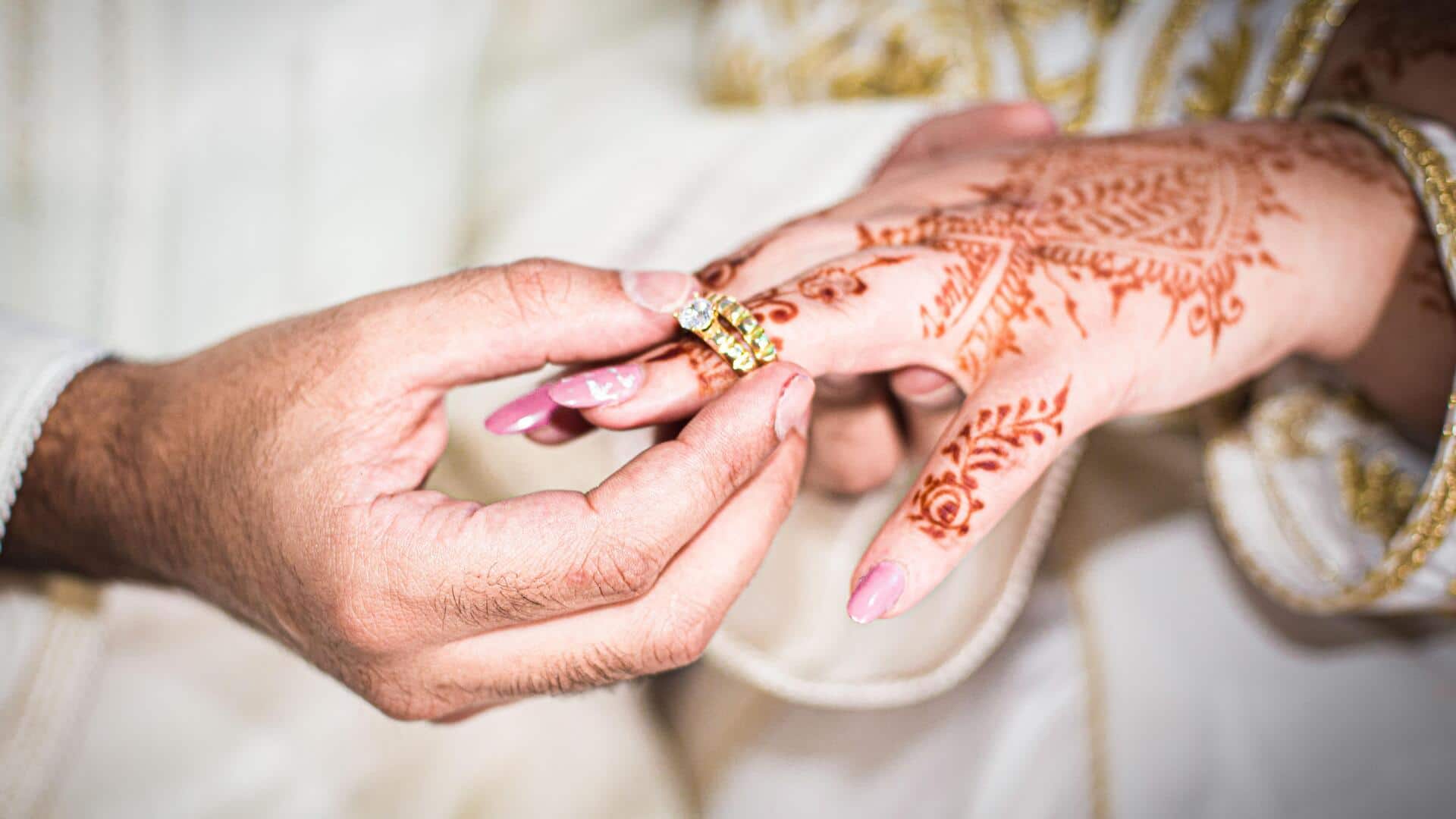
The henna ceremony is an important pre-wedding ritual in Moroccan culture.
Usually held a day or two before the wedding, this ceremony involves applying henna designs on the bride's hands and feet.
The intricate patterns are said to bring good luck and protect her from evil spirits.
Family members and friends often join in this celebration, making it a fun-filled event, full of music and dance.
#2
The attire of the bride
In Moroccan weddings, the bride's attire is nothing short of stunning. She usually wears a series of traditional garments, each symbolizing a different aspect of her new life.
The kaftan, richly embroidered and adorned with jewels, is one of the most popular choices.
This attire is complemented by elaborate accessories, like a tiara or a crown, which add to the elegance of her look on this special day.
#3
The groom's attire
Just like the bride, the groom also dresses up in traditional Moroccan attire for the wedding day.
He usually wears a djellaba or a suit with local touches, like a fez cap or babouche slippers.
His attire is designed to complement that of his bride while also reflecting his own style and personality.
#4
Traditional music and dance
Music and dance are integral to Moroccan weddings, with traditional instruments like the guembri and the bendir setting the mood for the celebrations.
Guests join in with lively dances, such as the ahidous or chaabi, making the atmosphere even more festive.
These performances are not just entertainment, but also a way to honor cultural heritage and bring everyone closer together.
#5
Post-wedding celebrations
Post-wedding celebrations in Morocco can last several days, depending on the region.
These events may include communal feasts, where guests enjoy traditional dishes like tagine or couscous, and participate in more music and dance.
These gatherings strengthen community bonds and provide a joyous conclusion to the wedding festivities.