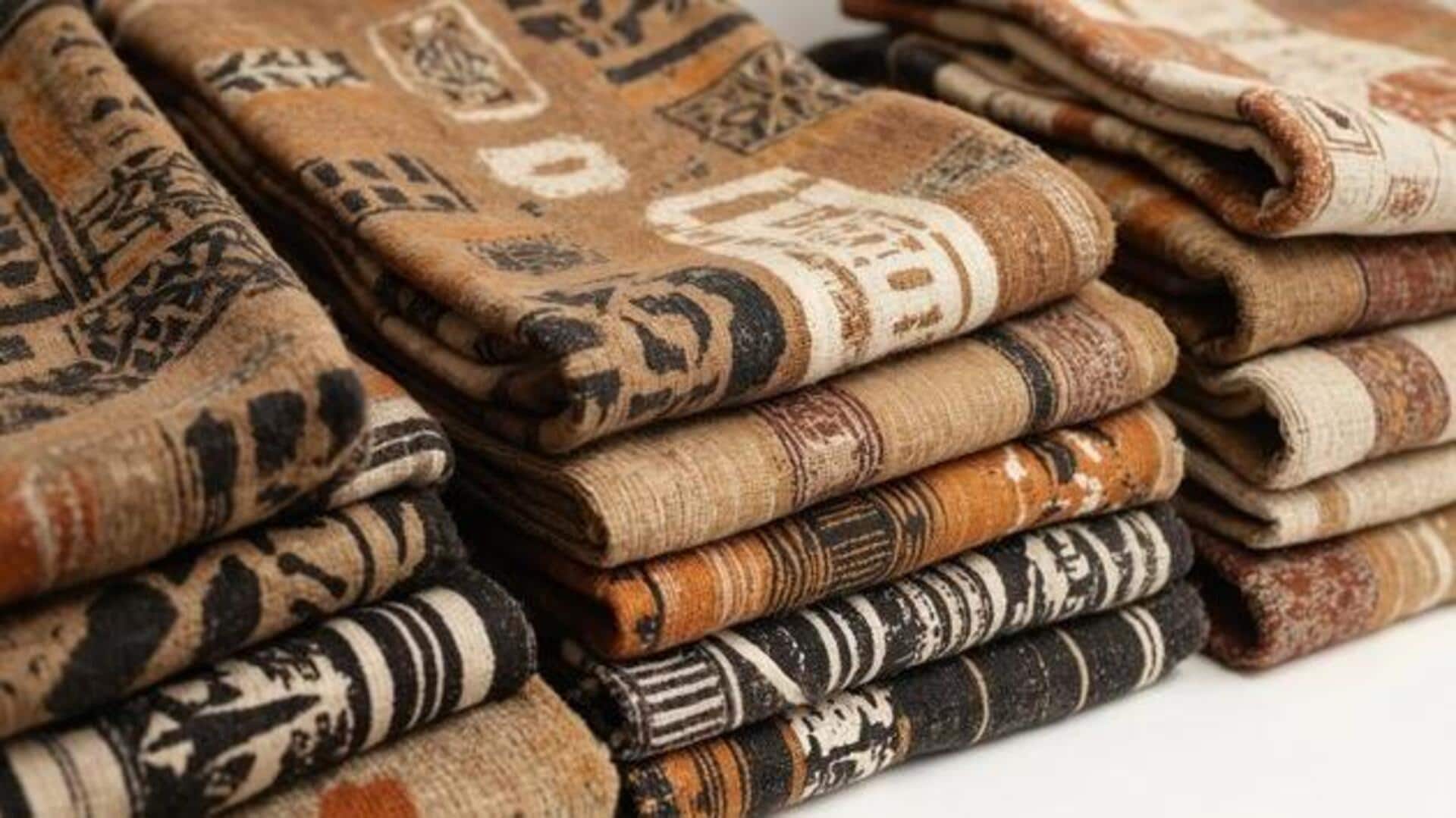
Mud cloth: Exploring the evolution of this timeless art form
What's the story
Malian mud cloth, popularly known as bogolanfini, is a traditional textile that has been a part of West African culture for centuries. The fabric, made from fermented mud and dyed with plant-based colors, tells stories through its intricate patterns. While the ancient designs were steeped in cultural significance, contemporary artists are now reinterpreting these patterns to reflect modern aesthetics. This fusion of old and new offers a unique insight into the evolution of this art form.
#1
Historical significance of mud cloth
Malian mud cloth has been used for centuries as a means of communication and storytelling.
Each pattern on the cloth has a meaning, often related to historical events or social status.
Traditionally, women would wear these textiles as a form of identity and expression.
The process involves applying fermented mud onto cotton fabric, which is then dyed with natural pigments.
This technique creates unique designs that are both beautiful and meaningful.
#2
Modern interpretations in fashion
In recent years, designers have started incorporating mud cloth patterns into contemporary fashion lines.
These designs are now seen on clothing items such as dresses, jackets, and accessories.
By blending traditional motifs with modern silhouettes, designers are making this ancient art form accessible to a wider audience.
The use of mud cloth in fashion not only preserves its legacy but also introduces it to new generations.
#3
Impact on home decor trends
The influence of Malian mud cloth has also spilled over into home decor trends across the globe.
Interior designers use these patterns in textiles like pillows, rugs, and wall hangings to add an exotic touch to spaces.
The earthy tones and geometric shapes lend themselves well to various design styles, from bohemian to minimalist.
This adaptation highlights the versatility of mud cloth beyond its cultural roots.
#4
Challenges faced by artisans today
Despite its growing popularity, artisans who create traditional Malian mud cloth face challenges in preserving their craft.
Limited access to resources and competition from mass-produced alternatives threaten the sustainability of this art form.
Many artisans are working towards finding ways to balance tradition with innovation, while ensuring fair compensation for their work.