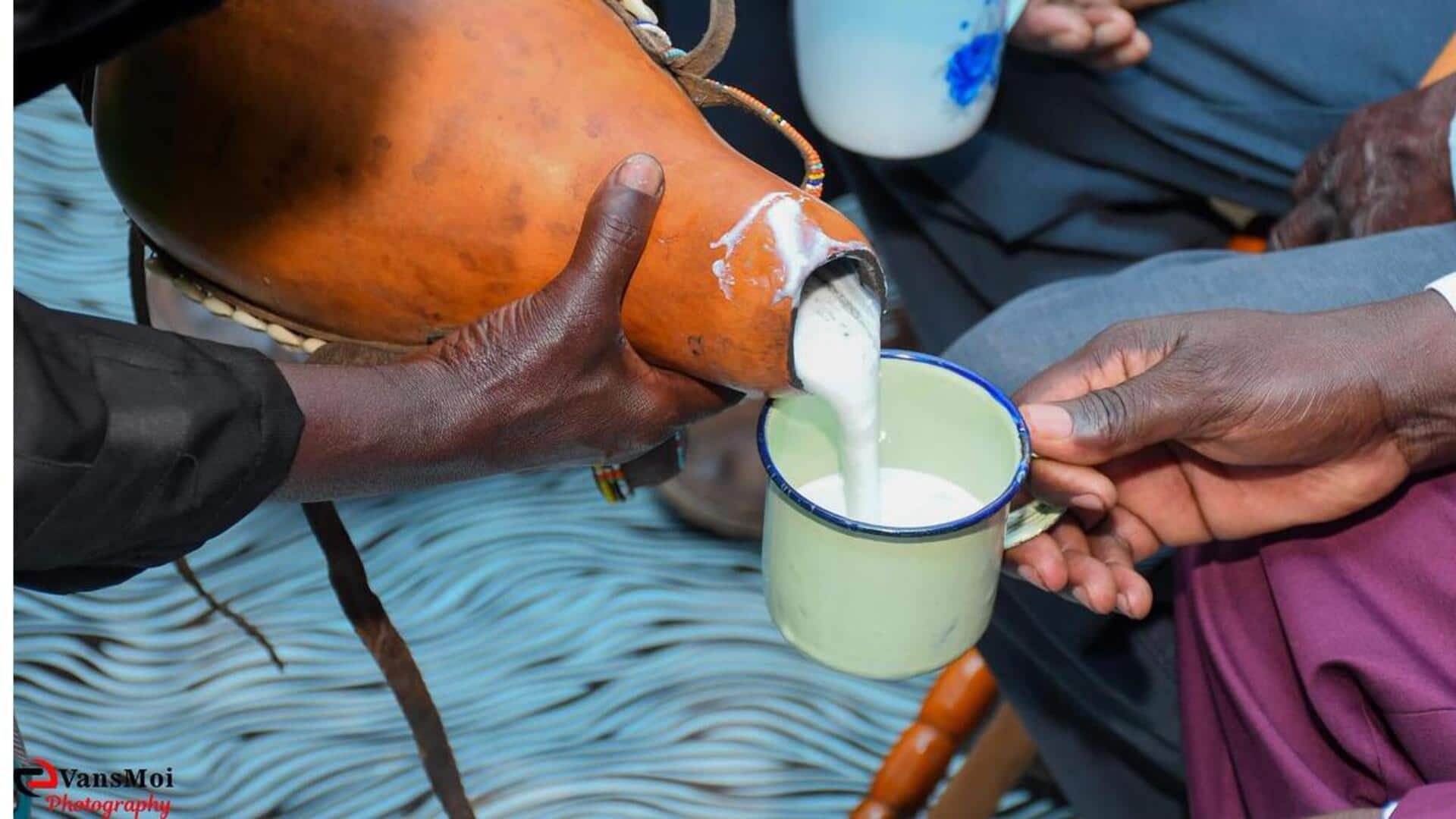
Mursik: A traditional fermented drink from Kenya
What's the story
A traditional Kenyan fermented drink, mursik is prepared from cow's milk and is a staple in the Rift Valley region. The drink is not just a source of sustenance but also a cultural symbol, prepared using age-old techniques. The drink is known for its unique taste and nutritional benefits, making it an integral part of the daily lives of many communities. Here's all about this fascinating beverage.
#1
The fermentation process
Mursik is prepared by fermenting fresh cow's milk in calabash gourds.
The process usually takes two to three days, during which natural bacteria convert lactose into lactic acid. This gives the drink its distinct tangy flavor.
The gourds are often lined with ash or herbs to add flavor and preserve the milk.
The fermentation process is crucial to achieving the desired taste and texture.
#2
Nutritional benefits of mursik
Rich in probiotics, mursik is great for gut health. These beneficial bacteria aid digestion, and boost immunity.
Mursik is also a good source of calcium and protein, which are essential for bone health and muscle repair.
Its low lactose content makes it easier to digest for lactose-intolerant individuals.
#3
Cultural significance in Kenya
In many Kenyan communities, mursik is more than just a drink; it's a part of social gatherings and rituals.
It is commonly served during ceremonies or as a welcome gesture to guests.
The preparation of mursik can be a communal activity that strengthens bonds among family members or neighbors.
Tip 1
Modern adaptations and availability
While traditionally prepared at home, mursik has also found its way into urban markets, where it is sold in bottles or cartons for convenience.
Some modern variations may include added flavors like ginger or lemon for those who prefer a different taste profile.
However, these adaptations still retain the core elements that make this beverage unique to Kenyan culture.