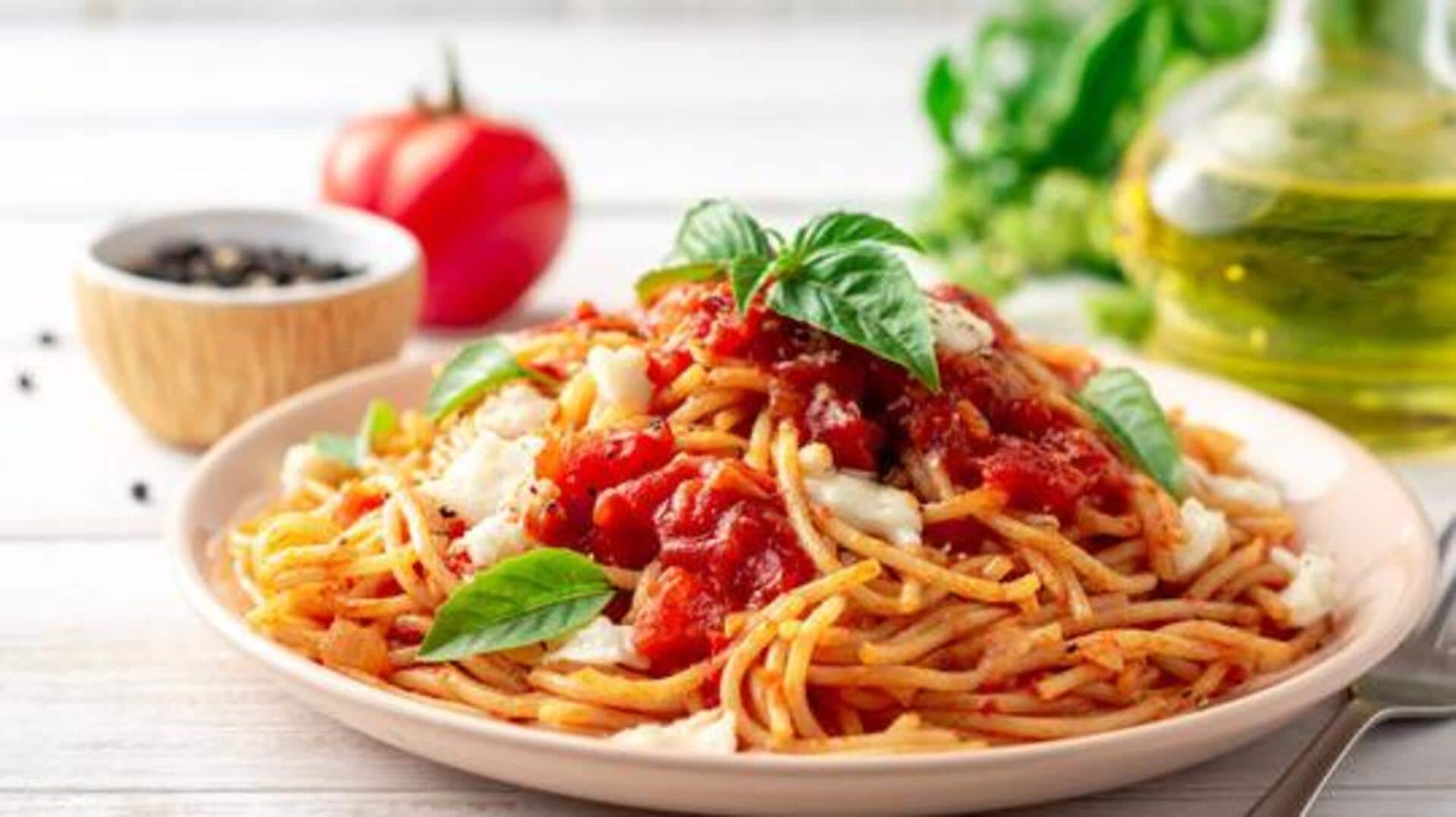
Want to master pasta? Stop making these mistakes
What's the story
Pasta is a staple in many kitchens, but cooking it perfectly is often surrounded by myths. These misconceptions can lead to less-than-ideal results, making your pasta dishes less enjoyable. By debunking these myths, you can elevate your pasta cooking skills and ensure delicious outcomes every time. Here are some common pasta cooking myths and the facts that will help you get it right.
Tip 1
Myth: Adding oil prevents sticking
Many believe adding oil to pasta water prevents the noodles from sticking together. However, this is not true.
The oil floats on the water's surface and does not coat the pasta evenly.
Instead, use plenty of water and stir the pasta occasionally during the first few minutes of cooking to keep it from sticking.
Tip 2
Myth: Salted water makes pasta taste salty
Another common myth is that salting water makes pasta taste salty.
In reality, salting water enhances the flavor of the pasta by seasoning it from within.
Use about one tablespoon of salt per liter of water for optimal flavor without making it salty.
Tip 3
Myth: Rinsing pasta stops cooking
Some people rinse their pasta under cold water after cooking, thinking it stops the cooking process.
While rinsing does cool down the noodles quickly, it also washes away starch that helps sauces cling to them.
Instead, drain your pasta well and toss it with sauce immediately for best results.
Tip 4
Myth: All pastas cook in same time
Assuming all types of pasta have the same cooking time can lead to overcooking or undercooking.
Different shapes and sizes require different times; smaller shapes like macaroni cook faster than larger ones like penne or fusilli.
Always check package instructions for accurate timing, and test for al dente texture before serving.
Tip 5
Myth: Adding pasta directly into sauce cooks evenly
Adding cooked pasta directly into sauce without any prior mixing can lead to uneven distribution of sauce flavors.
This is because the noodles don't absorb enough seasoning this way.
Instead, combine them over low heat, allowing them to meld together gradually.
This way, every bite is consistently flavored throughout.