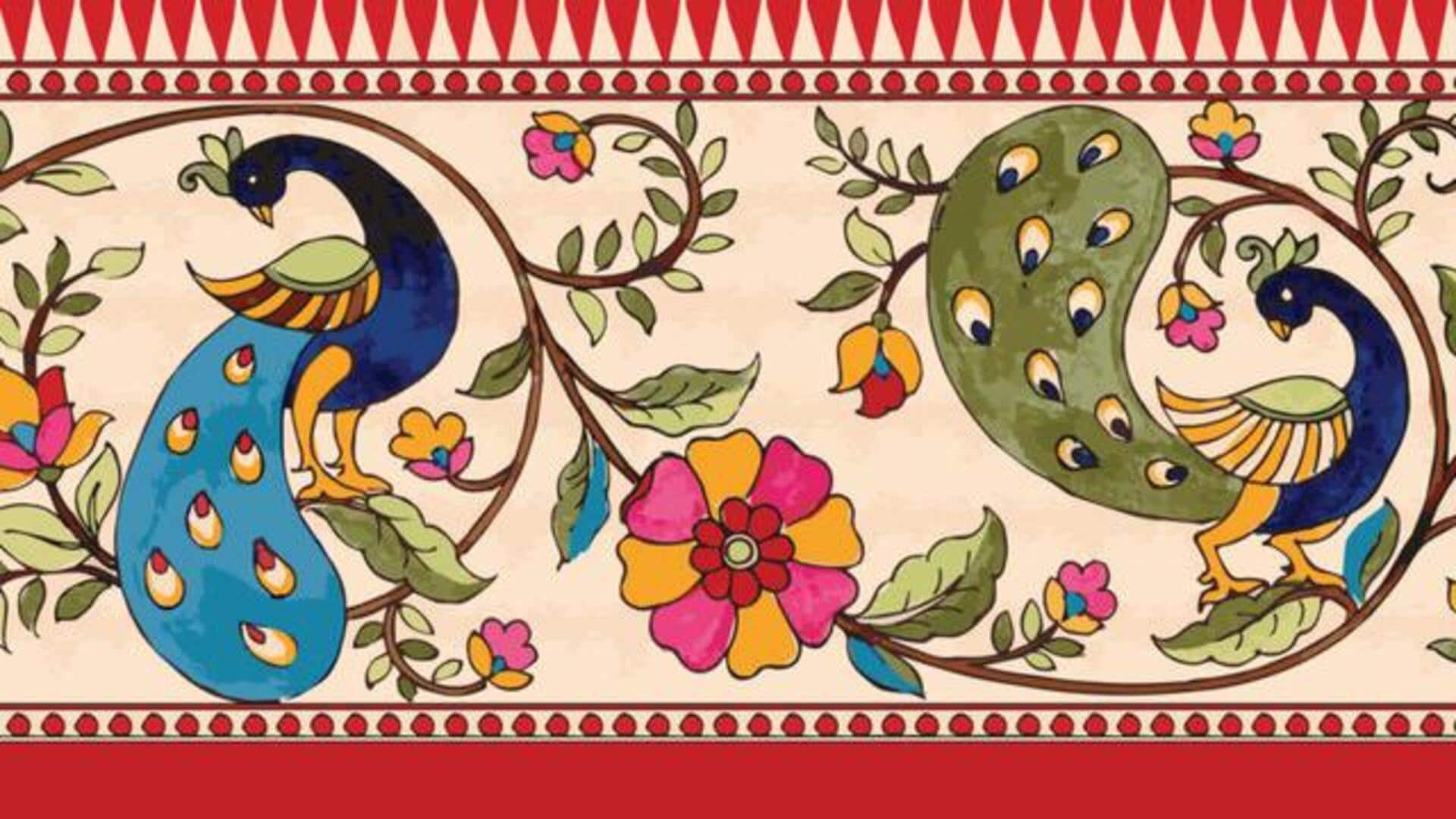
All about Persian qalamkari art
What's the story
Persian qalamkari is a traditional art form used for centuries to beautify home textiles. The intricate designs and vibrant colors of this craft make it a favorite for those looking to add a touch of elegance to their homes. The art involves hand-painted or block-printed fabric with detailed patterns, usually inspired by nature and mythology. Here are some key aspects of this timeless craft.
#1
Historical significance of qalamkari
Qalamkari has its roots in Persia and has been practiced for over 2,000 years.
The word qalamkari comes from the Persian word qalam, meaning pen, and kari, meaning work.
Artisans used bamboo pens to draw intricate designs on cloth with natural dyes.
This technique was not just an art form but also a way to tell stories and preserve cultural heritage.
#2
Techniques used in qalamkari
The two main techniques used in Persian qalamkari are block printing and hand painting.
In block printing, artisans carve designs on wooden blocks and stamp them on fabric.
Hand painting involves skilled artisans painting intricate patterns by hand with natural dyes.
Both techniques require immense precision and patience, resulting in unique pieces that showcase the beauty of this craft.
#3
Popular motifs in qalamkari designs
Persian qalamkari designs are characterized by floral patterns, paisley motifs, and scenes from mythology.
These motifs are not just decorative but also carry cultural significance.
The floral patterns usually symbolize beauty and nature, while paisley motifs signify fertility and prosperity.
Mythological scenes often depict stories from ancient texts, giving each piece a narrative quality.
#4
Modern applications of qalamkari
Today, Persian qalamkari is used in various home textile applications, such as curtains, cushion covers, bedspreads, and tablecloths.
Its versatility allows it to blend with different interior styles, from traditional to contemporary settings.
As people continue to appreciate handcrafted items with cultural significance, qalamkari remains relevant in modern home decor trends.