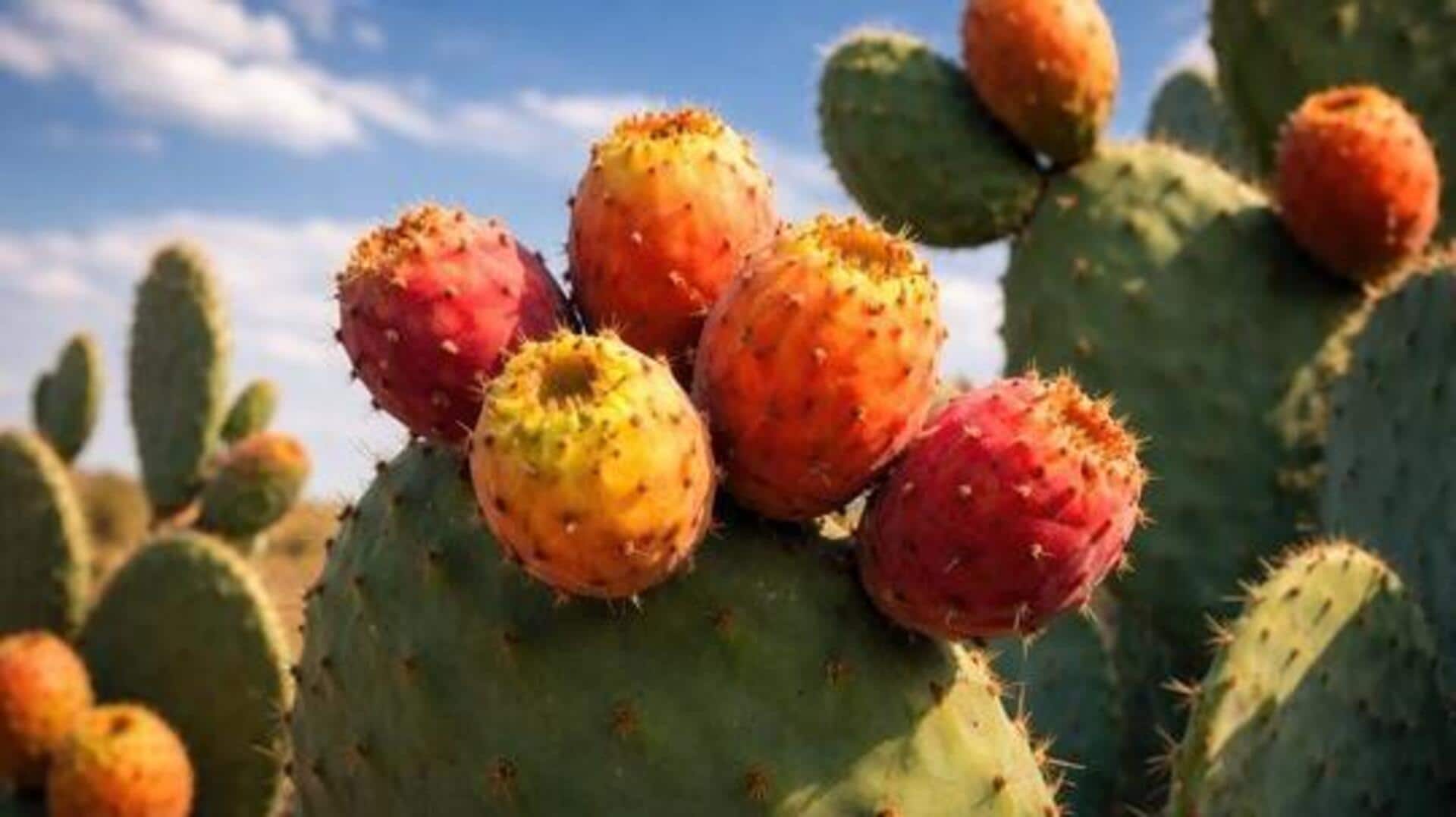
Prickly pear: A unique fruit packed with nutrients
What's the story
African prickly pear, a bright and colorful fruit, is often ignored by the world. However, this resilient fruit is packed with nutrients and has a lot to offer. Grown in arid regions, the prickly pear is a testament to nature's adaptability. Its vibrant color and unique texture make it a delight to the eyes, while its nutritional benefits make it a worthy addition to any diet.
#1
Nutritional benefits of prickly pear
Packed with vitamins and minerals, the African prickly pear is a powerhouse of nutrition.
It is rich in vitamin C, which boosts immunity, and magnesium, which helps keep blood pressure in check.
The fruit is also high in dietary fiber, which aids digestion and keeps cholesterol levels in check.
Plus, it has antioxidants that fight oxidative stress in the body.
#2
Cultivation in arid regions
The resilience of the African prickly pear makes it perfect for cultivation in arid regions where other crops may fail.
Its ability to store water allows it to thrive even with minimal rainfall. This makes it an important crop for farmers dealing with climate challenges.
The plant requires little maintenance once established, making it an attractive option for sustainable agriculture.
#3
Culinary uses of prickly pear
From salads to desserts, the African prickly pear can be used in a range of culinary applications.
Its sweet yet tangy flavor adds a unique twist to traditional recipes.
The flesh can be eaten raw or cooked into jams and jellies.
Even the juice is used as a refreshing beverage or added to smoothies for an extra nutrient boost.
#4
Economic potential of prickly pear farming
Prickly pear farming also has great economic potential for farmers in Africa's arid areas.
With low input costs and high market demand, farmers can earn good profits from this resilient crop.
The growing interest in exotic fruits globally opens up export opportunities as well. This further enhances its economic viability on both local and international markets.