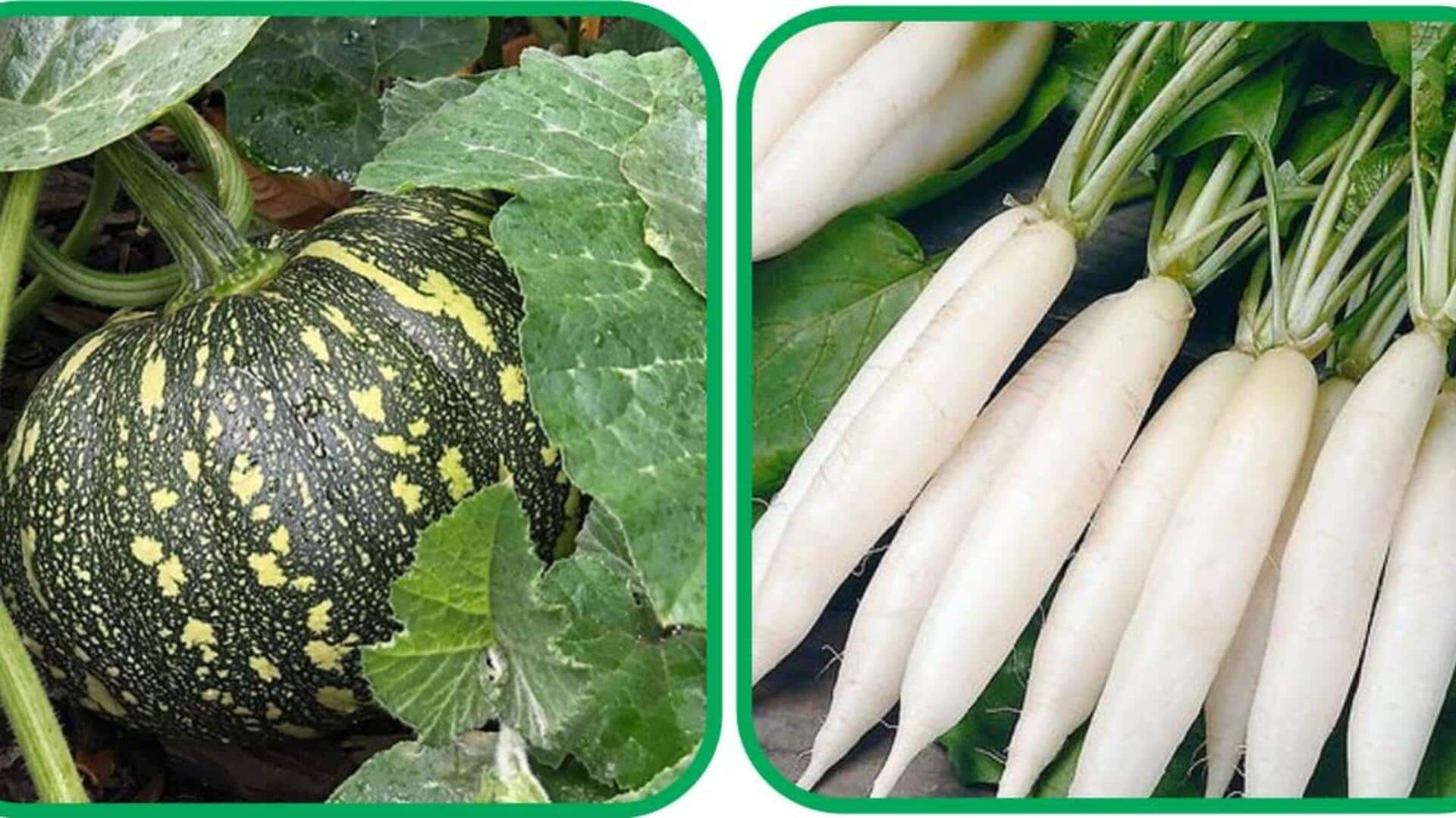
Radish v/s pumpkin: Do they have same Vitamin C content?
What's the story
Radishes and pumpkins are two popular vegetables, both offering unique nutritional benefits. While radishes are known for their crisp texture and peppery flavor, pumpkins are famous for their sweet taste and creamy texture. One of the key nutrients in these vegetables is vitamin C, essential for immune function, skin health, and antioxidant protection. Let's take a look at the vitamin C content of radishes and pumpkins to see how they compare.
Radish Insight
Vitamin C content in radishes
Radishes are a great source of vitamin C, providing around 14% of the recommended daily intake per 100 grams.
This root vegetable not only adds a crunchy texture to salads but also boosts your immune system with its vitamin-rich profile.
The presence of other nutrients like potassium and folate makes radishes an excellent addition to a balanced diet.
Pumpkin insight
Vitamin C content in pumpkins
Pumpkins also provide a healthy dose of vitamin C, offering around 10% of the recommended daily intake per 100 grams.
While they may not be as rich in vitamin C as radishes, pumpkins make up for it with other nutrients such as beta-carotene, which converts to vitamin A in the body.
This makes pumpkins great for promoting eye health and providing antioxidants.
Nutritional value
Health benefits beyond vitamin C
Beyond vitamin C, both radishes and pumpkins offer other health benefits.
Radishes are low in calories but high in fiber, which helps with digestion and weight management.
Pumpkins are rich in antioxidants like beta-carotene that protect cells from damage.
Including these vegetables in your diet can promote overall health by providing essential nutrients.
Dietary advice
Tips for incorporating these vegetables into your diet
To reap the benefits of radishes and pumpkins, try adding them to your meals creatively.
Use sliced radishes as a crunchy topping on sandwiches or mix them into coleslaw for added zest.
Cooked or pureed pumpkin can be added to soups or used as a base for sauces, giving a creamy texture without the calories of dairy products.