
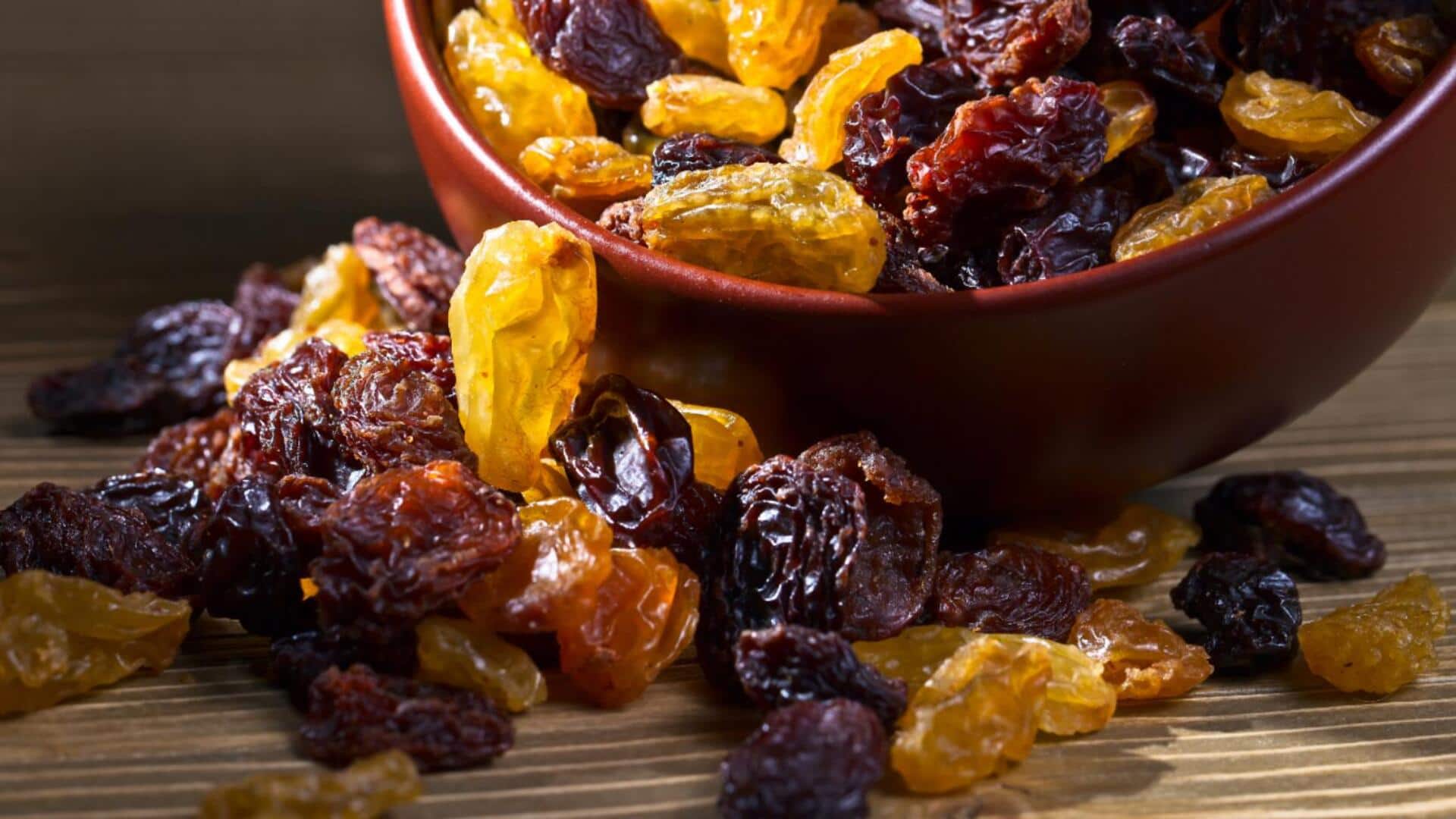
Raisins v/s dried cranberries: Which is healthier?
What's the story
Raisins and dried cranberries are two popular dried fruits that are often used as healthy snacks or additions to meals. Both have their own set of benefits, making them popular among health-conscious people. While raisins are known for their natural sweetness, dried cranberries are famous for their tart flavor. Here's a look at the nutritional profiles of the two fruits, and what makes them unique.
#1
Nutritional profile of raisins
Raisins are dried grapes, and they are rich in natural sugars, which provide a quick energy boost. They are also a good source of fiber, which helps with digestion and keeps you full. Raisins also contain essential minerals like potassium and iron, which help with muscle function and blood health. Their antioxidant content also helps fight oxidative stress in the body.
#2
Health benefits of dried cranberries
Dried cranberries are famous for their tart taste and high vitamin C content. This vitamin is essential for boosting the immune system and promoting skin health. Cranberries also have compounds that promote urinary tract health by preventing bacteria from sticking to the bladder walls. They are also a source of dietary fiber, which promotes digestion.
#3
Sugar content comparison
When comparing sugar content, raisins have a higher natural sugar content than dried cranberries. The latter often has added sugar during processing to balance its tartness. While raisins provide natural sweetness without added sugars, it's important to check labels on dried cranberries to know added sugars.
Tip 1
Caloric value per serving
In terms of caloric value, raisins are denser due to their concentration during drying. A typical serving of raisins may have around 100 calories or more depending on portion size. Dried cranberries usually have fewer calories per serving but may have added sugars that increase overall caloric intake.