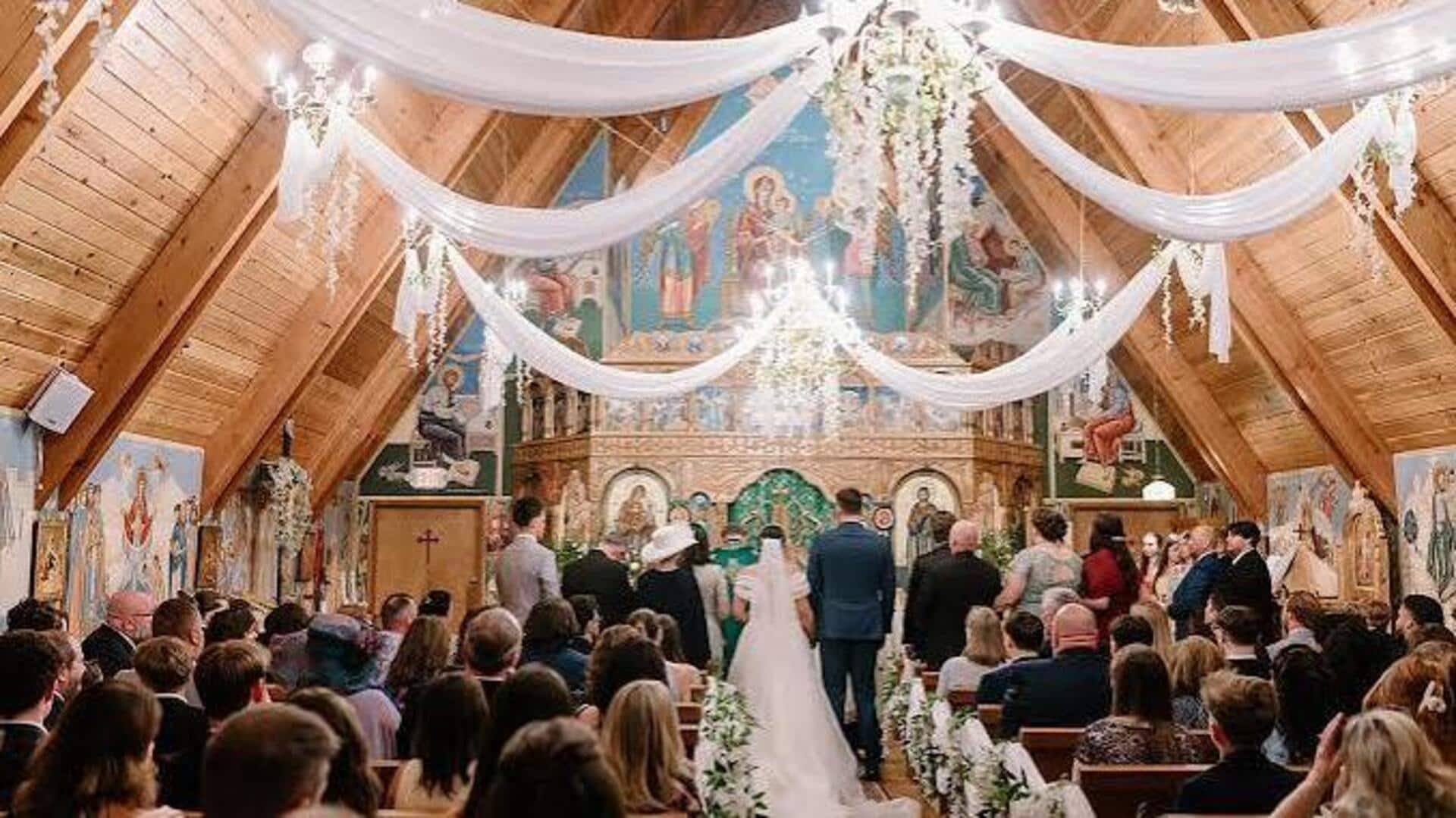
Romanian wedding traditions you'll love
What's the story
Romanian weddings are a beautiful blend of ancient traditions and modern celebrations. They give a glimpse into the rich cultural heritage of the country. From colorful attire to lively music, these weddings are filled with rituals that have been passed down generations. Each region has its own unique customs, making every wedding an individual experience. Here are some key aspects of Romanian wedding traditions.
#1
The role of music and dance
Music and dance are integral to Romanian weddings. Traditional folk music is played on instruments like the violin, accordion, and flute.
Guests join in traditional dances such as the hora, forming a circle around the couple.
The lively atmosphere encourages participation from everyone present, creating a sense of community and joy.
#2
Attire: Symbolism in clothing
Attire at Romanian weddings is steeped in symbolism.
The bride usually wears a white dress with intricate embroidery that represents purity and new beginnings.
Grooms may wear traditional shirts with embroidered patterns unique to their region.
Guests often dress in colorful outfits that reflect local customs.
#3
Rituals before the ceremony
Before the ceremony, several rituals are performed that hold cultural significance.
One common practice is plocon, where family members offer gifts to the bride's family as a sign of respect and gratitude.
Another ritual involves blessing bread called colac, symbolizing prosperity for the couple's future together.
#4
Celebrating with feasting
Feasting is an integral part of Romanian weddings, with tables laden with traditional dishes such as sarmale (cabbage rolls) and mamaliga (cornmeal porridge).
Desserts like cozonac (sweet bread) are also popular.
The meal is accompanied by toasts wishing health and happiness to the newlyweds.
#5
Modern influences on traditions
While many traditional elements remain, modern influences have also made their way into Romanian weddings over time.
Some couples choose to incorporate contemporary music, or opt for destination weddings abroad, while still honoring key cultural practices during their celebrations at home or overseas venues alike.