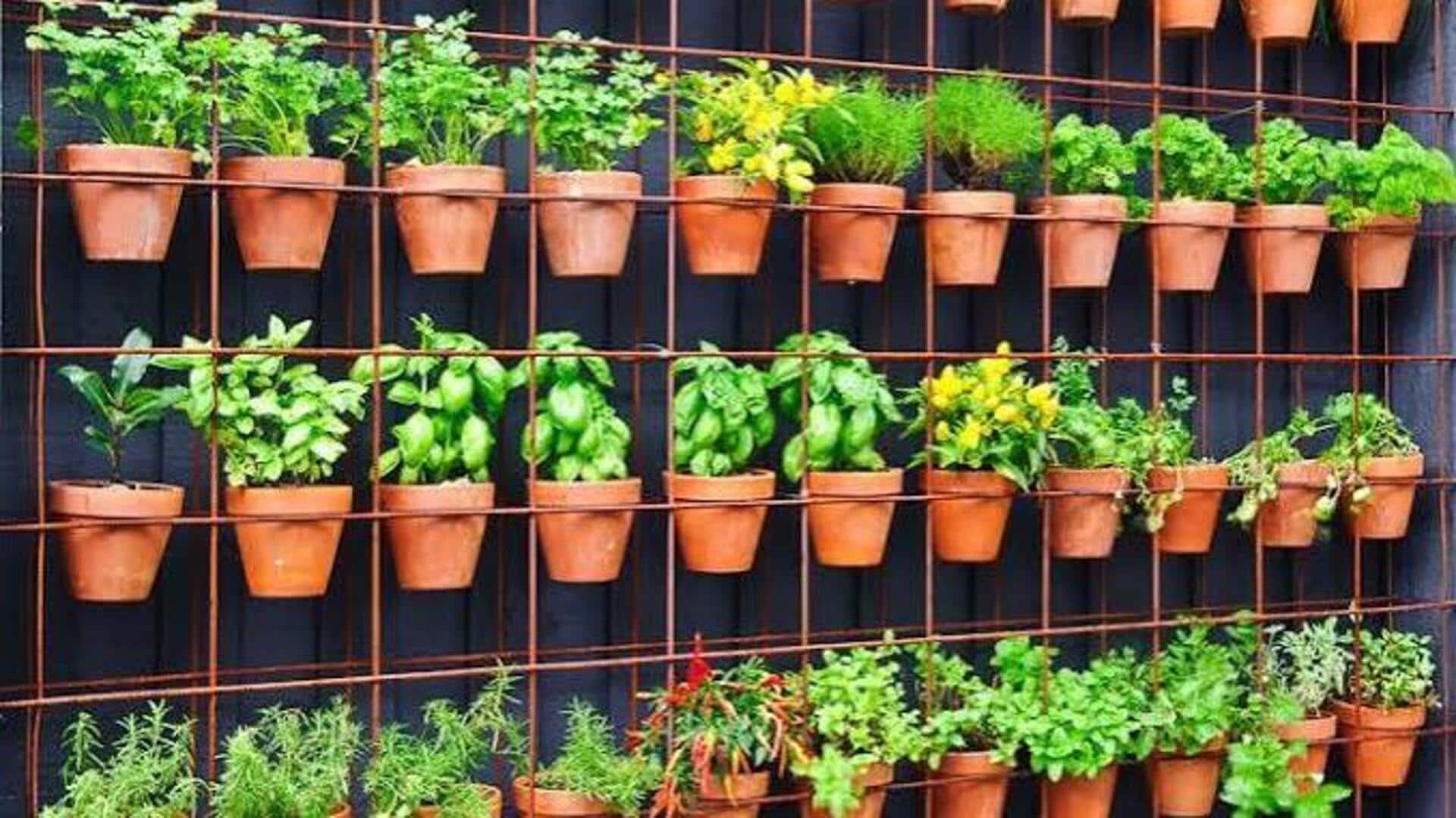
How to grow sage plants in a vertical garden
What's the story
Growing sage in vertical gardens can be a rewarding experience, providing fresh herbs and saving space. Sage, with its aromatic leaves, is a staple in many kitchens. However, to ensure healthy growth and vibrant foliage, certain care tips are essential. Here are five practical tips to help you successfully grow sage in your vertical garden, maximizing both yield and flavor.
Tip 1
Choose the right soil mix
Selecting an appropriate soil mix is essential for sage's growth.
A well-draining mix with organic matter will ensure that the roots do not sit in water, which can lead to root rot.
A combination of potting soil, perlite, and compost can provide the necessary drainage and nutrients.
This mix allows sage plants to thrive by maintaining moisture levels without becoming waterlogged.
Tip 2
Ensure adequate sunlight
Sage plants require plenty of sunlight to flourish, ideally six to eight hours of direct sunlight every day.
When positioning your vertical garden, make sure it is in a spot where it receives ample sunlight throughout the day.
If natural light is insufficient, you can also use grow lights to provide the necessary illumination, especially during shorter days or cloudy weather.
Tip 3
Water wisely
Overwatering is one of the most common mistakes when growing sage.
It is important to let the top inch of soil dry out before watering again. This prevents overwatering and encourages deeper root growth.
Using drip irrigation or self-watering systems can help regulate moisture levels effectively, without the risk of overwatering.
Tip 4
Prune regularly for health
Regular pruning keeps sage plants healthy and encourages bushier growth.
Trim back any dead or yellowing leaves regularly to keep plants healthy.
Prune lightly every few weeks by removing older leaves from the bottom of the plant, which encourages new growth at the top.
This practice keeps your sage plants looking neat and productive.
Tip 5
Fertilize sparingly
While sage does not need much fertilization, giving it a light feed with a balanced fertilizer every four to six weeks during the growing season can boost its growth.
However, be careful not to over-fertilize, as it can affect the flavor of the leaves, making them too bitter.
This way, you can ensure the plant remains healthy without compromising on the taste of the leaves.