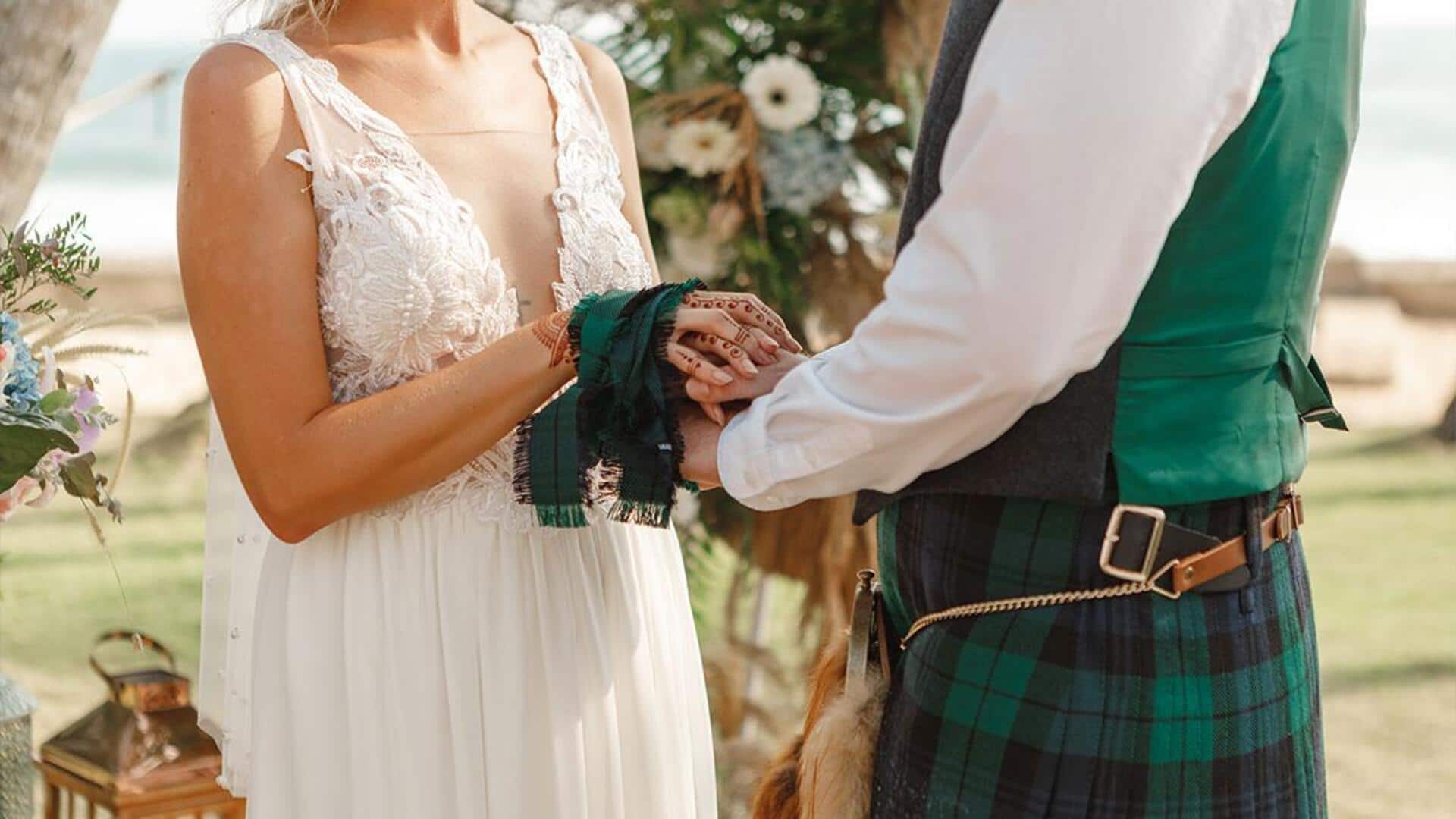
All about handfasting, a Scottish wedding ritual
What's the story
Scottish weddings are steeped in rich traditions, one of which is the ancient practice of handfasting. This symbolic ritual involves tying the couple's hands together, signifying their union and commitment to one another. Handfasting has been a part of Scottish culture for centuries, often performed as part of the wedding ceremony or as a standalone event. It represents the binding of two lives into one, highlighting themes of loyalty and partnership.
#1
Historical roots of handfasting
Handfasting dates back to ancient Scotland, where it was used as a trial marriage or engagement.
Couples would have their hands tied together for a year and a day before deciding to stay together or part ways.
This practice allowed partners to test compatibility without permanent commitment.
Over time, handfasting evolved into a symbolic gesture used in modern weddings to honor heritage and tradition.
#2
Symbolism behind the ritual
The act of binding hands together during handfasting symbolizes unity and strength in a relationship.
It also represents the idea that marriage is not just about love but also about mutual support and understanding.
The cords used in the ceremony can be made from various materials, each chosen for its personal significance to the couple.
This ritual serves as a visual reminder of their vows to stand by each other through life's challenges.
#3
Modern interpretations of handfasting
In contemporary weddings, handfasting has taken on new meanings while retaining its core symbolism.
Some couples incorporate it as part of their ceremony, alongside traditional vows, while others use it as an opportunity for creative expression with unique designs or themes.
Modern interpretations may include incorporating family members or friends into the ritual, further emphasizing community support within marriage.
Tip 1
Tips for incorporating handfasting into your wedding
If you are considering adding handfasting to your wedding ceremony, think about what materials you would like to use for the cords.
Some couples even opt for colors that represent different aspects of their relationship or future aspirations together.
You can also personalize this tradition by including elements like readings or music that resonate with both partners' values and beliefs about love and partnership.