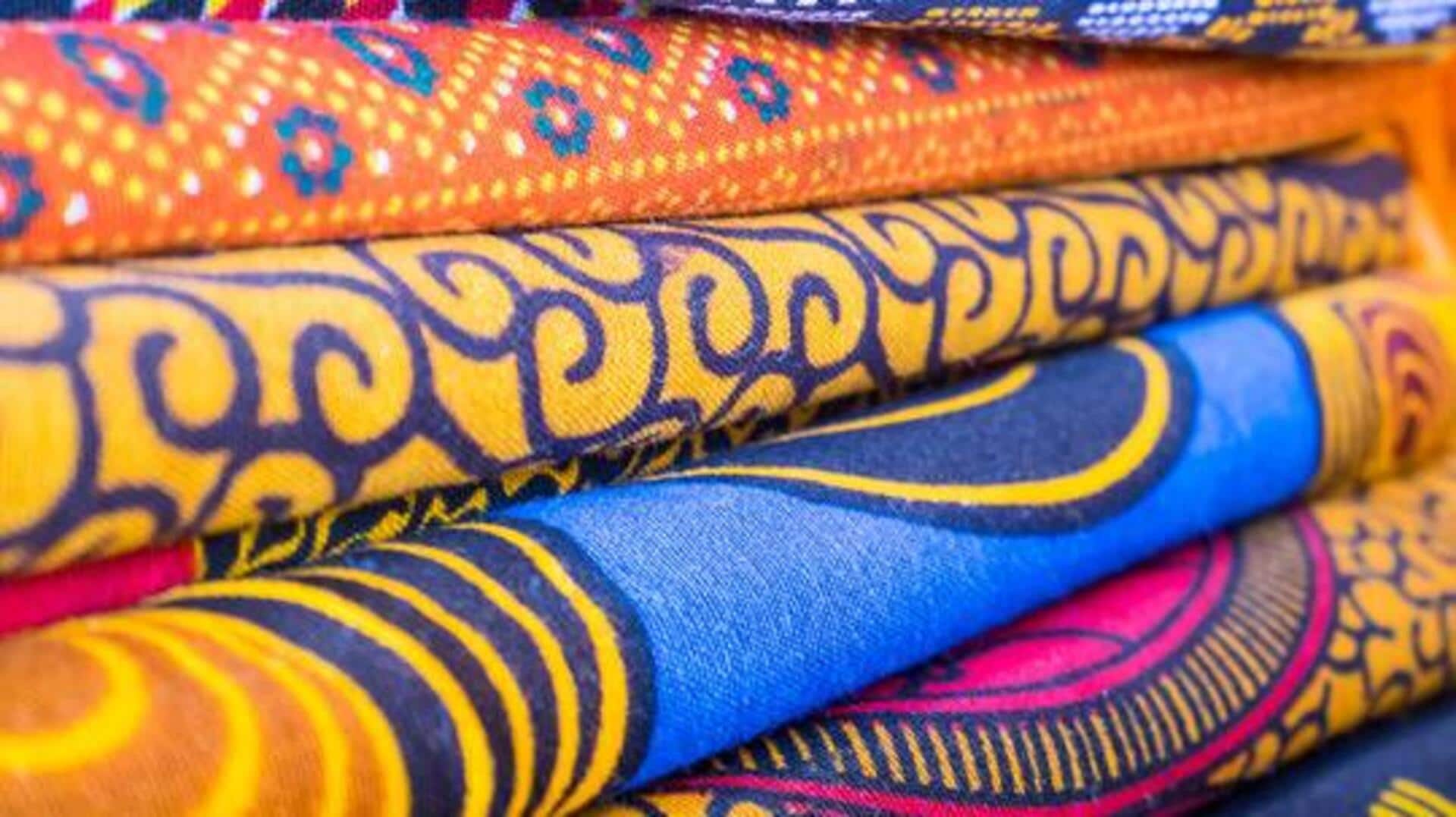
A guide to traditional textiles of Africa
What's the story
Africa is home to a rich tapestry of cultures, each with its own unique textile traditions. From the vibrant kente cloth of Ghana to the intricate mud cloths of Mali, these textiles are not just beautiful, but also steeped in history and meaning. For those looking to explore African textiles, there are plenty of markets and workshops across the continent where you can find authentic pieces. Here is a guide to discovering these traditional fabrics.
#1
Exploring Ghana's kente cloth
Ghana's kente cloth is famous for its bright colors and intricate patterns.
Traditionally, the cloth is woven by hand on looms in the Ashanti region.
Each pattern has a specific meaning or story, making it a cultural symbol, as much as a fashion statement.
Tourists can visit local markets in Accra or Kumasi to buy authentic kente or even participate in weaving workshops to learn about this ancient craft.
#2
Discovering Mali's mud cloth
Mali's mud cloth, or bogolanfini, is made from cotton fabric dyed with fermented mud and plant-based dyes.
The process results in unique designs that often have symbolic meanings related to fertility, protection, or personal identity.
In Bamako, visitors can shop at artisan stalls, or attend classes where they can try their hand at creating their own mud cloth designs under expert guidance.
#3
Senegal's vibrant batik creations
Senegal is famous for its colorful batik fabrics, which are made by applying wax on cloth before dyeing it with vibrant colors.
The process is repeated several times to create intricate patterns. These are often inspired by nature or traditional motifs.
The markets of Dakar are filled with batik vendors, displaying a variety of designs, from simple geometric shapes to elaborate scenes depicting daily life in Senegalese culture.
#4
Kenya's shuka: A cultural staple
The shuka, a traditional garment worn by the Maasai people, is characterized by its bold checkered patterns and bright red hues. It is a symbol of identity and pride.
In Nairobi's Maasai Market, tourists can buy authentic shukas directly from local artisans, who explain the cultural significance behind each design.
This way, buyers get more than just a purchase; they get a connection to the community's heritage.