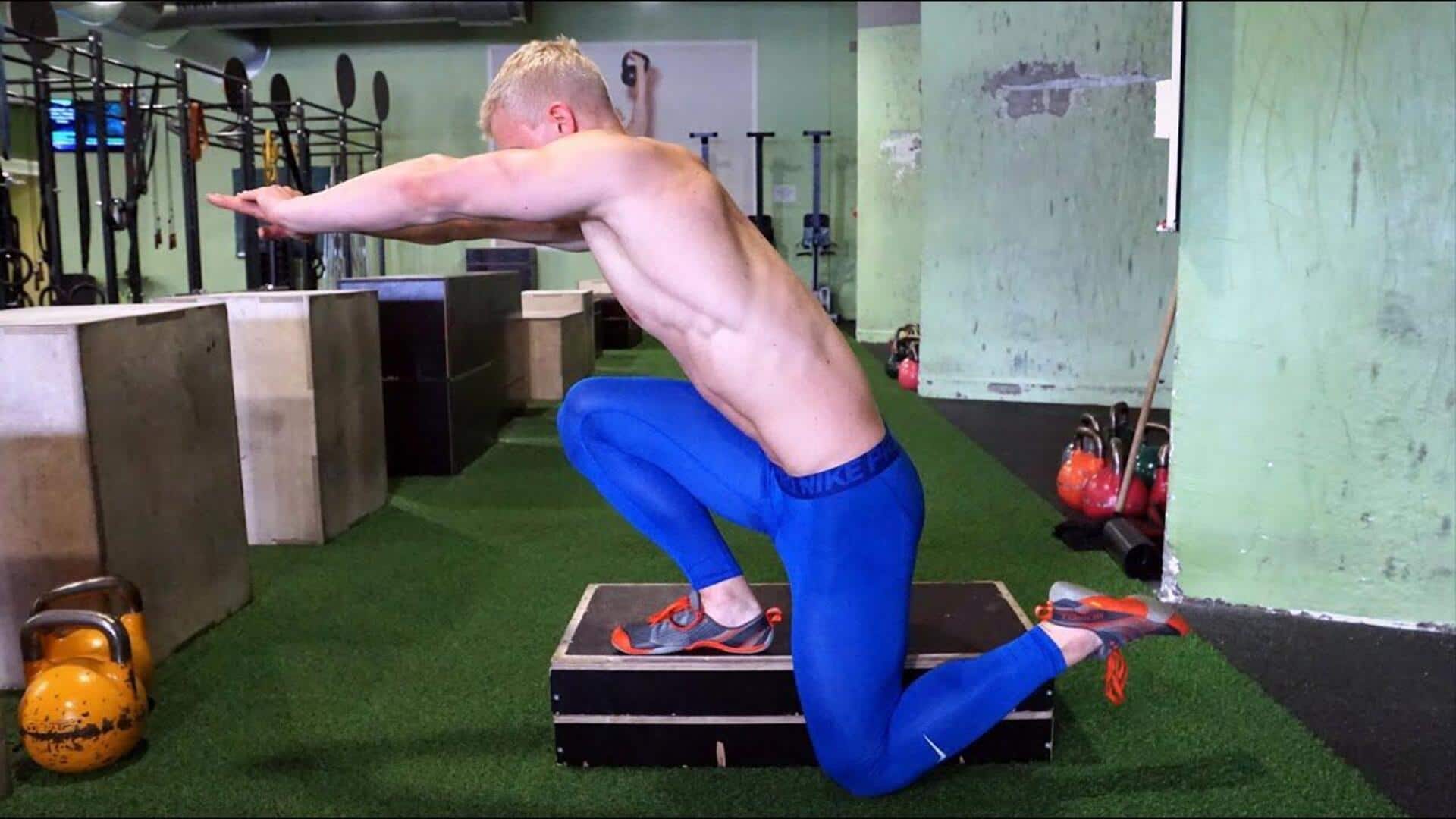
Why shrimp squat is necessary for the lower body
What's the story
The shrimp squat is a challenging yet highly effective exercise that targets the lower body, particularly the quads, hamstrings, and glutes. Unlike traditional squats, this movement requires balance and flexibility as you perform a single-leg squat while holding the other leg behind you. This exercise not only builds strength but also improves your coordination and stability. Here's a guide to mastering the shrimp squat.
Tip 1
Mastering balance and flexibility
To perform a shrimp squat, you need to have a good sense of balance and flexibility.
Start by practicing balance exercises such as single-leg stands or yoga poses like tree pose.
Stretch your hip flexors, quadriceps, and hamstrings regularly to improve your flexibility.
These will help you get into the right position without losing balance.
Tip 2
Strengthening core muscles
A strong core is essential for performing a shrimp squat correctly.
Include exercises like planks, bridges, and Russian twists in your routine to strengthen your core muscles.
A strong core will help you maintain stability throughout the movement, preventing any strain on your back or knees.
Tip 3
Gradual progression techniques
Start with easier variations of the shrimp squat before you move on to the full movement.
Begin with assisted versions by holding onto a wall or chair for support.
As you gain strength and confidence, gradually reduce assistance until you can perform the exercise independently.
Tip 4
Incorporating into workout routines
Integrate shrimp squats into your regular workout routines for maximum benefit.
Pair them with other lower body exercises like lunges or step-ups for a comprehensive workout targeting multiple muscle groups.
Consistency is key; aim to include them in your routine at least twice a week for noticeable improvements in strength and balance.