Why fitness enthusiasts love slacklining
What's the story
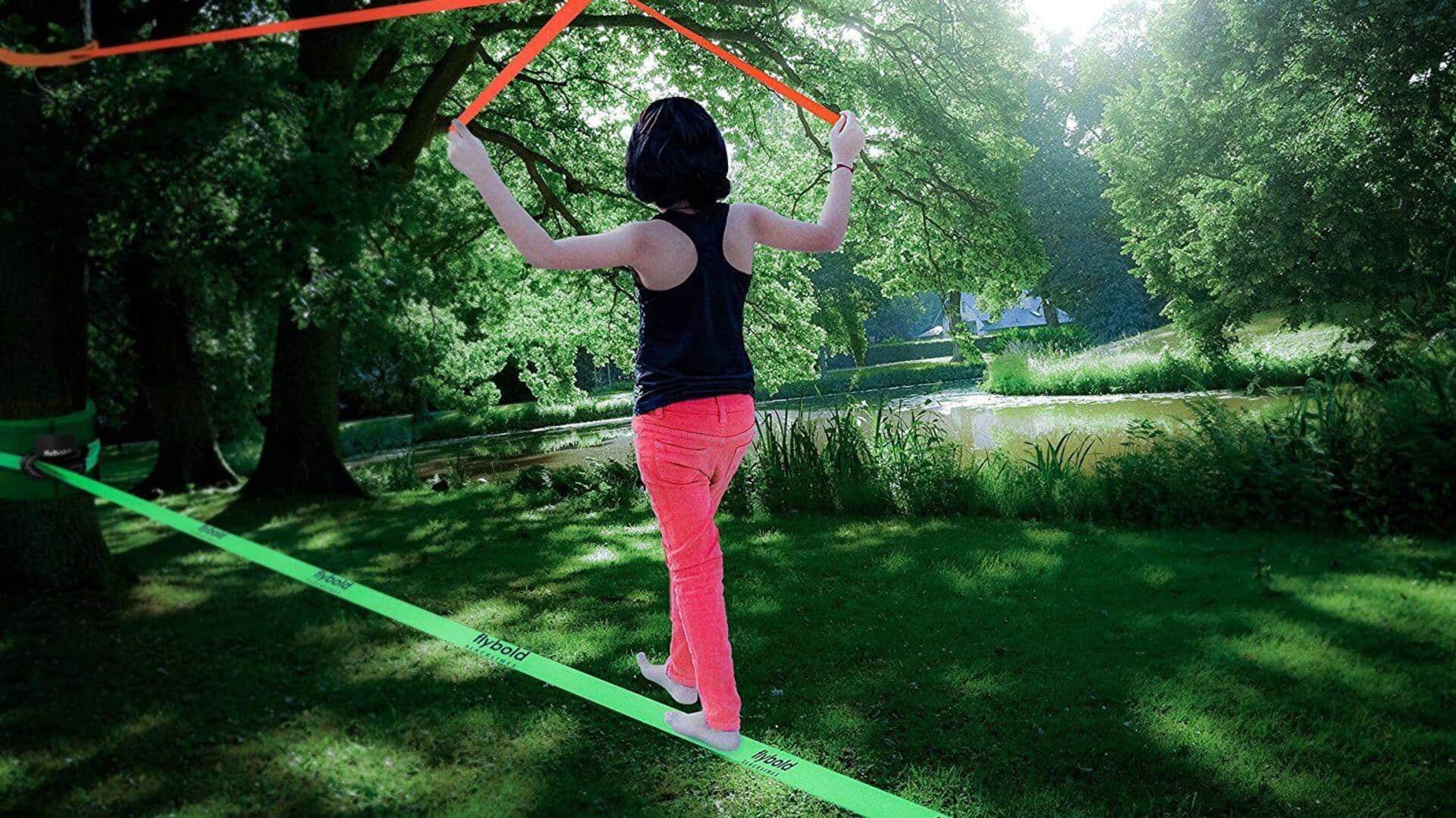
Slacklining, a practice that involves balancing on a narrow, flexible piece of webbing anchored between two points, is gaining popularity as a versatile fitness activity. While most people associate slacklining with improved balance and core strength, it offers several unexpected health benefits that go beyond the obvious. Here are five surprising ways slacklining can boost your well-being, making it a worthwhile addition to your fitness routine.
#1
Enhances mental focus
Slacklining requires intense concentration and mental engagement as you try to stay balanced on the line.
This mindfulness practice helps improve your focus and attention span over time.
The need to stay present while balancing can also reduce stress levels by encouraging relaxation and reducing anxiety.
Regular slacklining sessions may lead to better mental clarity and improved cognitive function.
#2
Boosts cardiovascular health
Though it may not seem like a high-intensity workout, slacklining is a great way to get your heart rate up.
This low-impact exercise can improve cardiovascular health by increasing blood circulation and strengthening the heart muscles.
By regularly practicing slacklining, you may notice better endurance and increased energy levels throughout the day.
#3
Improves flexibility
As you try to maintain balance on a slackline, your body naturally engages in various stretching movements that improve flexibility.
These dynamic stretches help loosen tight muscles and joints, promoting a greater range of motion over time.
Improved flexibility from slacklining can reduce the risk of injuries during other physical activities.
#4
Encourages social interaction
Slacklining is usually done in groups or pairs, which promotes social interaction and community building.
Be it at parks or dedicated slackline events, the activity brings people together who share similar interests in fitness and outdoor activities.
This social aspect not only makes the experience more enjoyable but also helps build friendships and support networks.
#5
Increases proprioceptive awareness
Proprioception is the body's ability to sense its position in space, which is critical for coordination and balance.
Slacklining challenges these senses by forcing you to make constant adjustments to stay upright on the line.
Over time, this enhances proprioceptive awareness, leading to better coordination skills that translate into other sports or daily tasks requiring balance control.