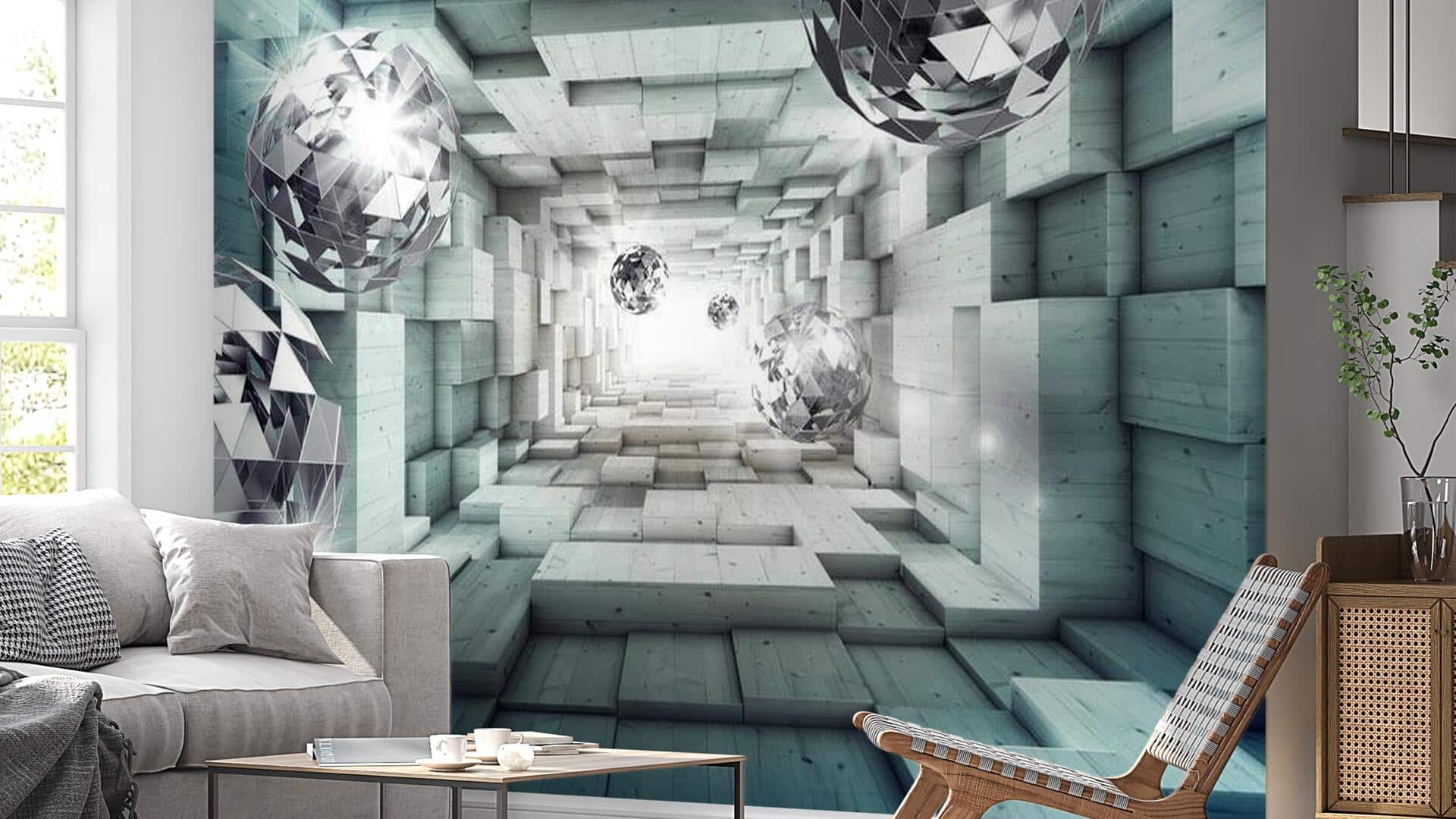
How to use optical illusions to transform your space
What's the story
Designing small spaces can be a daunting task, but optical illusions provide an innovative way to make them appear larger and more inviting. By playing with light, color, and perspective, you can create the illusion of space without any structural changes. These tricks are not just cost-effective, but also easy to implement, making them ideal for anyone looking to maximize their living area. Here are five optical illusions that can transform small spaces into airy havens.
Tip 1
Use of mirrors for depth
Mirrors are a classic trick to create depth in small rooms.
By placing a large mirror on one wall or using mirrored furniture, you can reflect light and make the room feel more spacious.
This trick works especially well in narrow hallways or compact living rooms, where every bit of space counts.
The reflective surface bounces back light, brightening up the area and giving an illusion of extended dimensions.
Tip 2
Light colors expand spaces
Light colors have the power to expand spaces visually.
Painting walls in soft pastels or whites can make a room feel more open than it actually is.
Light hues reflect more light than darker ones, making the atmosphere brighter and airier.
You can also use light-colored furniture and accessories to maintain this illusion throughout the room.
Tip 3
Vertical lines draw eyes upward
Incorporating vertical lines into your design can draw eyes upward, creating an illusion of higher ceilings.
This can be achieved through vertical stripes on wallpaper or paint, tall bookshelves, or elongated light fixtures.
The upward movement guides the eye along the height of the room, making it feel less claustrophobic.
Tip 4
Transparent furniture adds openness
Transparent furniture pieces like glass tables or acrylic chairs add an element of openness to small spaces by minimizing visual clutter.
These pieces take up less visual space than opaque ones, while serving their purpose effectively.
They allow for uninterrupted sightlines across the room, contributing to an overall sense of spaciousness.
Tip 5
Layered lighting enhances dimension
Layered lighting adds dimension and warmth to small rooms by combining ambient, task, and accent lighting sources.
Ceiling lights provide general illumination, while table lamps offer localized light for reading or working areas.
Wall sconces highlight artwork or architectural features, adding depth and interest without overwhelming limited square footage.