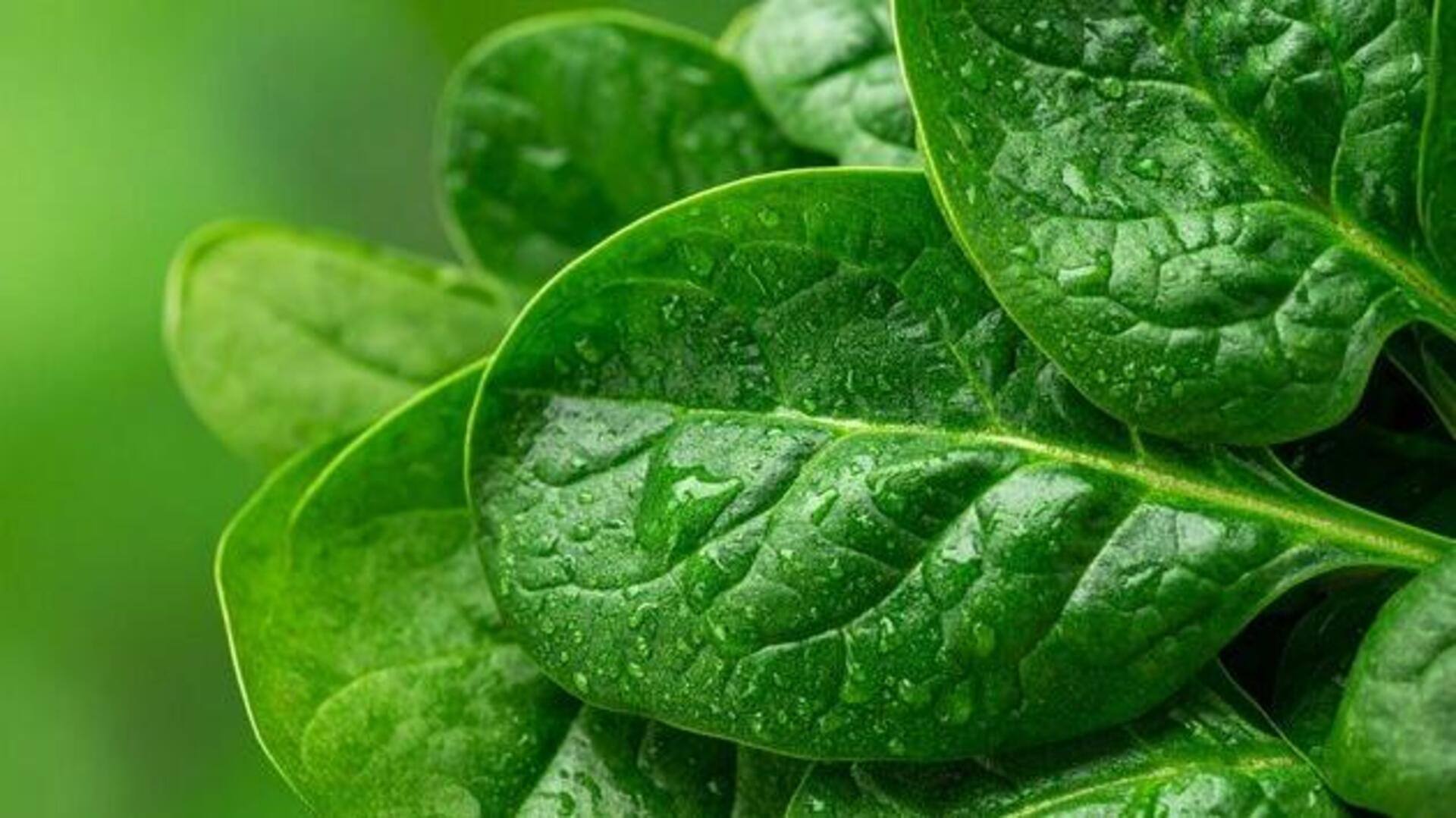
Is spinach really a superfood?
What's the story
Spinach is often touted as a rich source of iron, but its actual contribution to our daily iron intake might be a little misleading. The leafy green is packed with many nutrients, but the bioavailability of its iron content has always been debated. This article delves into the truth behind spinach's iron content, and how other dietary factors affect its absorption.
#1
Spinach's oxalate content
Spinach is loaded with oxalates, which are compounds that can bind with minerals such as calcium and iron.
When oxalates bind with iron, they reduce its absorption in the body.
This means that even though spinach has a lot of iron, the amount available for absorption may be considerably less than what is actually present.
#2
Comparison with other greens
Other leafy greens like kale and Swiss chard have lower oxalate levels than spinach.
These greens provide more bioavailable iron per serving than spinach.
Kale, for example, has more vitamin C than spinach, which also helps improve iron absorption from plant sources.
#3
Cooking effects on nutrient availability
Cooking spinach can reduce its oxalate content by up to 30%, making more iron available for absorption.
Steaming or boiling spinach briefly before consumption can improve its nutritional value by making more nutrients available.
However, overcooking can lead to a loss of other important vitamins.
Tip 1
Dietary combinations for better absorption
Pairing spinach with vitamin C-rich foods like citrus fruits or bell peppers can improve non-heme iron absorption from plant sources.
Adding these foods to meals containing spinach helps counteract some effects of oxalates and improves overall nutrient intake from this leafy green.