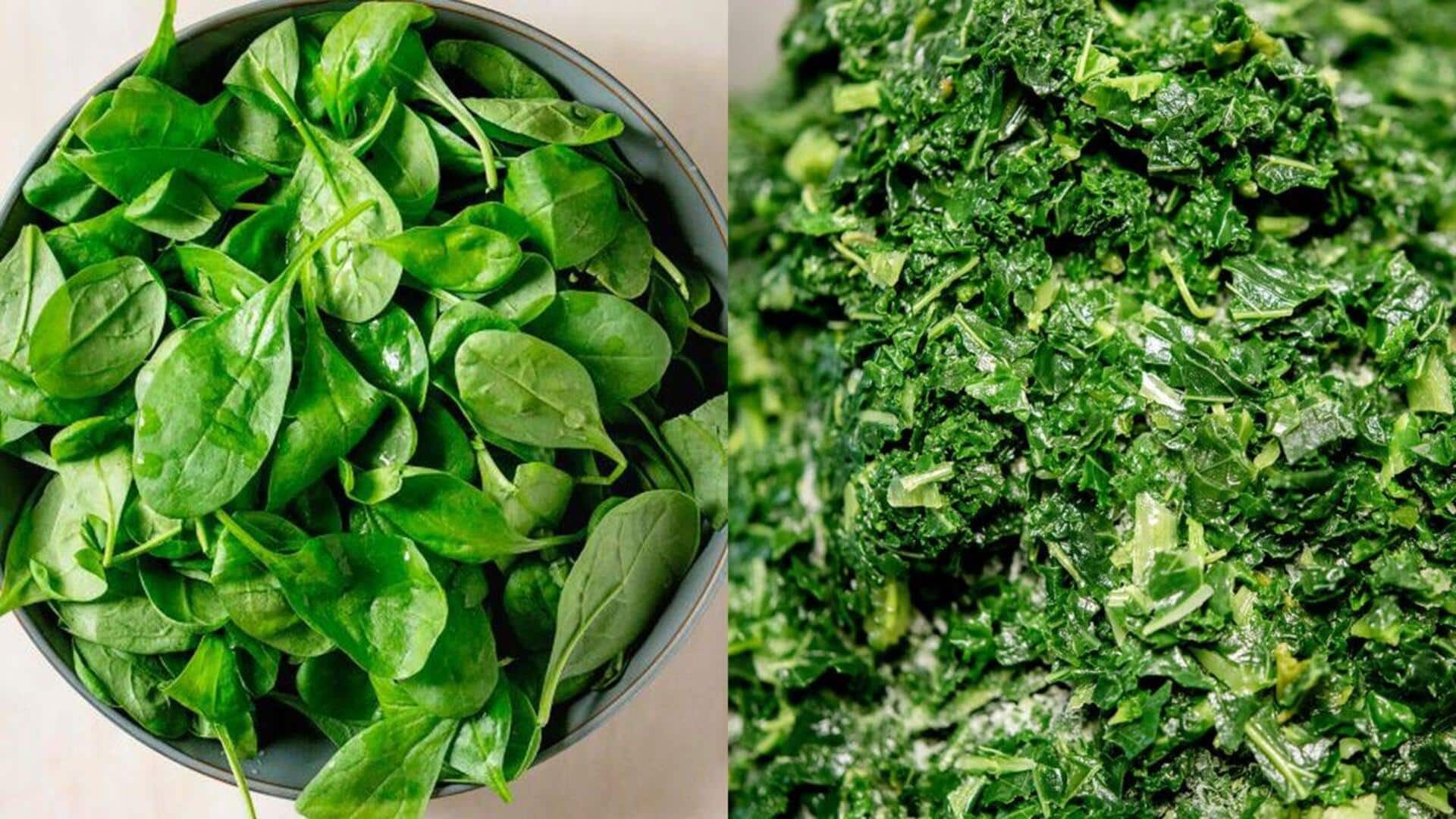
Spinach v/s kale: Which has more iron?
What's the story
Spinach and kale are two of the most popular leafy greens, famous for their nutritional benefits. Both are packed with vitamins, minerals, and antioxidants, making them a staple in healthy diets. While they may look similar, they have different nutrient profiles that can benefit you in different ways. Here's a look at the nutritional differences between spinach and kale, and how they can contribute to your health.
#1
Vitamin content comparison
Spinach is famous for its high vitamin A content, which is essential for good vision and immune function.
It also has a good amount of vitamin K, important for blood clotting and bone health.
Kale, on the other hand, is also high in vitamin C, which boosts the immune system and skin health. It also has more vitamin K than spinach, making it an excellent choice for bone health.
#2
Mineral richness explored
Both spinach and kale are rich in essential minerals such as calcium and iron.
While spinach has more iron than kale, it also contains oxalates that may hinder iron absorption.
Kale provides more calcium than spinach per serving without the oxalate issue, making it a better option for those looking to increase their calcium intake.
#3
Antioxidant levels analyzed
Antioxidants are important for protecting cells from damage by free radicals.
Spinach is rich in lutein and zeaxanthin, which are good for eye health.
Kale has high amounts of quercetin and kaempferol, which are anti-inflammatory and may reduce the risk of chronic diseases.
Adding either green to your diet can help you get these powerful antioxidants.
Tip 1
Fiber content insights
Fiber is important for good digestive health and regular bowel movements.
Kale has slightly more fiber than spinach per serving, which can help you keep your digestive system healthy.
Adding either green to your meals can help you reach the recommended daily fiber intake while providing other nutrients that promote overall well-being.