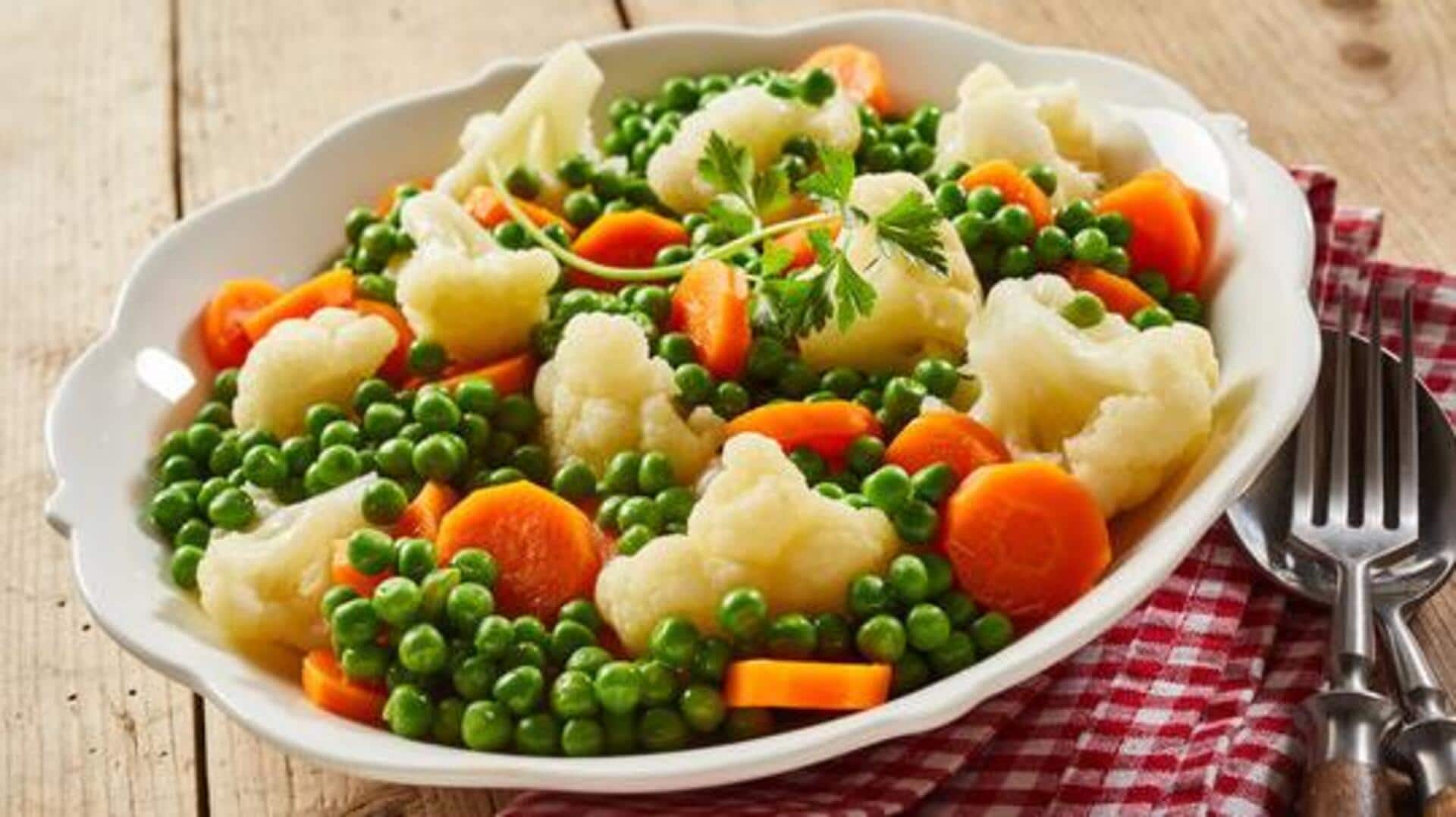
Are steamed vegetables always the healthiest choice?
What's the story
Steaming vegetables is often touted as the healthiest way to cook them, but there are many misconceptions about its benefits. Many believe steaming retains all nutrients and enhances flavor without losing any. However, the reality is a little more nuanced. This article aims to debunk common myths about steaming vegetables, providing insights into how this cooking method really affects nutrient retention and taste.
#1
Myth: Steaming retains all nutrients
While steaming does retain more nutrients than some other cooking methods, it does not retain everything.
Water-soluble vitamins such as vitamin C and B vitamins can still leach out into the steam.
A study found that up to 20% of vitamin C can be lost during steaming.
So, it is important to know that no cooking method is perfect in nutrient retention.
#2
Myth: Steamed vegetables have no flavor
Another common misconception is that steamed vegetables lack flavor.
While it is true that steaming preserves the natural taste of vegetables, it does not mean they are bland.
The method keeps the natural sugars and compounds intact, which can enhance their sweetness and aroma.
Adding herbs or spices before steaming can further improve the flavor without compromising the health benefits.
#3
Myth: All vegetables are best steamed
Not all vegetables benefit from steaming as much as others do.
Leafy greens like spinach or kale may lose some of their texture when steamed for too long, while root vegetables like carrots or potatoes may hold up well under the heat.
Knowing which vegetables work best with this method is key to getting the most out of your meals.
#4
Myth: Steaming is always healthier than boiling
Many think steaming is always healthier than boiling because it uses no direct contact with water.
However, both methods have their pros and cons, depending on what you're cooking.
Boiling can be useful for certain vegetables where quick cooking helps retain color and texture but may lead to nutrient loss if overcooked or not properly drained afterward.