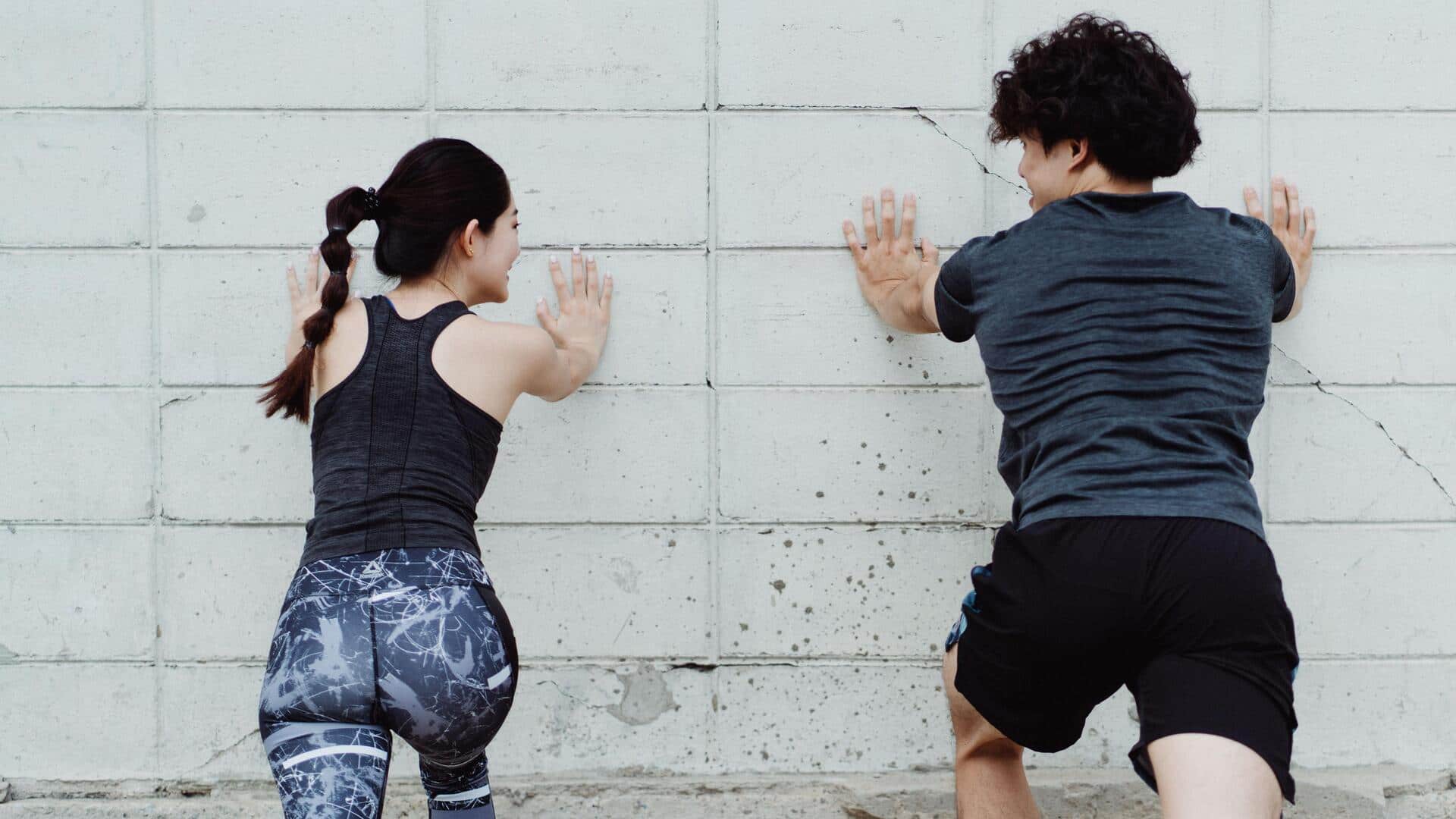
Build arm strength with wall forearm push-ups
What's the story
Wall forearm push-ups are a simple yet effective exercise to strengthen your arms. They are ideal for beginners and those looking to improve their upper body strength without the need for any equipment. By using the wall as support, you can easily modify the intensity of the workout, making it suitable for all fitness levels. Regular practice of this exercise can lead to improved muscle tone and endurance in your arms.
Tip 1
Proper positioning for maximum benefit
To perform wall forearm push-ups correctly, stand a few feet away from the wall with your feet shoulder-width apart.
Place your forearms flat against the wall at shoulder height, ensuring that your elbows are directly under your shoulders.
This positioning helps maintain balance and reduces strain on your joints, allowing you to focus on strengthening your arm muscles effectively.
Tip 2
Gradual increase in intensity
Start by performing wall forearm push-ups at an angle that feels comfortable for you.
As you build strength over time, gradually decrease the angle by moving closer to the wall.
This progressive approach allows you to challenge yourself without risking injury or overexertion.
Consistency is key; aim for two to three sessions per week to see noticeable improvements in muscle tone.
Tip 3
Focus on controlled movements
During each repetition of wall forearm push-ups, focus on controlled movements rather than speed or quantity.
Lower your body slowly toward the wall while keeping your core engaged and back straight.
Pause briefly before pushing back up to the starting position with equal control.
This mindful practice enhances muscle engagement and promotes better overall results.
Tip 4
Incorporate breathing techniques
Incorporating proper breathing techniques into your workout routine can significantly enhance performance and results.
Inhale deeply as you lower yourself toward the wall, ensuring your diaphragm expands fully.
Exhale slowly as you push back up to the starting position, maintaining a steady rhythm throughout each repetition.
This practice not only aids in muscle oxygenation but also helps in maintaining focus and control during the exercise.