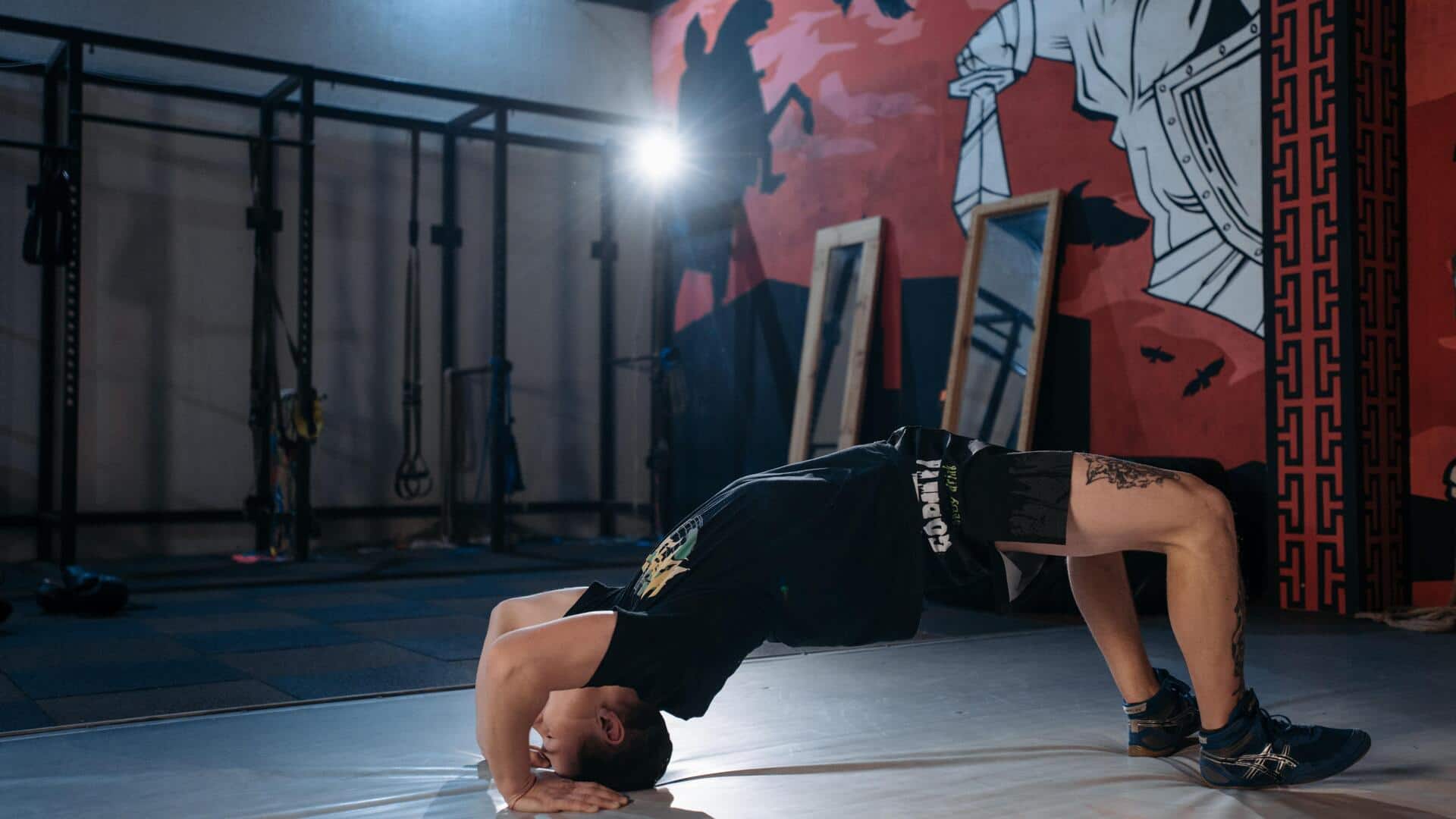
Thoracic bridge: How to do this exercise for better posture
What's the story
The thoracic bridge is a powerful exercise that can improve your posture by strengthening your back and core muscles. This movement focuses on the upper body, specifically the thoracic spine, which is essential for maintaining good posture. By adding this exercise to your routine, you can improve your alignment and reduce the risk of back pain. Here are five effective ways to perform the thoracic bridge for better posture.
Tip 1
Focus on proper form
Proper form is essential for getting the most out of the thoracic bridge and avoiding injuries.
Start by lying on your back with knees bent and feet flat on the floor.
Keep your arms extended at shoulder level, palms facing down.
Lift your hips toward the ceiling while squeezing your glutes and engaging your core.
Make sure your shoulders stay relaxed and away from your ears throughout the movement.
Tip 2
Incorporate breathing techniques
Breathing techniques can enhance the effectiveness of the thoracic bridge exercise.
Inhale deeply before starting the movement to prepare your body.
As you lift your hips, exhale slowly through pursed lips to maintain control over each phase of the exercise.
This controlled breathing helps stabilize your core muscles, allowing you to hold the position longer, and with greater stability.
Tip 3
Gradually increase duration
Increasing the duration of each hold can help build endurance in the muscles that support good posture.
Start by holding each bridge position for 10 seconds, and gradually increase it to 30 seconds or more as you get comfortable with the exercise.
Consistent practice will strengthen these muscle groups over time, improving overall stability and alignment.
Tip 4
Add variations for challenge
To keep things interesting and challenge different muscle groups, try different variations of the thoracic bridge exercise.
For example, you can try lifting one leg off the ground while holding the bridge position, or adding arm movements such as reaching overhead or extending them outwards.
These variations engage additional stabilizing muscles, further enhancing postural benefits.
Tip 5
Regular practice is key
Regular practice is key to improving your posture through this exercise. Include it in your daily routine for better results over time.
You can also make it part of a broader fitness plan. Along with improving posture and alignment, regular exercise can support overall health.
Yoga practices can also complement these efforts by promoting better body alignment and movement.