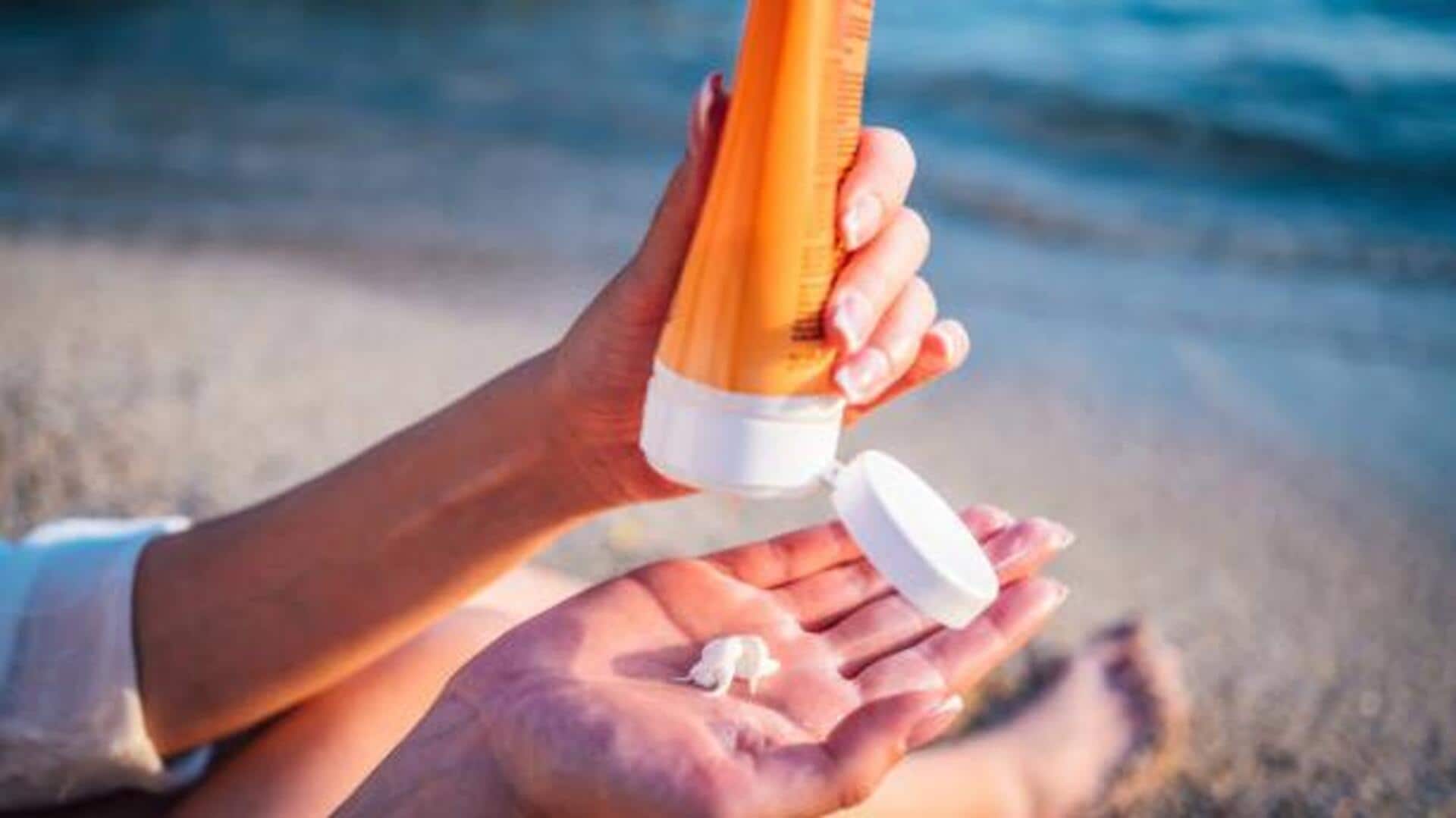
Sunscreen SPF types: What you should know
What's the story
Most of us think all sunscreen SPF types are the same, but that is far from the truth. Each SPF type is formulated to protect against different UV rays and skin types. Knowing these differences can help you pick the right sunscreen for your skin. Here is a look at the different SPF types and how they protect your skin against sun damage.
#1
Understanding UV radiation
UV radiation from the sun comes in two types: UVA and UVB.
UVA rays penetrate deep into the skin, causing premature aging and wrinkles.
UVB rays are responsible for causing sunburns and can contribute to skin cancer.
A good sunscreen should protect against both types of UV rays.
Broad-spectrum sunscreens are designed to protect against both UVA and UVB rays.
#2
SPF numbers explained
The SPF number on a sunscreen indicates how well it protects against UVB rays.
For example, an SPF of 30 blocks about 97% of UVB rays, while SPF 50 blocks about 98%.
Higher SPF numbers offer marginally better protection, but also require more frequent application.
It is important to choose an SPF level based on your skin type and sun exposure.
#3
Chemical v/s physical sunscreens
Sunscreens are broadly classified into chemical and physical types.
Chemical sunscreens absorb UV rays and convert them into heat, releasing it from the body.
Physical sunscreens, on the other hand, sit on top of the skin and reflect UV rays away from the body.
Both types have their pros and cons, and the choice depends on personal preference and skin sensitivity.
Tip 1
Application tips for effective protection
For maximum effectiveness, apply sunscreen generously on all exposed areas at least 15 minutes before sun exposure.
Reapply every two hours, or immediately after swimming or sweating heavily.
Don't forget areas often missed, like ears, neck, and feet, for comprehensive protection against sun damage.