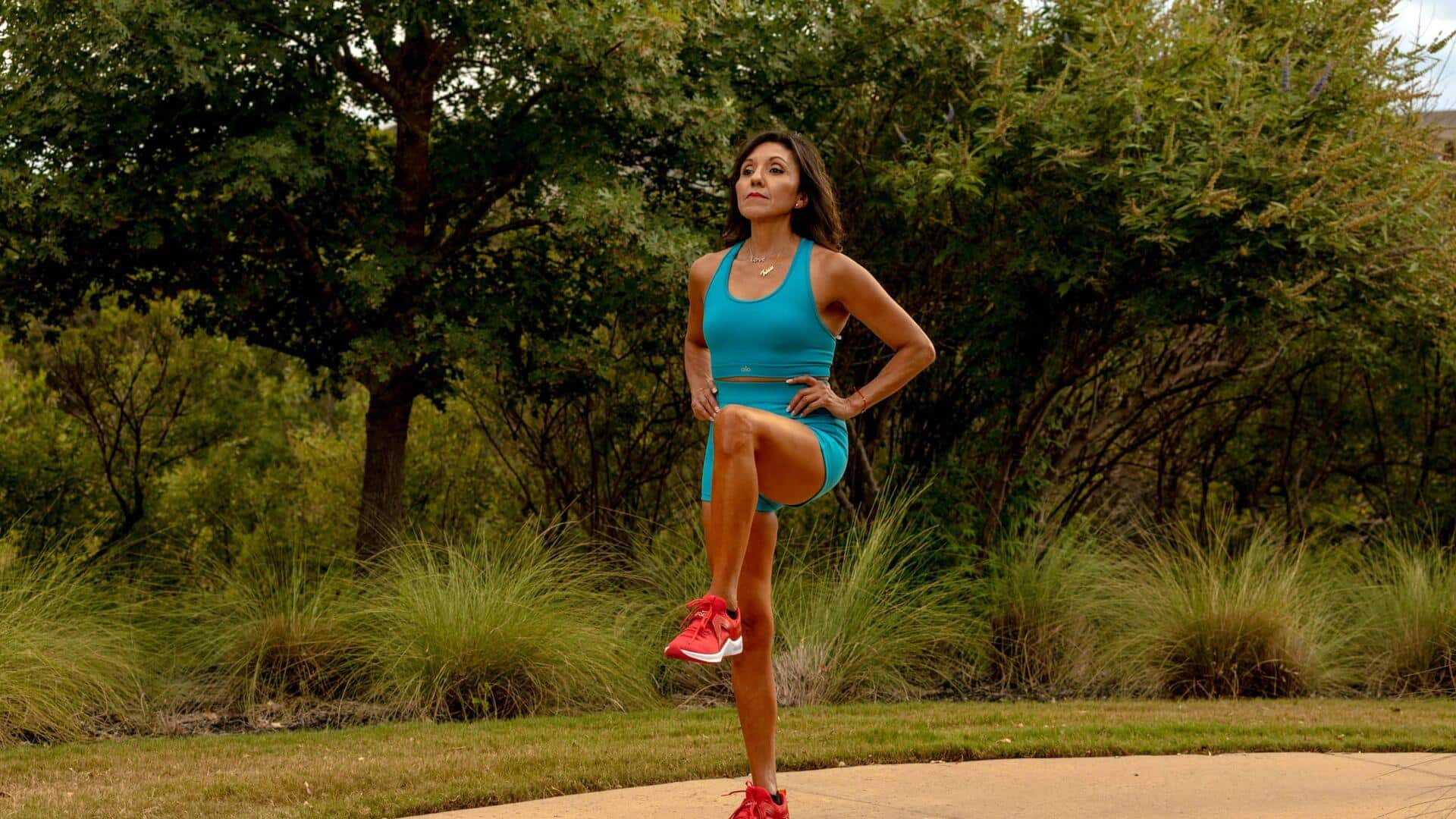
Why doctors recommend single-leg balancing for improving coordination
What's the story
Single-leg balancing is an underrated exercise that can do wonders for your overall health. It is a simple yet effective way to improve stability, strengthen muscles, and enhance coordination. By incorporating this exercise into your routine, you can reap a number of benefits that contribute to physical well-being. Here are five surprising health benefits of single-leg balancing that might just inspire you to give it a try.
Core strength
Enhances core stability
Single-leg balancing requires engagement of core muscles to maintain balance and posture.
This constant engagement helps in strengthening the core over time, which is important for overall stability and support of the spine.
A strong core can help reduce the risk of back pain and improve posture.
Coordination boost
Improves coordination and balance
Balancing on one leg challenges the body's ability to coordinate movements and maintain equilibrium.
With regular practice, individuals can see significant improvements in their coordination skills.
This enhanced coordination is beneficial not just for athletes but for anyone looking to improve their daily functional movements.
Muscle strengthening
Strengthens lower body muscles
Single-leg balancing targets key muscle groups in the lower body, including the calves, thighs, and glutes.
By regularly performing this exercise, you can build strength in these muscles without the need for weights or equipment.
Stronger lower body muscles contribute to better mobility and reduced risk of injuries.
Proprioceptive improvement
Enhances proprioception
Proprioception is the body's ability to sense its position in space.
Single-leg balancing is a great way to improve proprioceptive abilities by challenging your body's awareness of its surroundings.
Improved proprioception leads to better agility and a reduced risk of falls, especially as you age.
Joint support
Supports joint health
Balancing exercises are low-impact activities that are easy on the joints while still providing a good workout.
By regularly practicing single-leg balancing, you can support joint health by improving the flexibility and strength of the surrounding muscles and ligaments.
This can prevent joint-related issues in the long run.