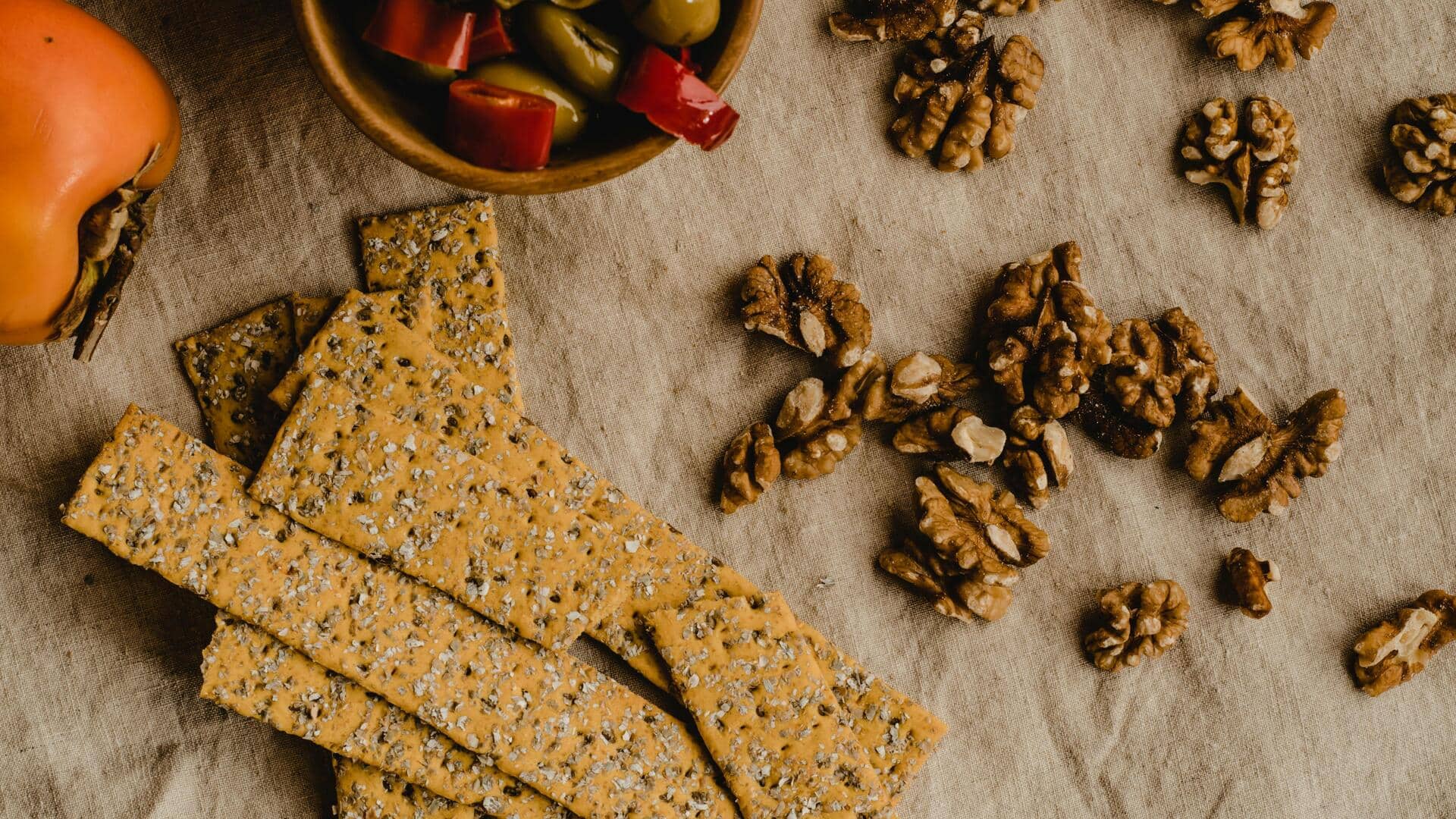
Swap nacho chips with this healthy, crunchy snack
What's the story
Baked water chestnut flour crackers are a healthy alternative to traditional nacho chips. These gluten-free snacks are made from water chestnut flour, which is high in fiber and low in calories. They offer a crunchy texture and mild flavor that goes well with dips and spreads. By swapping nacho chips with these crackers, you can enjoy a tasty snack without compromising on health.
#1
Nutritional benefits of water chestnut flour
Water chestnut flour is loaded with essential nutrients such as potassium, manganese, and vitamin B6.
It is also low on the glycemic index, making it ideal for anyone looking to maintain stable blood sugar levels.
The high fiber content promotes digestion and keeps you feeling full for longer.
Using this flour in your snacks can give you a nutritious boost without the extra calories.
#2
How to make baked water chestnut crackers
Making baked water chestnut crackers at home is easy.
Mix water chestnut flour with a pinch of salt and add water to form a dough.
Roll out thin sheets and cut them into desired shapes before baking at 180 degrees Celsius until crisp.
This simple process allows you to customize flavors by adding spices or herbs according to your preference.
#3
Pairing suggestions for your crackers
These versatile crackers go well with a range of dips and spreads.
Try pairing them with hummus or guacamole for a protein-rich snack option.
For those who prefer something sweeter, almond butter or fruit preserves make excellent choices.
Experimenting with different combinations can elevate the snacking experience while keeping it healthy.
#4
Cost-effective snacking solution
Baked water chestnut flour crackers also make for an economical snacking option as compared to store-bought nacho chips that are often pricey and loaded with preservatives.
By making these at home, you can save money while enjoying fresh snacks made from natural ingredients.
This not only promotes healthier eating habits but also contributes to cutting down on food waste by controlling portion sizes during preparation.