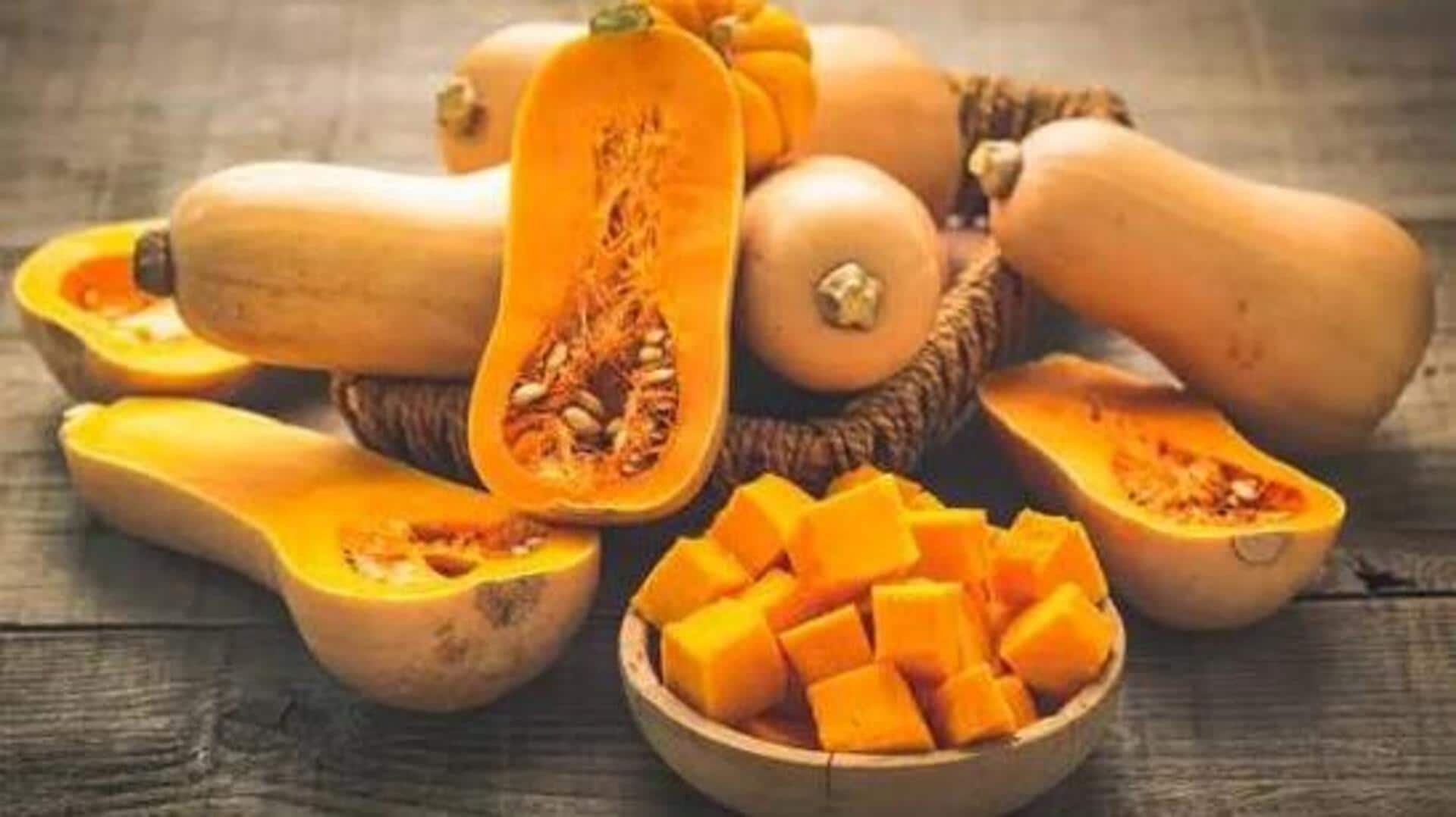
Sweet potato v/s butternut squash: Comparing nutrition
What's the story
Sweet potatoes and butternut squash are two of the most popular root vegetables, known for their versatility and nutritional benefits. Both are rich in vitamins and minerals, making them a healthy addition to any diet. While they may look similar, their nutritional profiles differ in a number of ways. Here's a look at the nutritional differences between sweet potatoes and butternut squash, to help you make informed dietary choices.
Vitamins
Vitamin content comparison
Both sweet potatoes and butternut squash are loaded with vitamins, but they differ in the types of vitamins they provide.
Sweet potatoes are especially high in vitamin A, giving more than 400% of the daily recommended intake per serving.
Butternut squash also provides a good dose of vitamin A, but is more rich in vitamin C.
While both vitamins are essential for maintaining healthy vision and skin, vitamin C also helps with immunity.
Fiber
Fiber content analysis
Fiber is an important nutrient for digestive health, and both sweet potatoes and butternut squash provide a good amount of it.
Sweet potatoes have slightly more fiber than butternut squash, with around four grams per serving, compared to butternut squash's two grams.
Eating fiber-rich foods can help with digestion and keep you feeling full longer.
Calories
Caloric value differences
When it comes to caloric value, sweet potatoes are a little more caloric than butternut squash.
A serving of sweet potato has about 112 calories, while the same serving of butternut squash has roughly 82 calories.
If you are keeping an eye on your calorie intake but still want to enjoy these vegetables' nutritional benefits, this difference may come in handy.
Minerals
Mineral composition insights
Both sweet potatoes and butternut squash provide essential minerals, such as potassium and magnesium.
Sweet potatoes are particularly high in potassium, which is important for heart function and muscle contractions.
Butternut squash provides more magnesium, which is important for bone health and energy production.
Knowing these mineral differences can help you choose based on your dietary needs.