The heritage story of Banarasi weaving
What's the story
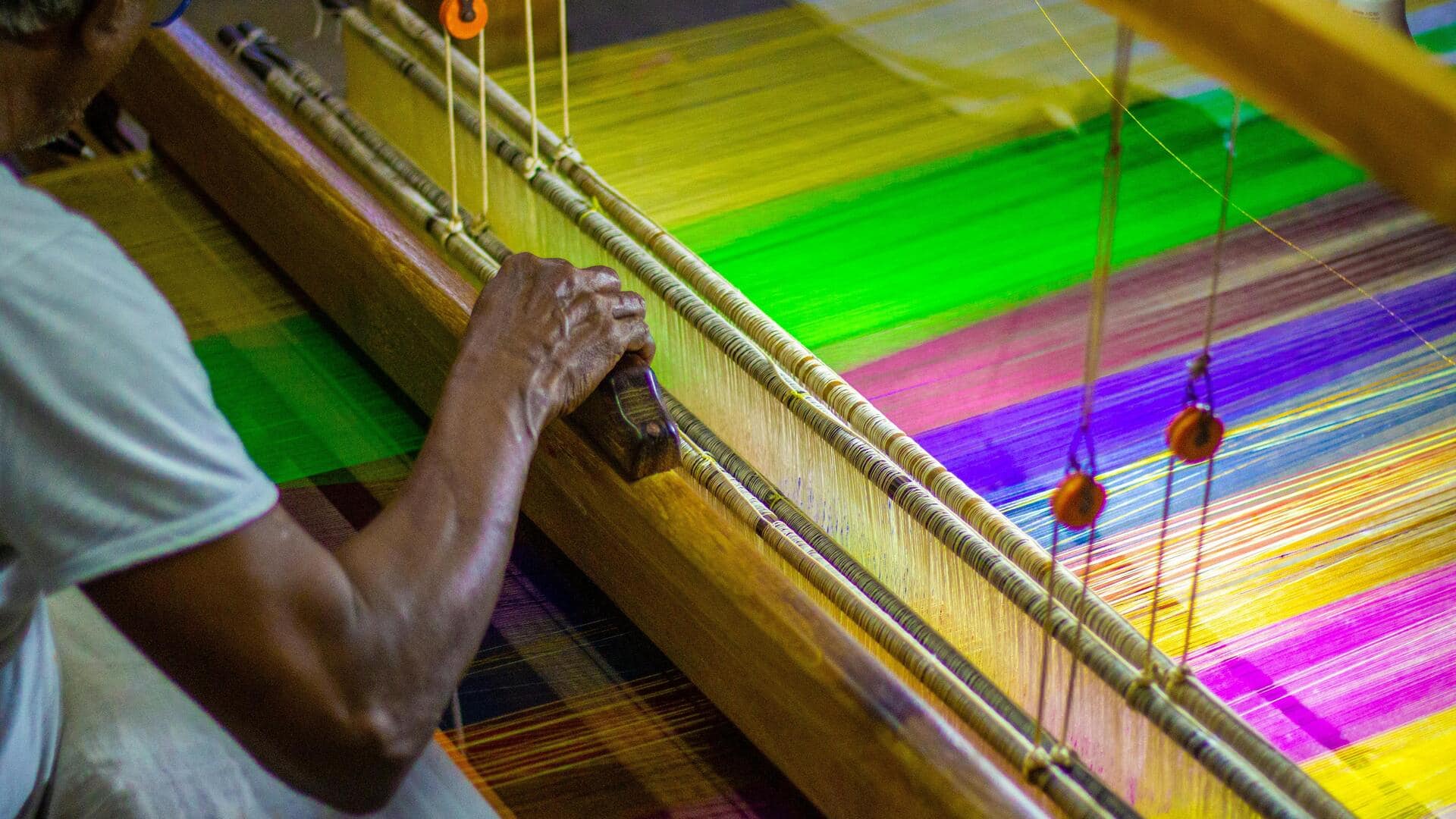
Banarasi weaving is an ancient craft that originates from Varanasi, India. Famous for its intricate designs and luxurious fabrics, the art has been practiced for centuries. The weavers create exquisite patterns using silk threads, making each piece a work of art. The craft not only showcases the skill of artisans but also reflects the rich cultural heritage of India. Here's all about this timeless tradition.
#1
The art of silk weaving
Banarasi weaving is mainly done on silk fabrics. The artisans use fine silk threads to create intricate patterns and designs.
The process requires a lot of precision and skill, as every design is woven into the fabric by hand.
The use of gold and silver threads is also common to add an extra touch of elegance to the final product.
#2
Intricate designs and patterns
The designs in Banarasi weaving are inspired by nature, mythology, and architectural motifs.
Floral patterns, paisleys, and geometric shapes are commonly used in these creations.
Each design is meticulously crafted to ensure that it meets the high standards of craftsmanship that Banarasi textiles are known for.
#3
Techniques passed down generations
The techniques used in Banarasi weaving have been passed down through generations.
Artisans learn their craft from a young age, often starting as apprentices under experienced weavers.
This tradition ensures that the techniques remain unchanged while allowing for some innovation within the framework of traditional methods.
#4
Economic impact on local communities
Banarasi weaving significantly contributes to local economies by providing jobs to thousands of artisans in Varanasi and nearby areas.
The demand for these textiles in domestic and international markets helps sustain livelihoods while preserving this cultural heritage.
Efforts are also being made to promote fair trade practices within this industry to ensure fair compensation for artisans.