Interested in sculpting? Follow these African artists
What's the story
African sculptors are leading the way in sustainable art, using eco-friendly materials to create stunning works. These artists are not only preserving cultural heritage but also promoting environmental consciousness. By using locally sourced and recyclable materials, they are making art that speaks to both tradition and innovation. Here are some of the most influential African sculptors who are making a difference with their sustainable practices.
Material mastery
El Anatsui's transformative art
El Anatsui is famous for his large-scale sculptures made from recycled bottle caps and other discarded materials.
His work transforms waste into beautiful, intricate pieces that challenge perceptions of value and materiality.
By using what others consider trash, Anatsui highlights the importance of recycling and sustainability in art.
Heritage preservation
Ousmane Sow's cultural impact
Ousmane Sow was known for his life-sized sculptures depicting historical and cultural figures.
While he primarily worked with clay and natural fibers, his focus on cultural narratives also emphasized the importance of preserving heritage through sustainable practices.
Sow's work encourages a deeper understanding of African history while advocating for eco-friendly artistic methods.
Industrial innovation
Sokari Douglas Camp's urban influence
Sokari Douglas Camp is famous for her vibrant sculptures made from metal scraps and industrial materials.
Her work often reflects urban life and social issues in Africa.
By repurposing materials that would otherwise contribute to pollution, Camp's art promotes environmental awareness while celebrating contemporary African culture.
Mixed media exploration
Wangechi Mutu's ecological vision
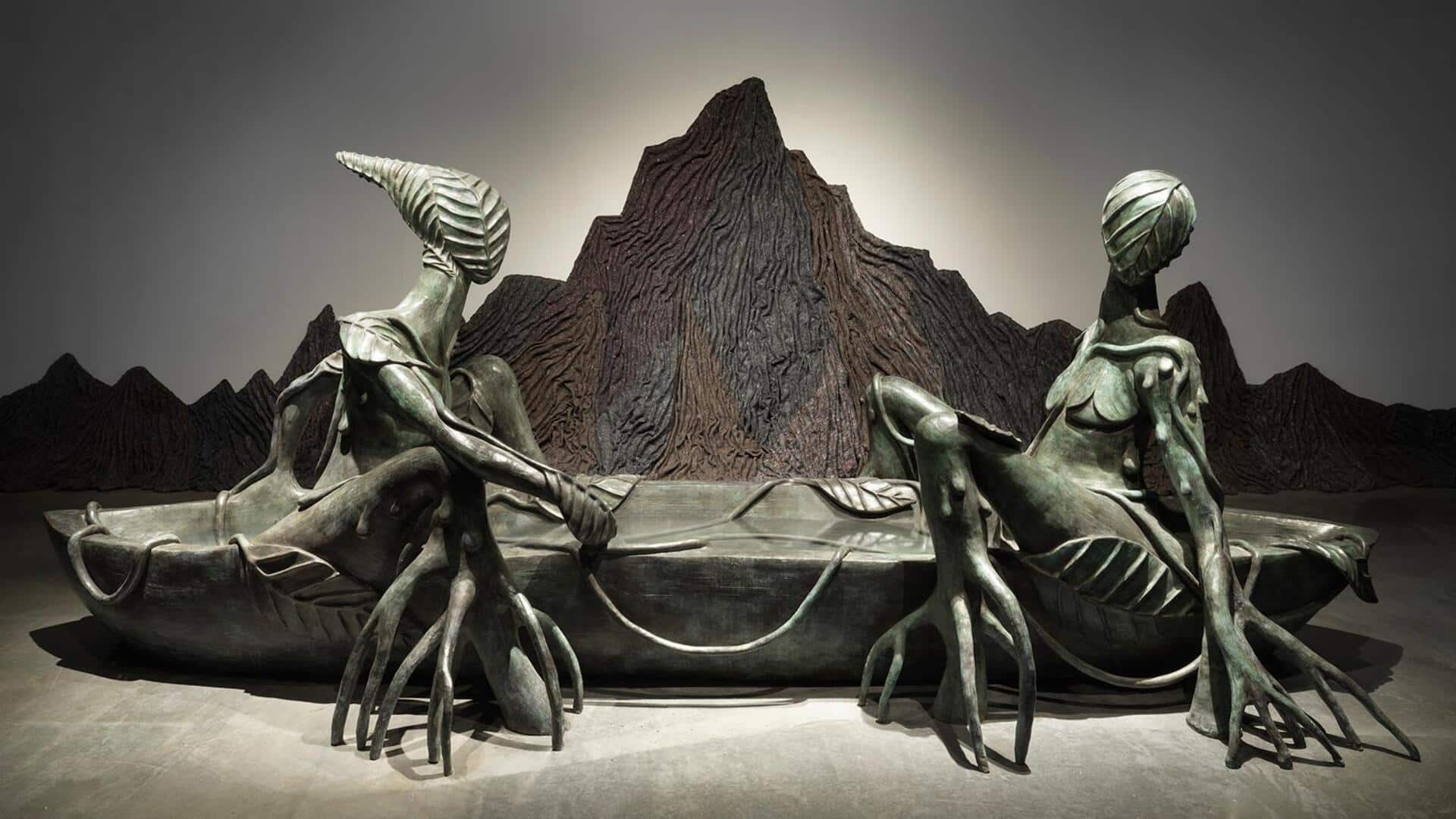
Wangechi Mutu uses mixed media, including recycled paper, plastic, and organic materials, to create her sculptures.
Her work often addresses themes of identity, gender, and ecology.
By incorporating sustainable materials into her art, Mutu invites viewers to consider the relationship between nature and human experience.
Organic artistry
Nnenna Okore's textural creations
Nnenna Okore is known for her textural sculptures made from recycled paper, fabric, and natural fibers.
Her work often explores themes of decay and regeneration, reflecting the cyclical nature of life.
Okore's use of biodegradable materials not only reduces waste but also adds depth to her artistic expression.