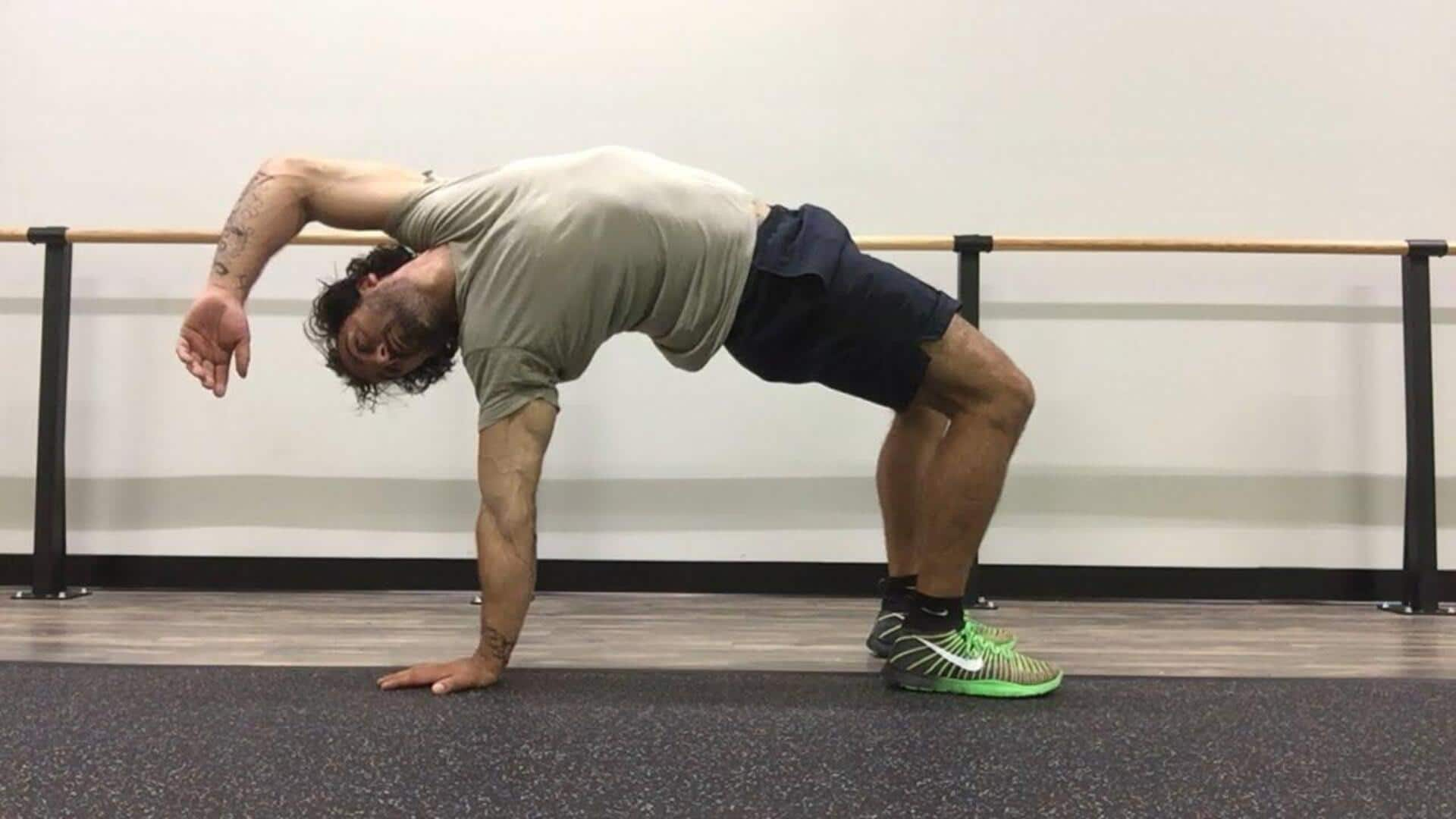
Thoracic bridge: What it is actually
What's the story
The thoracic bridge is a dynamic exercise that improves flexibility and strength in the upper body. It mainly targets the shoulders, chest, and spine, making it an ideal addition to any fitness routine. By performing this exercise, you can improve your posture and relieve tension in the upper back. Here are some tips on how to perform the thoracic bridge correctly and reap its benefits.
Tip 1
Proper form for maximum benefits
To perform the thoracic bridge, start by sitting on the floor with your knees bent and feet flat. Place your hands behind you with fingers pointing towards your toes. Lift your hips towards the ceiling while arching your back. Ensure that your shoulders are pulled back and down to avoid strain. Maintaining proper form is crucial to avoid injury and get the most out of this exercise.
Tip 2
Incorporating breathing techniques
Breathing is key when doing the thoracic bridge. Inhale deeply before you start the movement to fill your lungs with air. As you lift your hips, exhale slowly through your mouth. This not only helps you maintain control over the movement but also relaxes your muscles, making it easier to hold the position for longer.
Tip 3
Gradually increasing intensity
Like any other exercise, gradually increasing the intensity of the thoracic bridge is key to improving flexibility and strength. Start by holding each position for a few seconds and gradually increase the duration as you become comfortable. You can also increase the difficulty by adding variations like extending one leg or arm while holding the bridge position.
Tip 4
Consistency is key
Consistency is key when it comes to reaping the benefits of any exercise routine, including the thoracic bridge. Aim to include this movement in your workout regimen at least three times a week for noticeable improvements in flexibility and upper body strength over time. Regular practice will help you achieve better posture and reduced muscle tension in the long run.