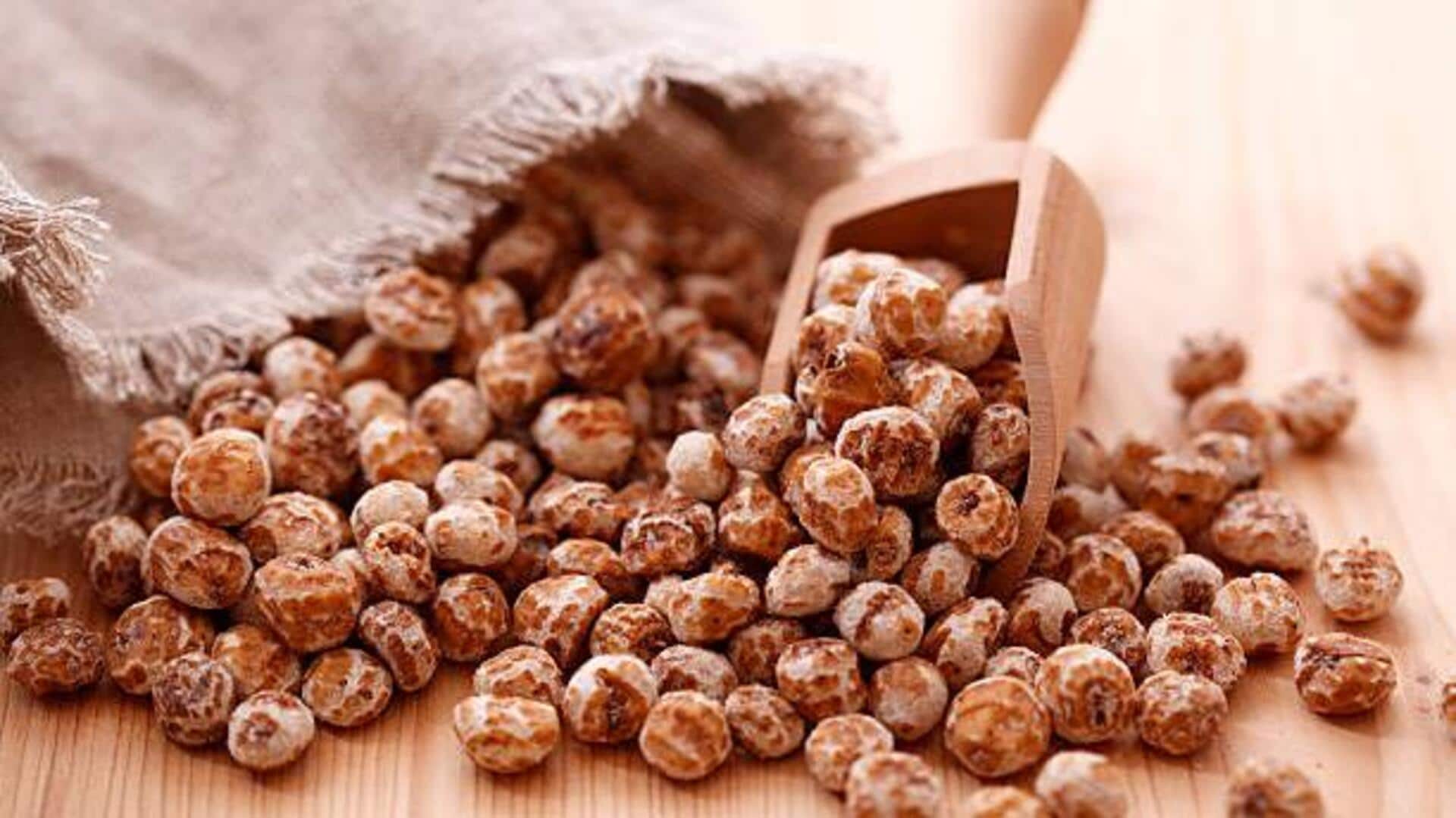
Tigernut: The superfood you've been missing out on
What's the story
African tigernut, a small root vegetable, is making waves as a superfood. Although it has been a staple in African diets for centuries, it is now becoming popular across the globe for its nutritional benefits. Packed with fiber, vitamins, and minerals, tigernut is an excellent addition to a balanced diet. Here is how this humble root can be incorporated into your meals.
#1
Nutritional benefits of tigernuts
African tigernuts are packed with nutrients that promote overall health.
They are high in fiber, which helps with digestion and keeps blood sugar levels stable.
They also contain essential vitamins, such as vitamins E and C, which are antioxidants that protect cells from damage.
The presence of minerals, such as potassium and magnesium, makes them heart-healthy.
#2
Versatile culinary uses
Tigernuts can be used in a number of culinary applications because of their nutty flavor and crunchy texture.
They can be eaten raw as a snack or roasted to bring out their natural sweetness.
Ground into flour, tigernuts make an excellent gluten-free alternative for baking bread or pastries.
Tigernut milk is another popular option that serves as a dairy substitute.
#3
Health benefits beyond nutrition
Beyond their nutritional value, African tigernuts offer several health benefits.
Their high fiber content aids in weight management by promoting feelings of fullness after meals.
The prebiotics found in tigernuts support gut health by nourishing beneficial bacteria in the digestive system.
Additionally, they may help reduce cholesterol levels due to their heart-friendly properties.
Tip 1
Tips for incorporating tigernuts at home
Incorporating African tigernuts into your diet can be simple and rewarding.
Start by adding them to salads or yogurt for an extra crunch and flavor boost.
Use tigernut flour when baking cookies or pancakes for a nutritious twist on classic recipes.
For those looking for dairy alternatives, try making homemade tigernut milk by blending soaked tigernuts with water and straining the mixture through cheesecloth or a fine sieve.