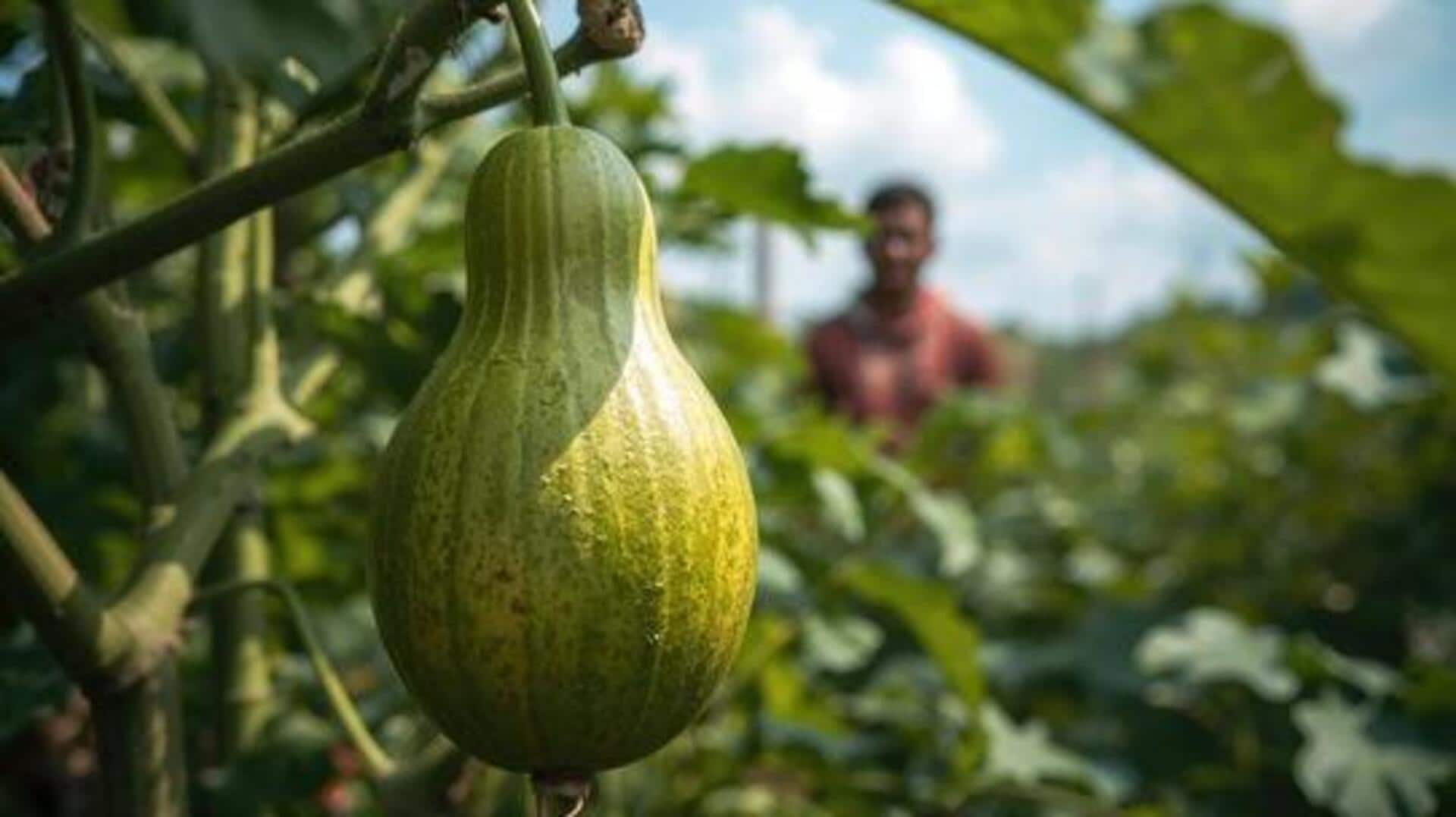
How to grow ash gourd at home
What's the story
Growing ash gourd at home can be a rewarding experience, providing you with fresh produce and a sense of accomplishment. This tropical vegetable, known for its versatility in cooking, thrives in warm climates and requires minimal care. With the right conditions and attention, you can cultivate ash gourd successfully in your garden or balcony. Here are some practical tips to help you grow this nutritious vegetable effectively.
#1
Choosing the right location
Selecting an appropriate location is crucial for growing ash gourd.
It needs plenty of sunlight, so pick a spot that gets at least six hours of direct sunlight daily.
The soil should be well-drained and rich in organic matter.
Avoid areas with standing water or poor drainage, as they can lead to root rot.
A raised bed or container with good drainage holes can work well if your ground soil isn't ideal.
#2
Preparing the soil
Proper soil preparation is key to healthy ash gourd plants.
Start by testing your soil's pH level; it should ideally be between six and seven.
Amend the soil with compost or well-rotted manure to improve its fertility and structure. This will provide essential nutrients needed for growth.
Make sure to till the soil thoroughly before planting seeds or seedlings to ensure good root development.
#3
Planting techniques
Plant ash gourd seeds directly into the prepared soil after the last frost date when temperatures are consistently warm.
Space seeds about one meter apart in rows spaced 2 meters apart to allow ample room for vines to spread outwards as they grow.
If transplanting seedlings, ensure they have developed strong roots before moving them outdoors.
#4
Watering and maintenance
Regular watering is essential, especially during dry spells, but avoid overwatering, as it can cause fungal diseases like powdery mildew on leaves.
Water deeply once a week unless rainfall provides adequate moisture naturally.
Mulching around plants helps retain moisture while suppressing weeds effectively, without competing with nutrients needed by growing vegetables themselves.