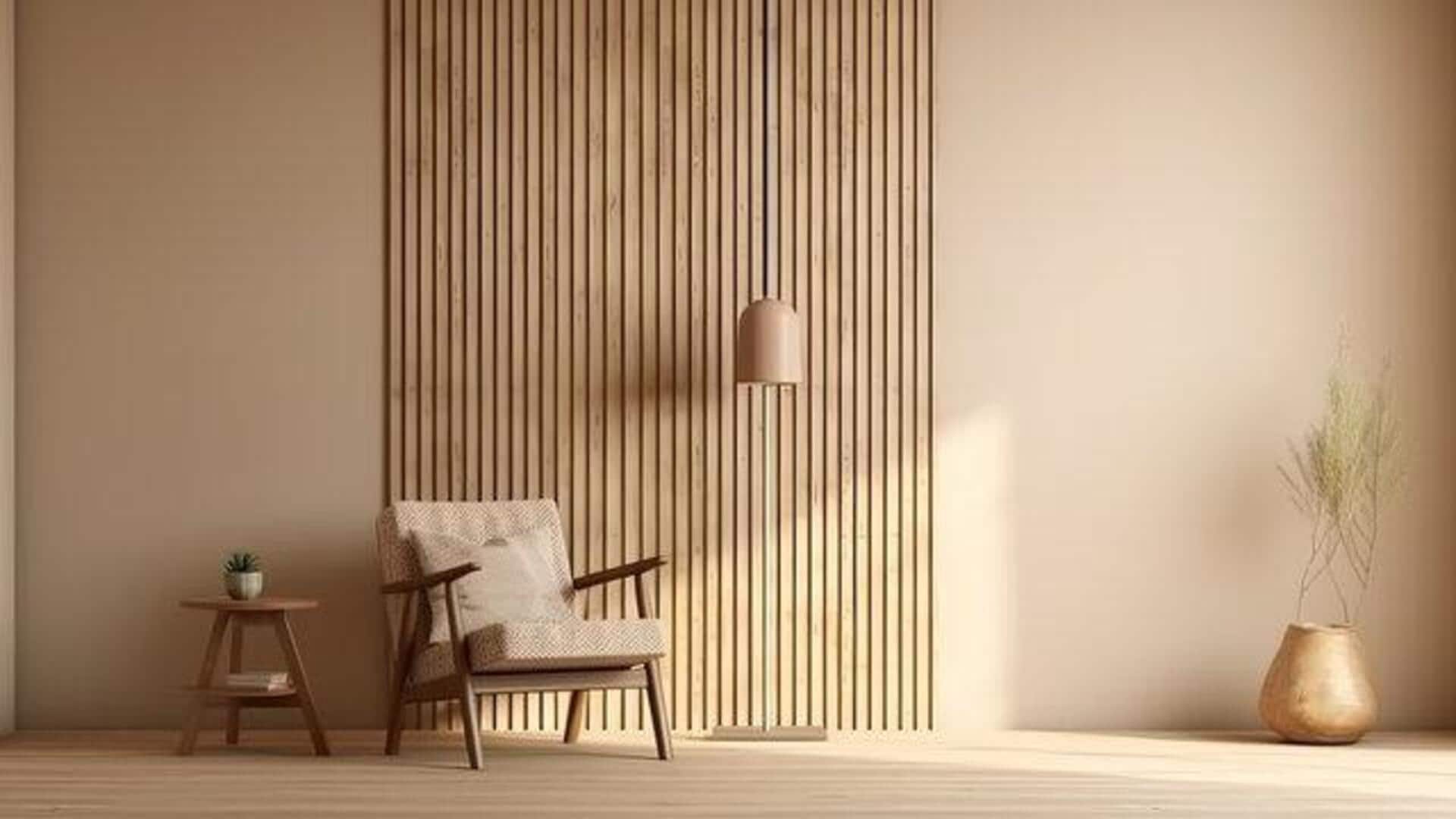
How to repurpose maize husks into stunning wall panels
What's the story
African wall panels made from maize husks are a sustainable and eco-friendly way to add a unique touch to your home. These panels, which are made from agricultural waste, provide an affordable and stylish alternative to traditional wall coverings. Not only do they help reduce waste, but they also support local economies by providing a market for maize husks. Here's how you can use these panels in your home decor.
#1
Understanding maize husk panels
Maize husk panels are made by compressing and treating dried maize husks into flat sheets. The process preserves the natural texture of the husks, giving each panel a one-of-a-kind look. These panels are lightweight, making them easy to install, and durable enough to withstand wear and tear. They can be used in various settings, from residential homes to commercial spaces.
#2
Benefits of using maize husk panels
Using maize husk panels has several benefits. First, they are environmentally friendly as they recycle agricultural waste that would otherwise be discarded. Second, they are cost-effective as they are cheaper than other decorative materials like wood or stone. Lastly, the natural fibers in the husks provide insulation properties that can help regulate indoor temperatures.
#3
Installation tips for maize husk panels
Installing maize husk panels is a straightforward process that requires minimal tools. Start by measuring the area where you want to install the paneling and cut the panels accordingly using a utility knife or saw. Use adhesive or nails to secure the panels in place on walls or ceilings. Ensure proper alignment for a seamless look.
Tip 1
Maintenance and care instructions
Maintaining maize husk panels is simple but important for their longevity. Regular dusting with a soft cloth keeps dirt from accumulating on surfaces over time. If needed, lightly dampen cloths with water mixed with mild soap solutions for deeper cleaning without damaging material integrity. Avoid harsh chemicals altogether since they may cause discoloration or deterioration of fibers within each panel's structure.