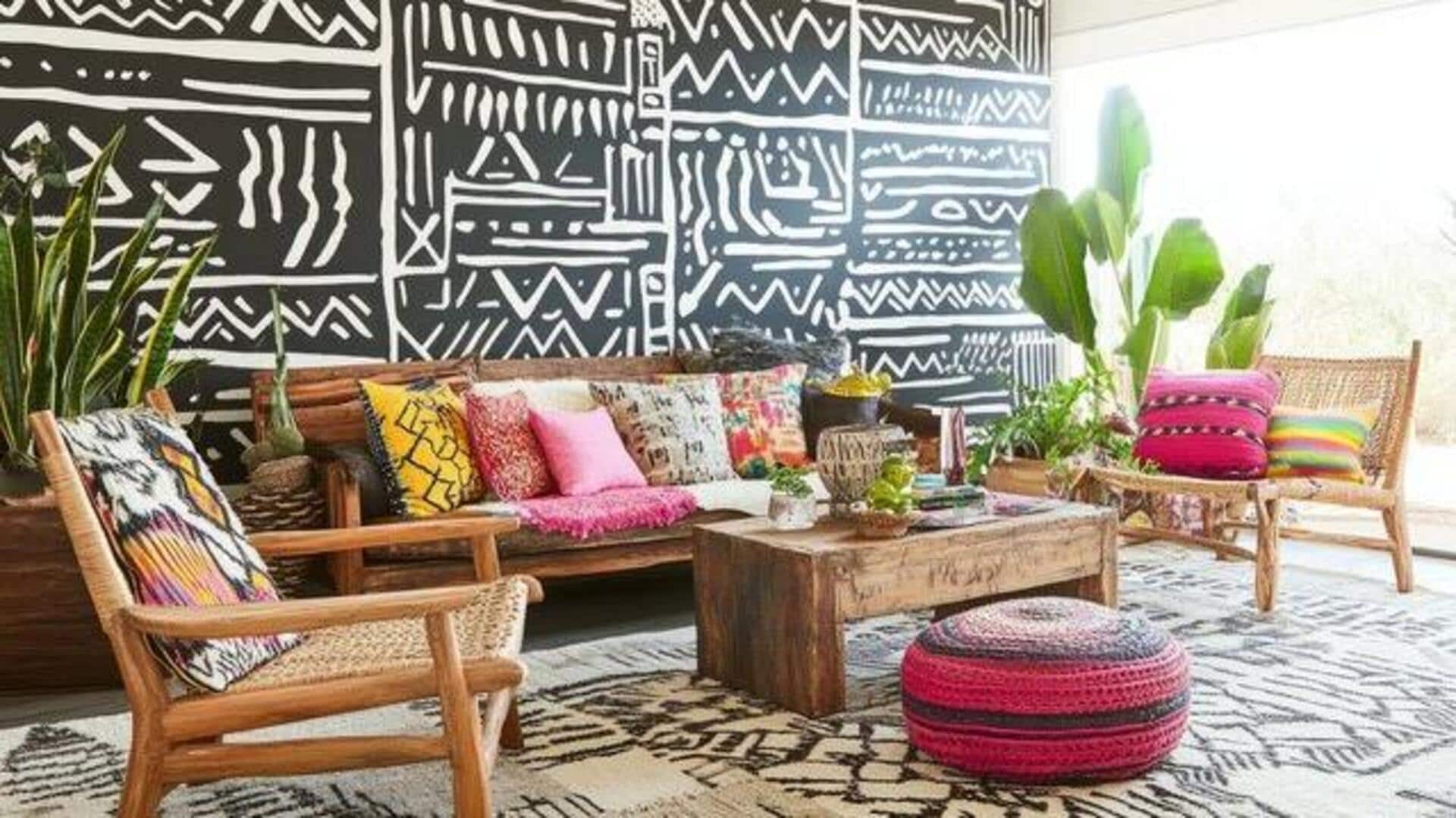
Transform your walls with mud cloth art
What's the story
African mud cloth art is a traditional textile art form that originates from West Africa. The unique patterns and designs of mud cloth, or bogolanfini, are created using fermented mud on handwoven cotton fabric. This ancient craft has been used for centuries as a means of storytelling and cultural expression. Today, it is increasingly being used to transform walls into stunning visual displays, bringing a touch of African heritage into modern spaces.
#1
Understanding the origins of mud cloth
Mud cloth originates from Mali, where it is made by skilled artisans.
The process begins with weaving cotton into strips and dyeing them with plant-based dyes.
Fermented mud is then applied to create intricate patterns that have cultural significance.
Each design tells a story or represents a particular symbol in the community.
This traditional technique not only preserves cultural identity but also offers unique aesthetic appeal.
#2
Techniques for applying mud cloth art on walls
Applying mud cloth art on walls can be done through various techniques.
One popular method is using fabric panels or wallpaper designed with mud cloth patterns. These can be easily adhered to walls, providing an instant transformation without permanent alterations.
Another technique involves painting directly onto the wall using stencils or brushes, mimicking the distinctive patterns of mud cloth.
#3
Incorporating mud cloth into interior design
Incorporating mud cloth into interior design adds depth and character to any space.
It works well with neutral color palettes, adding visual interest without overpowering other elements in the room.
Pairing mud cloth with natural materials like wood or leather enhances its earthy vibe while maintaining balance within the design scheme.
Tip 1
Maintaining authenticity in modern applications
To maintain authenticity when using African mud cloth art, it's important to source materials ethically and support artisans who practice this craft traditionally.
Using genuine handcrafted pieces ensures that the cultural significance is preserved while enjoying the aesthetic benefits of this unique art form in contemporary settings.