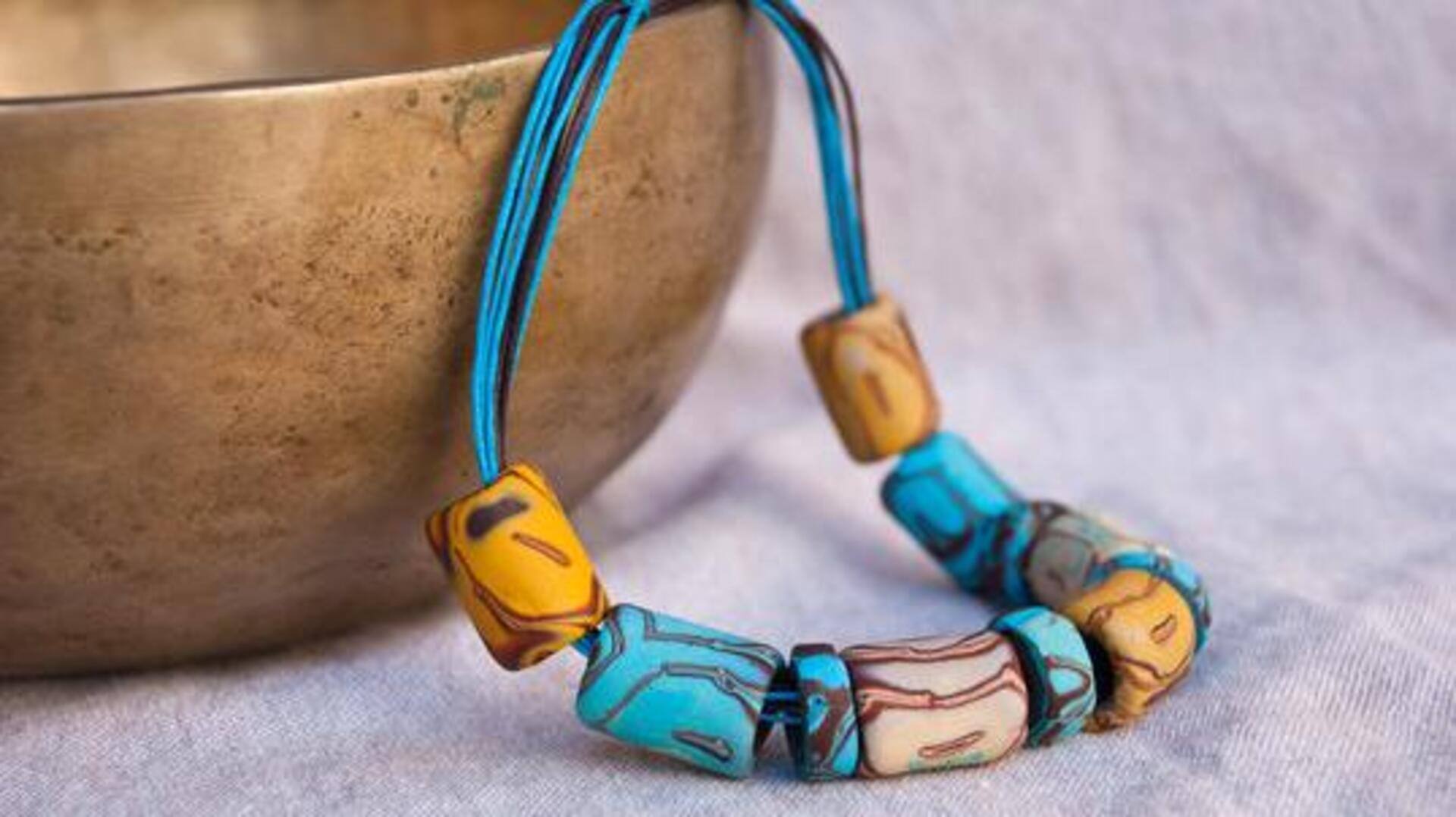
Tuareg jewelry: A unique art form you'll love
What's the story
Tuareg jewelry, a unique art form, is famous for its intricate designs and cultural significance. The jewelry, traditionally made by the Tuareg people of North Africa, is not just ornamental but also carries deep meanings and symbols. The craftsmanship involved in making these pieces is passed down through generations, making it a true representation of Tuareg heritage. Here are some key aspects of this fascinating art form.
#1
Symbolism in Tuareg jewelry
Tuareg jewelry is rich in symbolism, with each design telling a story or signifying an important aspect of life.
Common symbols include the cross, representing faith and protection, and geometric patterns that denote unity and balance.
These symbols are often engraved or crafted into the metalwork, giving each piece its unique narrative.
#2
Materials used in creation
Traditionally, Tuareg jewelry is made using silver and other metals. Silver is prized for its beauty and cultural significance among the Tuareg people.
The use of leather and beads is also common to add texture and color to the pieces.
These materials are sourced locally, ensuring that the craftsmanship remains true to its roots.
#3
Techniques employed by artisans
Artisans employ various techniques to create Tuareg jewelry, including engraving, filigree work, and repousse.
Engraving allows artisans to carve intricate designs onto surfaces, while filigree involves twisting thin wires into delicate patterns.
Repousse is a technique where metal is shaped from behind to create raised designs on the front.
#4
Modern adaptations of traditional designs
In recent years, there has been a growing interest in modern adaptations of traditional Tuareg jewelry designs.
While maintaining cultural integrity, contemporary artisans experiment with new materials like glass, or incorporate elements from other cultures.
This fusion creates unique pieces that appeal to a broader audience while honoring the original artistry.