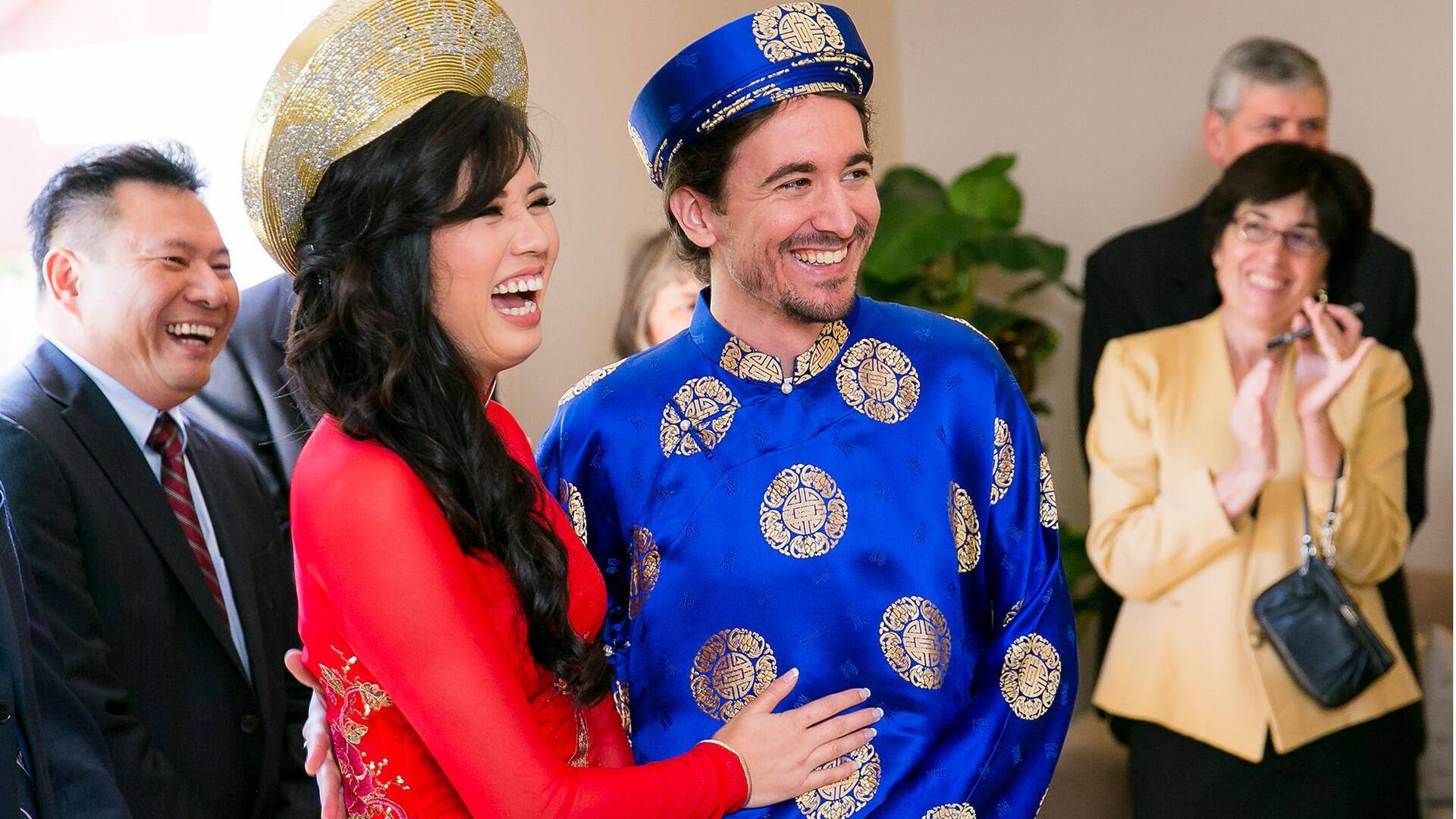
You'll fall in love with these Vietnamese wedding traditions
What's the story
Vietnamese weddings are a beautiful mix of culture and tradition, highlighting the importance of family and respect. The rituals, which are centuries-old, are still an important part of the wedding ceremonies today. From the engagement to the ceremony, each step has its own significance and customs that have been passed down through generations. Here are five traditional Vietnamese wedding rituals that are still celebrated today.
#1
The engagement ceremony
The engagement ceremony, or "dap huong," is the first official step towards marriage.
The groom's family visits the bride's home with gifts, including betel leaves and areca nuts, symbolizing goodwill.
This ritual establishes mutual respect between families and confirms the couple's intention to marry.
It usually involves a small gathering where both families discuss details about the wedding date and arrangements.
#2
Dowry presentation
The dowry, or "le van xin," is an important tradition in Vietnamese weddings.
The groom's family presents gifts to the bride's family as a sign of respect and appreciation.
These gifts often include money, jewelry, or traditional items like tea sets.
The dowry amount isn't fixed but depends on each family's financial situation and cultural beliefs.
This ritual emphasizes honor between families.
#3
Tea ceremony
The tea ceremony is a sacred part of Vietnamese weddings where couples serve tea to their elders as a mark of respect.
In this ritual, the bride and groom kneel before their parents or grandparents with cups of tea in hand.
Serving tea symbolizes gratitude towards elders for their guidance and support throughout life.
In return, elders offer blessings for a happy marriage.
#4
Wedding procession
The wedding procession, or "le cuoi," is the main event where both families come together to celebrate with music, dance, and traditional attire like ao dai (Vietnamese dresses).
The bride usually arrives at her new home accompanied by relatives who carry symbolic items such as lanterns or flowers representing prosperity for her new life ahead.
#5
Post-wedding rituals
Post-wedding rituals vary regionally but typically include visiting ancestral gravesites or holding feasts at both families' homes.
These events signify unity between two families after marriage has taken place officially during earlier ceremonies mentioned above.
They also allow everyone involved time together before returning back home again later on down the line when festivities conclude altogether finally once more!