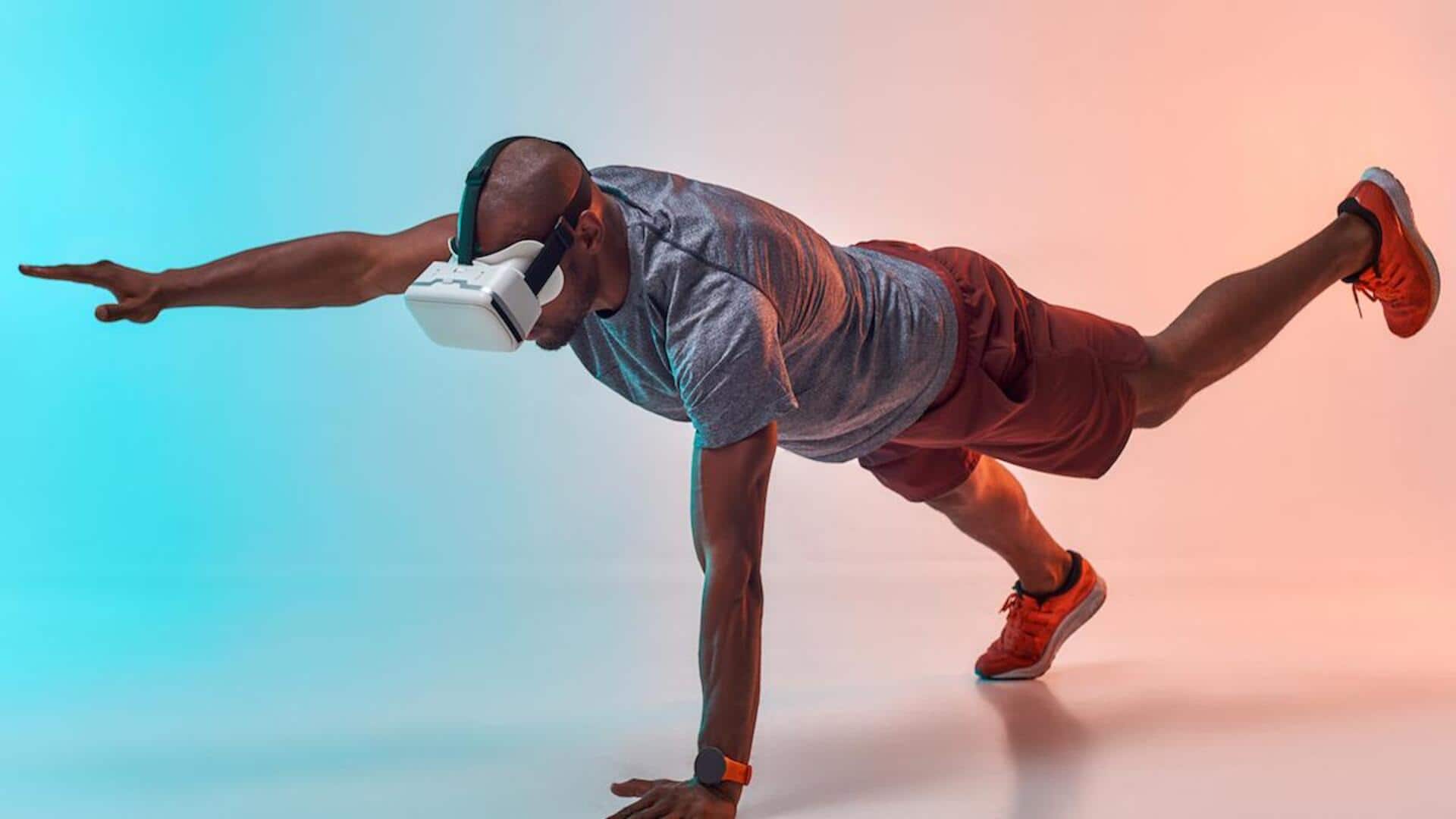
What are virtual reality workouts?
What's the story
Virtual reality (VR) workouts are taking the fitness world by storm, giving a whole new meaning to the concept of exercising. By combining technology with physical activity, VR workouts provide an immersive experience that can make you healthier and happier. Here are five ways VR workouts can improve your health and happiness, without any complex equipment or setups.
#1
Enhanced motivation through immersion
VR workouts create an immersive environment that can boost motivation.
By simulating real-world scenarios or exciting virtual landscapes, participants may find themselves more engaged and less likely to skip sessions.
This heightened level of immersion can lead to consistent workout routines, contributing positively to physical health.
#2
Stress reduction with interactive experiences
Engaging in VR workouts can be a great way to reduce stress.
The interactive nature of these sessions allows users to focus on the task at hand, diverting their minds from daily stressors.
This distraction technique has been proven to lower cortisol levels and promote relaxation, contributing to overall mental well-being.
#3
Improved cardiovascular health through gamification
Many VR workout programs use gamification elements like scoring systems and challenges to keep participants engaged.
These features encourage users to push their limits and stay active for longer periods.
Regular participation in such activities can improve cardiovascular health by increasing heart rate variability and enhancing endurance.
#4
Social connectivity via virtual communities
VR workouts also offer opportunities for social interaction through virtual communities.
Participants can connect with others from around the world, sharing experiences and supporting each other in their fitness journeys.
This sense of community can help combat feelings of isolation, while also contributing to emotional well-being.
#5
Enhanced coordination with interactive gameplay
The interactive gameplay of VR workouts also improves coordination and balance.
As users navigate through different movements in a virtual space, they develop better motor skills and reflexes over time.
These improvements not only contribute to physical fitness but also enhance daily functional capabilities, making activities easier and safer.