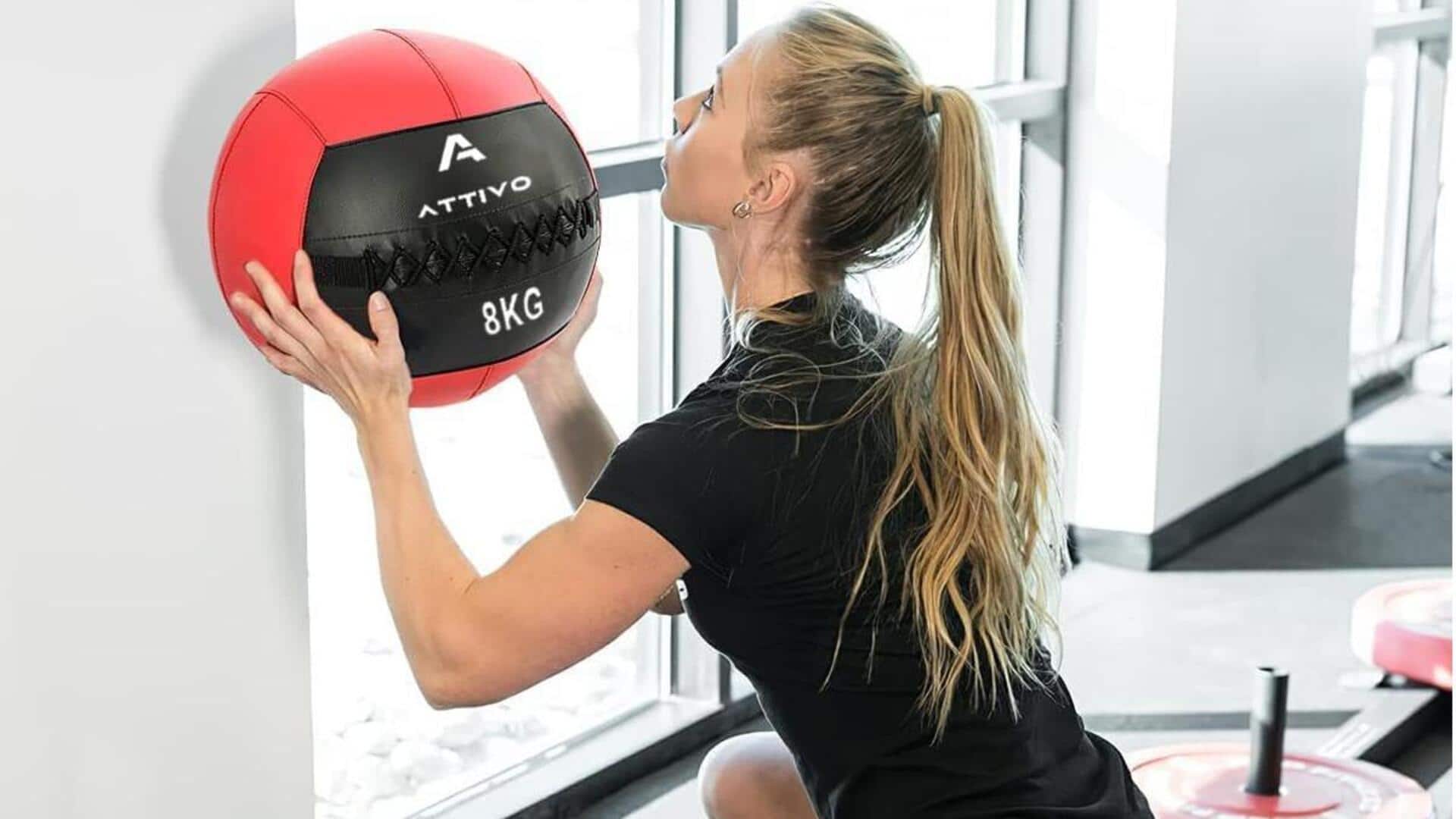
What are wall-bouncing exercises?
What's the story
Wall-bouncing exercises are a unique way to improve your physical fitness. These exercises involve bouncing off a wall, which can be a fun and effective way to improve your strength and coordination. They are ideal for all fitness levels, providing a versatile workout that can be tailored to your needs. By adding wall-bouncing exercises to your routine, you can enjoy a range of benefits that go beyond the usual workouts.
#1
Enhances coordination and balance
Wall-bouncing exercises require you to focus on timing and control as you bounce off the wall. This improves your coordination and balance over time. As you practice these movements regularly, you will notice an improvement in your overall body awareness and stability. This benefit is especially useful for activities requiring agility and precision.
#2
Boosts cardiovascular health
Incorporating wall-bouncing into your workout can give your heart a good workout. The dynamic nature of these exercises increases your heart rate, giving you a good cardiovascular workout. Doing wall-bouncing exercises regularly can improve your heart health by increasing circulation and lowering the risk of cardiovascular diseases.
#3
Strengthens core muscles
Wall-bouncing exercises engage multiple muscle groups, especially the core muscles. As you push off the wall, your abs, obliques, and lower back muscles work together to maintain balance and stability. This strengthens the core over time, improving posture and reducing the risk of back pain.
#4
Increases flexibility and mobility
The repetitive motion of wall-bouncing exercises helps increase flexibility, as well as mobility. The stretching and contracting of muscles while bouncing off the wall help improve the range of motion in joints over time. This increased flexibility can help you perform better in other physical activities while reducing the risk of injury.
#5
Provides mental stimulation
Wall-bouncing exercises also provide mental stimulation by requiring focus and concentration on timing and technique. This mental engagement can help improve cognitive function over time by promoting neural connections associated with motor skills development.