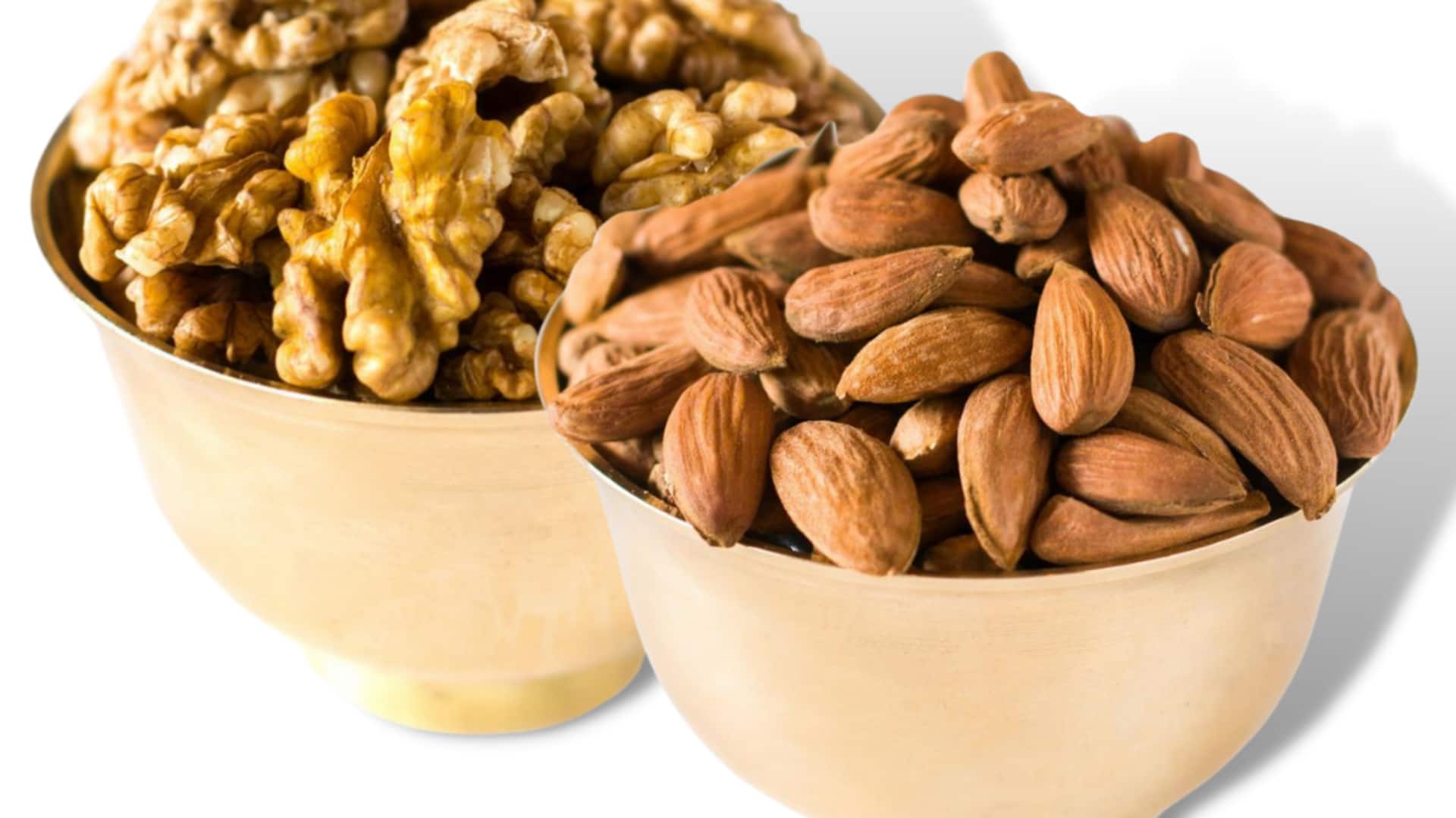
Walnuts v/s almonds: Which nut offers more benefits?
What's the story
Walnuts and almonds are two of the most popular nuts, both of which offer a range of health benefits. While both are packed with essential nutrients, they differ in their nutritional profiles. Knowing these differences can help you make informed dietary choices. Here's a look at the nutritional differences between walnuts and almonds, and how each nut can contribute to a balanced diet.
#1
Fat content and types
Walnuts have a higher fat content than almonds, but most of it is polyunsaturated fat, which is good for heart health.
Almonds, on the other hand, have more monounsaturated fats, which are also good for the heart.
Both nuts have omega-3 fatty acids, but walnuts have more of them than almonds.
These fats are important for brain function and reducing inflammation in the body.
#2
Protein levels in each nut
Almonds have a higher protein content than walnuts, making them a great option for people looking to increase their protein intake without consuming animal products.
Almonds have around six grams of protein per ounce, while walnuts have about four grams per ounce.
The higher protein content in almonds can help with muscle repair and growth.
#3
Vitamin E and antioxidant properties
Almonds are famous for their vitamin E content, providing about 7.3 milligrams per ounce, which is more than 37% of the daily recommended intake for adults.
Vitamin E is an antioxidant that protects cells from damage by free radicals.
Walnuts also offer antioxidants, but in smaller amounts compared to almonds.
#4
Fiber content comparison
Both walnuts and almonds are good sources of dietary fiber, which promotes digestive health by ensuring regular bowel movements and preventing constipation.
Almonds provide around 3.5 grams of fiber per ounce, while walnuts offer about two grams per ounce.
The fiber in both nuts can help with weight management by keeping you full after meals.
Tip 5
Mineral composition differences
Almonds are rich in magnesium, providing about 76 milligrams per ounce, which helps with muscle function and energy production.
Walnuts are also a good source of manganese, providing about 0.6 milligrams per ounce, which is essential for bone health and metabolism.
Both nuts provide essential minerals, but the specific mineral content varies between the two.